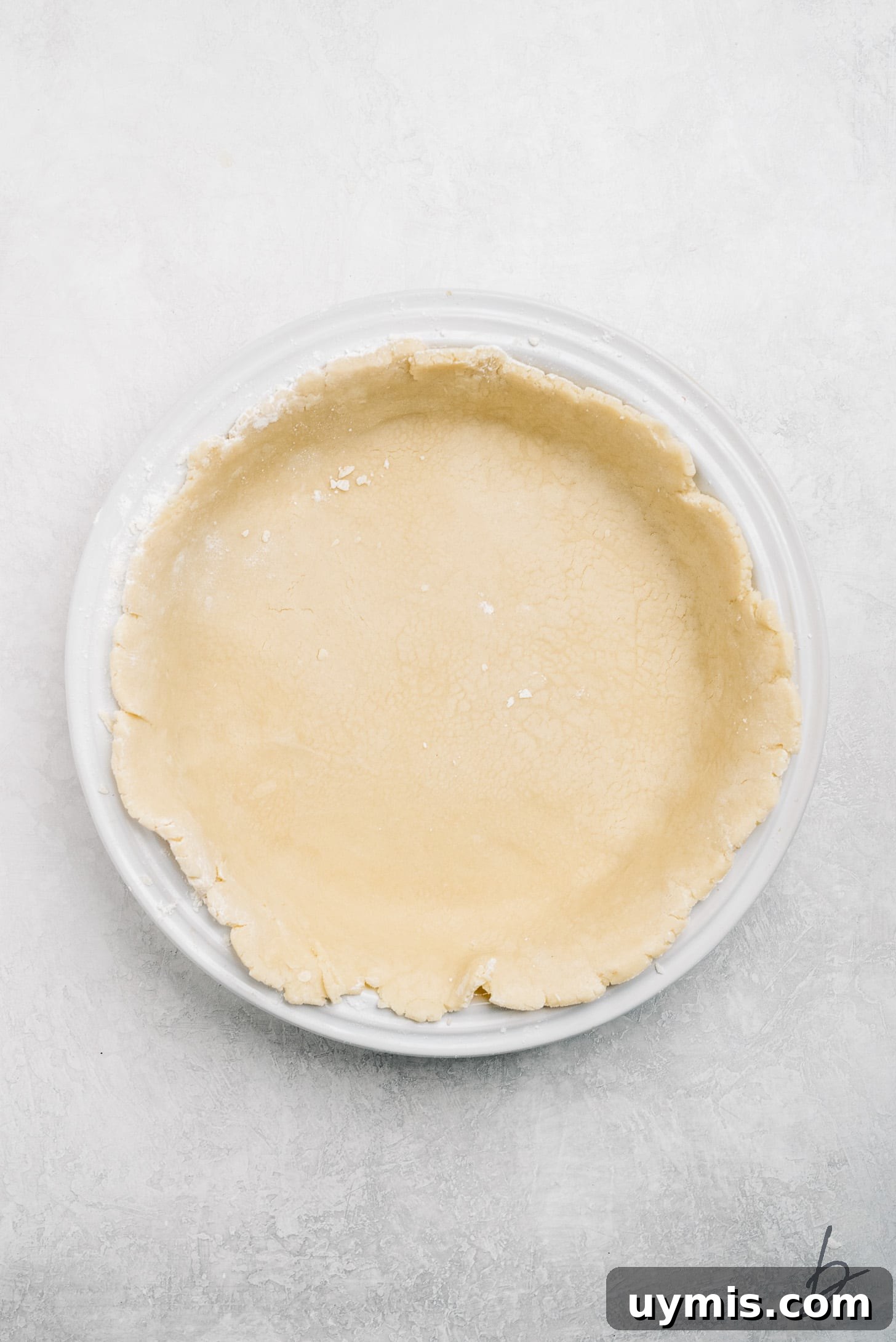
Take your pies to the next level with a reliable, foolproof homemade pie crust. This easy-from-scratch pastry yields two crusts and delivers a perfectly flaky, buttery texture by combining both butter and shortening. It’s simple, dependable, and one you’ll want to keep in your recipe collection.
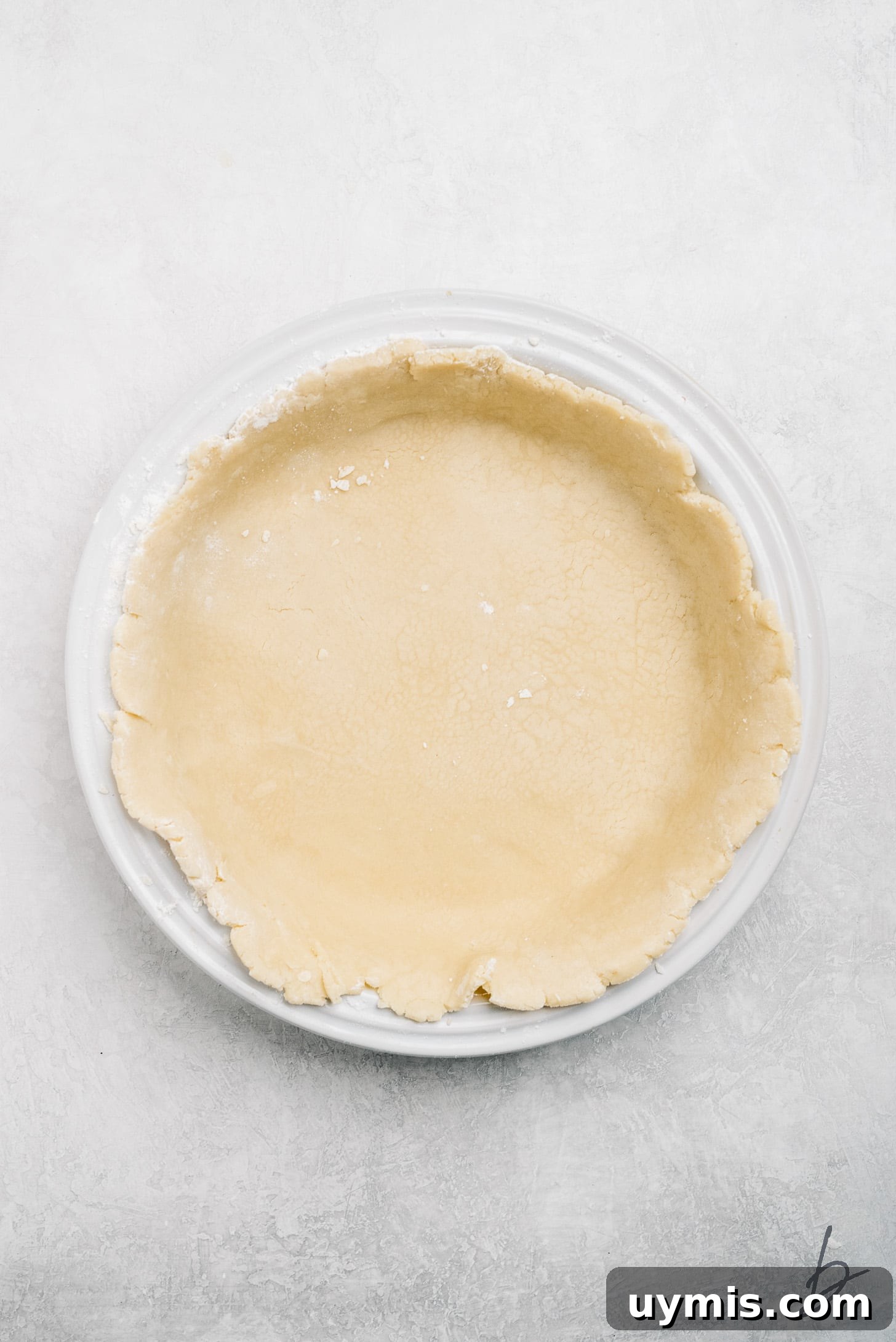
When I first started baking, I relied on pre-made crusts for convenience. Over time I learned that even the best filling can be undermined by a mediocre crust. After several attempts, I developed a crust that consistently delivers the texture and flavor I want—flaky, sturdy, and buttery.
A great pie begins with a great crust. This recipe focuses on three goals: a buttery flavor, delicate flakiness, and enough structure to hold your filling. It works for any classic pie and is also perfect for galettes, tarts, or even homemade Pop-Tarts.
Why this recipe works
This recipe yields a double crust so you can top a pie or freeze the second disc for later. No specialized equipment is required—if you don’t have a pastry cutter, two forks or a food processor will get the job done. The combination of butter and shortening gives reliable flavor and flakiness while staying easy to handle.
Ingredient notes
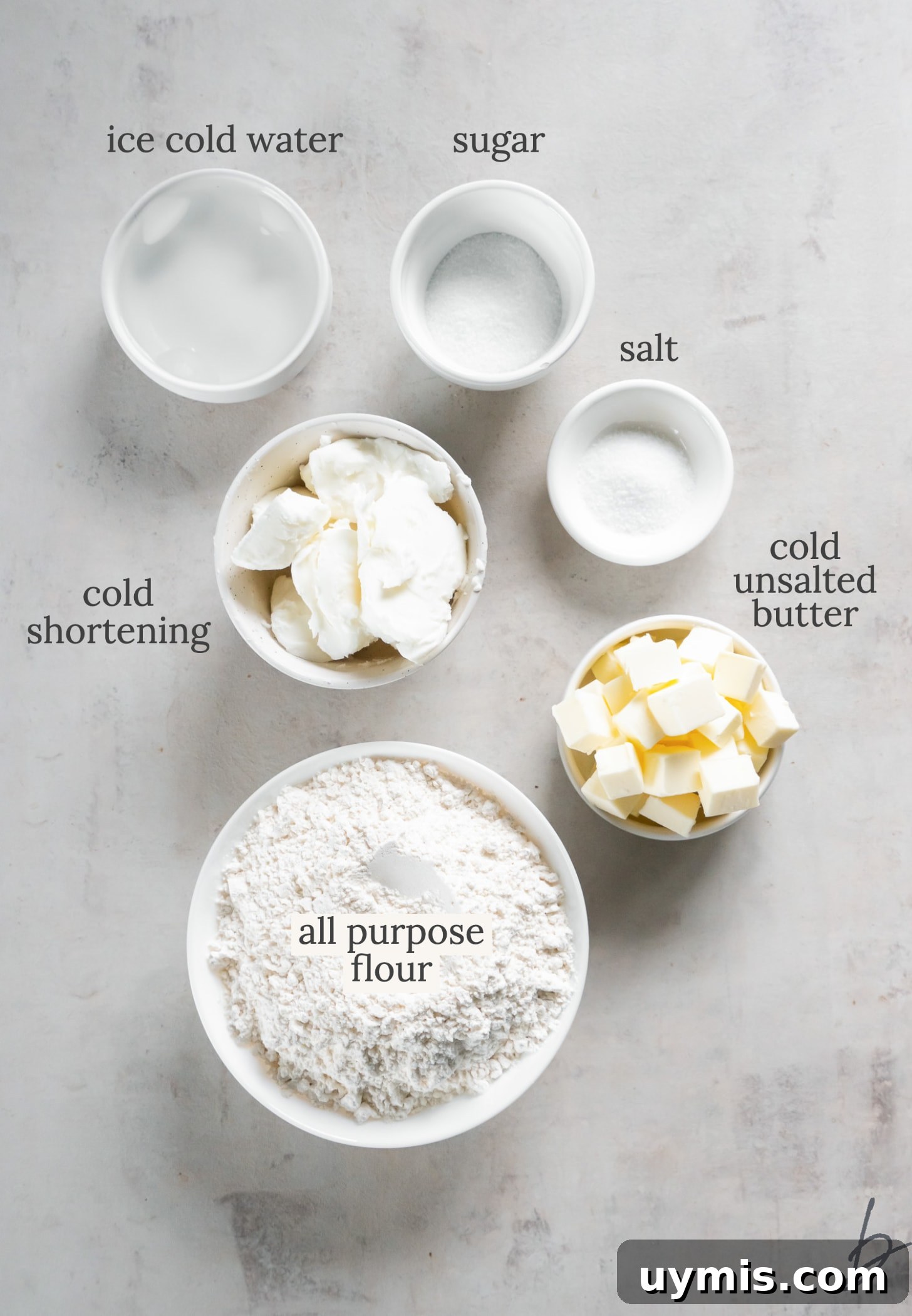
- Flour: Unbleached all-purpose flour provides the right protein for structure and reliable results.
- Sugar: Two tablespoons adds a touch of sweetness and helps the crust brown without making it sweet-tasting.
- Unsalted butter: Use cold butter for flavor and flaky layers; keep it refrigerated until you cut it into the flour.
- Shortening: Cold shortening raises the crust’s melting point and helps create flakiness; it balances the butter’s flavor.
- Ice-cold water: Adds just enough moisture to bind the dough while keeping it cold—use it sparingly so the dough doesn’t become tough.
Recipe variations
If you prefer an all-butter crust, replace the shortening with extra butter. Lard is another traditional option that gives excellent results for savory pies. For an ultra-tender crust, you can substitute 2 tablespoons of the ice water with 2 tablespoons of chilled vodka or a mild vinegar—these liquids can limit gluten formation and help the crust stay tender.
How to make homemade pie crust
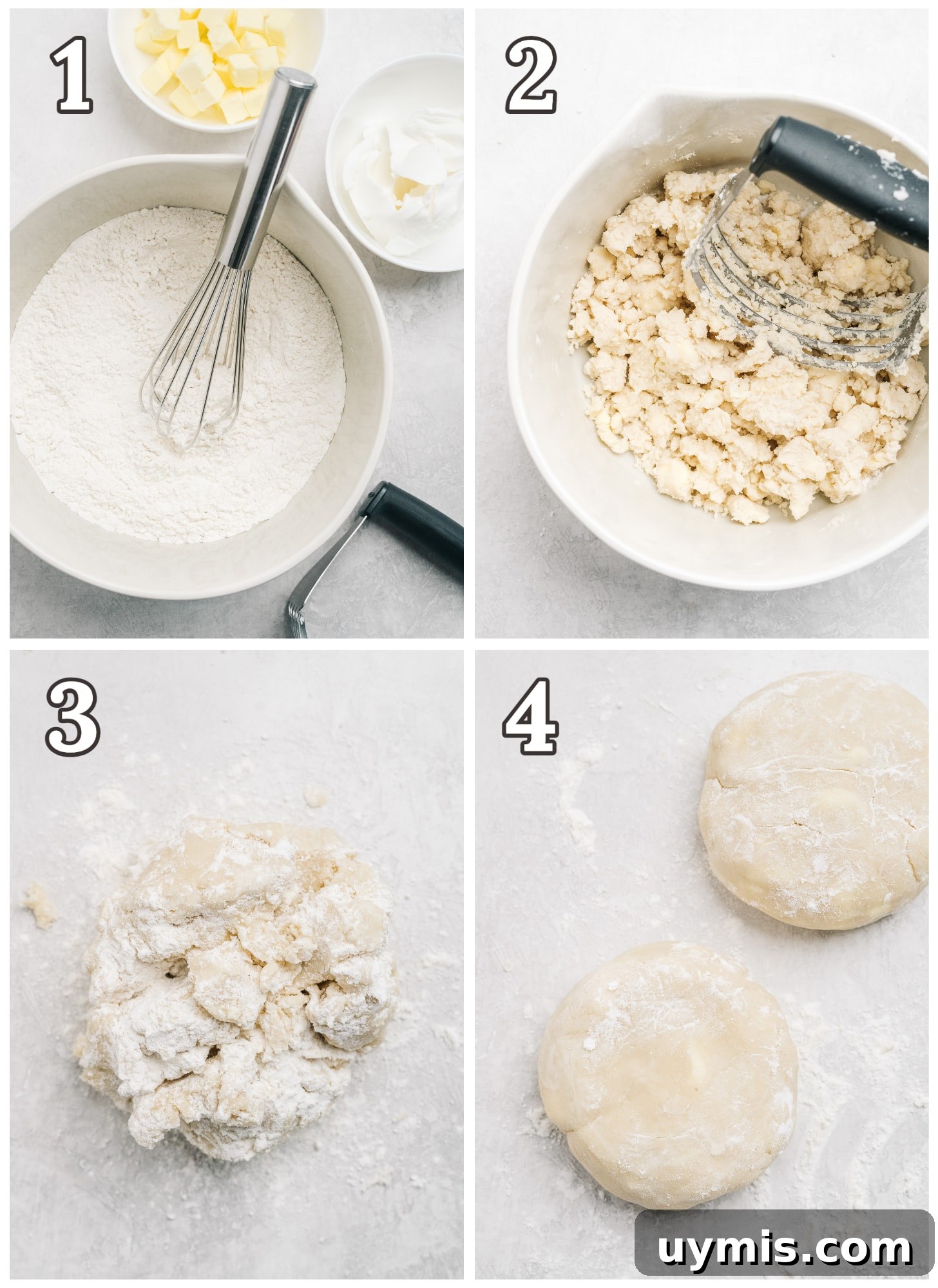
- Mix the dry ingredients. Whisk flour, sugar, and salt in a large bowl to combine evenly.
- Cut in the shortening and butter. Use a pastry cutter, two forks, or a food processor to cut the shortening in first until the mixture looks like coarse sand. Add the cold butter and cut until the pieces are about the size of small peas—some slightly larger bits are fine and add flakiness.
- Add ice-cold water a tablespoon at a time. Gently fold with a silicone spatula until large clumps form. Stop adding water as soon as the dough holds together; typically this is about 4–8 tablespoons depending on humidity.
- Form and divide the dough. Gather the dough into a ball using your hands, transfer to a lightly floured surface, and divide into two equal portions. Flatten each into a disc about 6 inches across.
- Wrap and chill. Wrap each disc tightly in plastic wrap and refrigerate for at least 1 hour before rolling, or keep refrigerated up to 3 days or frozen up to 3 months.
Expert tips
Keep everything cold—chilled butter, shortening, water, and even the mixing bowl if possible. Warm ingredients encourage gluten development and cause the fats to soften, which prevents the dough from forming flaky layers in the oven. Handle the dough as little as necessary and add only enough water for the dough to hold together; too much liquid will make the crust tough.
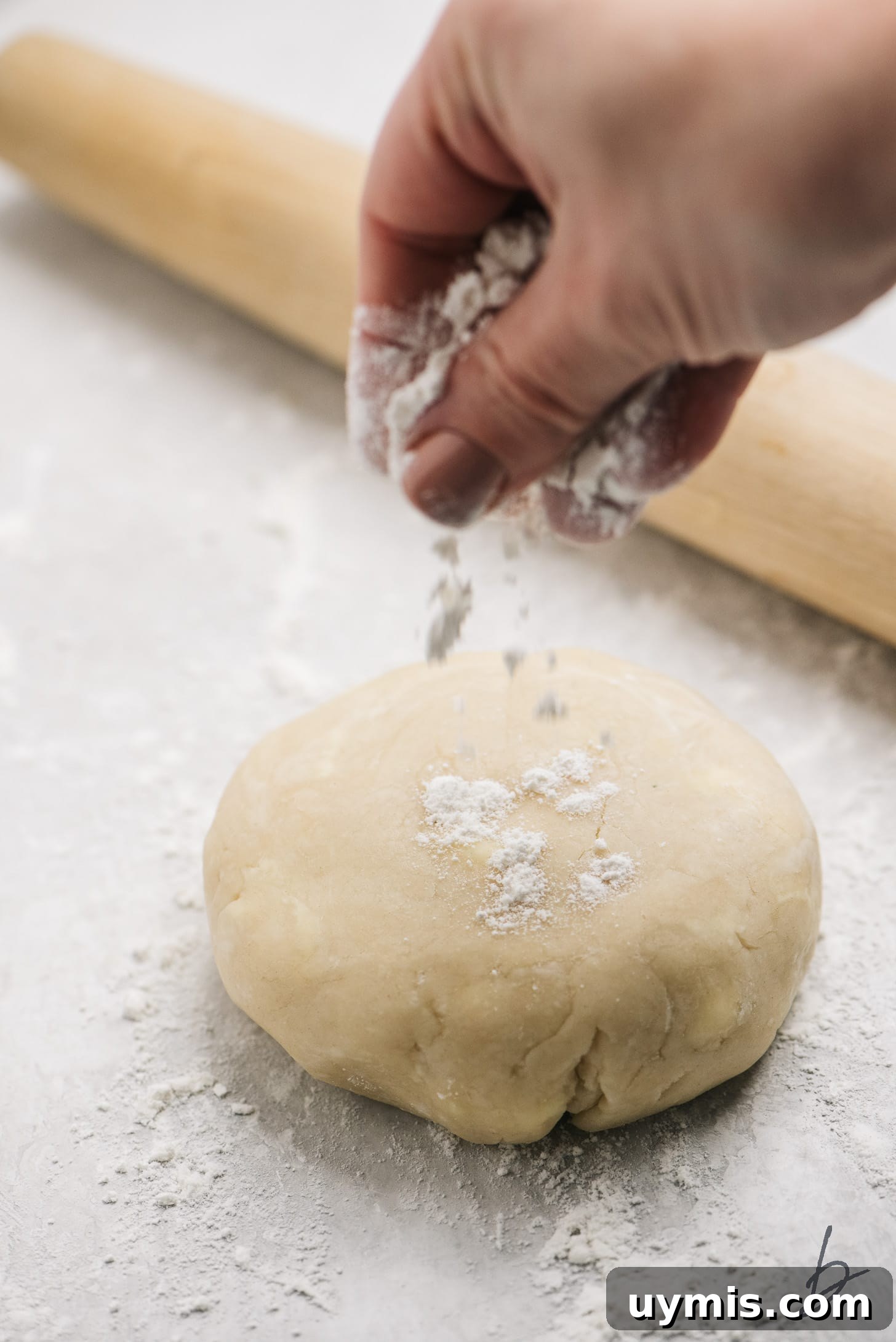
How to roll pie dough
Flour your surface and rolling pin. Light flouring prevents sticking—if the dough becomes tacky, lift it and dust flour underneath, especially in the center. Add a light dusting on top when needed.
Rotate and roll evenly. Turn the dough every few rolls to encourage a circular shape. Roll to just under 1/4 inch thick. For a standard 9-inch pie plate, aim for about a 12-inch diameter so the dough covers the plate with a bit to trim.
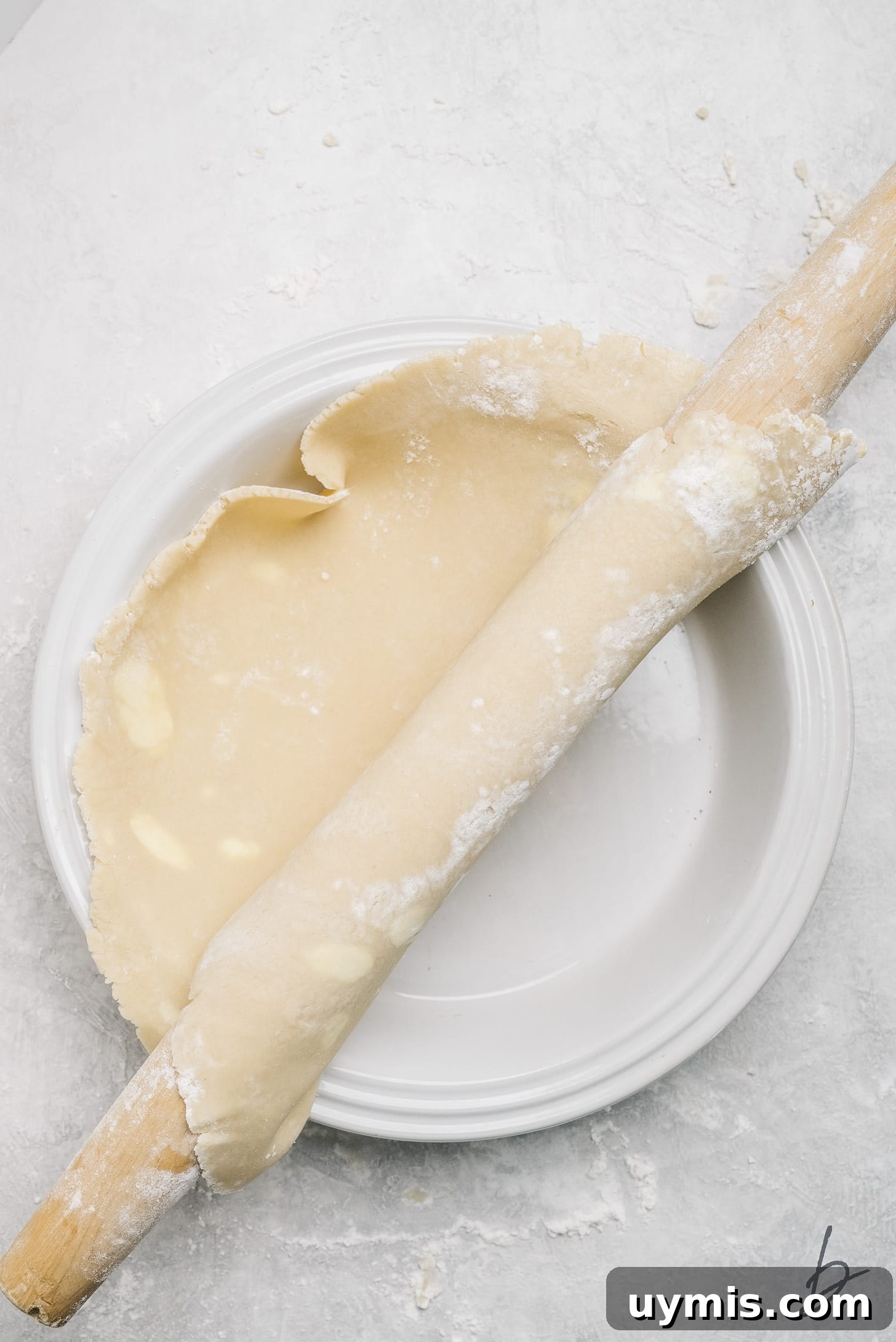
Transfer gently. Wrap the dough around the rolling pin to lift it, then unroll it over the pie plate. Press it gently into the bottom and sides, trim the excess, and flute the edge with your fingers or crimp with a fork.
Make ahead tips
Storage: Wrapped tightly, pie dough keeps in the refrigerator up to 3 days or in the freezer for up to 3 months. Thaw overnight in the fridge before using. If the dough is very cold after refrigeration, let it sit briefly at room temperature until it is pliable but still cool to the touch.
After fitting the rolled dough into the pie plate, chill it again until you are ready to add filling and bake—keeping the fat cold ensures the flakiest crust.
Frequently Asked Questions
Greasiness usually means too much fat. Reduce the butter or shortening by a tablespoon and test again until you reach the texture you prefer.
A tough crust most often results from overworking the dough or adding too much water. Start again, handling the dough as little as possible and using cold ingredients.
Yes. Halve the ingredients when you need only a single crust, for example for quiche or a galette.
Yes. Pulse the fat into the flour in short bursts until pea-sized crumbs form—avoid overmixing.
Related recipes
Once your crust is ready, try one of these favorite pie recipes.
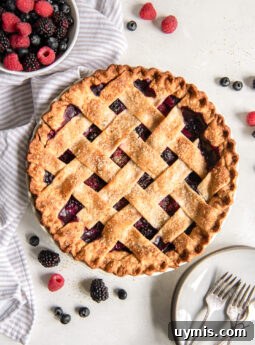
Triple Berry Pie from Scratch
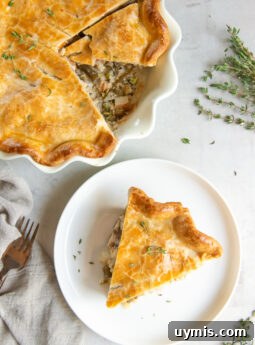
Leftover Turkey Pot Pie
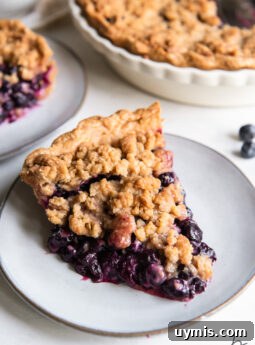
Blueberry Crumble Pie
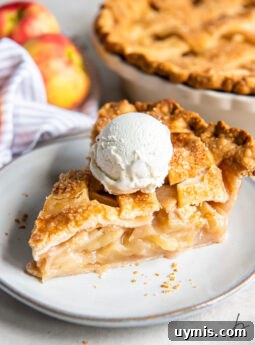
The Best Apple Pie
Did you love this recipe? Please rate it and consider leaving a comment—your feedback helps others bake with confidence.
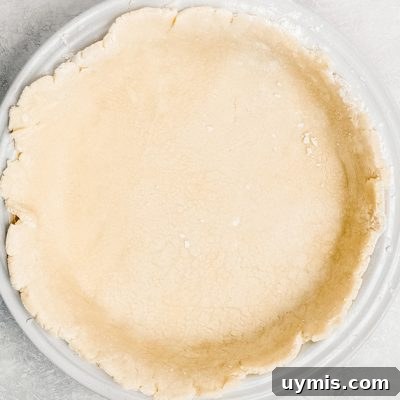
Homemade Pie Crust
Ingredients
- 2 ½ cups (312 g) unbleached all-purpose flour, plus extra for dusting
- 1 teaspoon salt
- 2 tablespoons (25 g) granulated sugar
- ⅔ cup (126 g) vegetable shortening, chilled and cut into 1/4-inch cubes
- 6 tablespoons (85 g) unsalted butter, chilled and cut into 1/4-inch cubes
- 4 to 8 tablespoons ice water
Instructions
- In a large bowl, whisk together the flour, salt, and sugar.
- Add the chilled shortening and, using a pastry cutter or two forks, cut it into the flour until the mixture resembles coarse sand.
- Add the cold butter cubes and cut them into the flour until the mixture looks like coarse crumbs with pea-sized bits of butter remaining.
- Sprinkle the ice-cold water one tablespoon at a time and fold gently with a rubber spatula. Stop when large clumps form—usually about 6 tablespoons total.
- Gather the dough into a ball, transfer to a lightly floured surface, and divide into two equal discs about 6 inches wide.
- Wrap each disc tightly in plastic wrap and refrigerate for at least 1 hour or up to 3 days.
- When ready to use, roll one disc on a floured surface to about 12 inches in diameter, wrap it around the rolling pin, and transfer to a 9-inch pie plate. Trim and flute or crimp the edges. Keep the second disc refrigerated for a top crust or another use.
Notes
- Use cold ingredients and minimize handling to keep the dough tender and flaky.
- Add water gradually and stop as soon as the dough holds together.
- If baking at high altitude, you may need a little more water and slightly less sugar.
Storage: Refrigerate wrapped dough up to 3 days or freeze up to 3 months. Thaw overnight in the fridge before using.
Serving: 1 slice — Calories: 213 kcal; Carbohydrates: 16 g; Protein: 2 g; Fat: 16 g; Saturated Fat: 6 g; Cholesterol: 15 mg; Sodium: 147 mg.
References: Martha Stewart and Baking Illustrated. | Photography by Our Salty Kitchen.