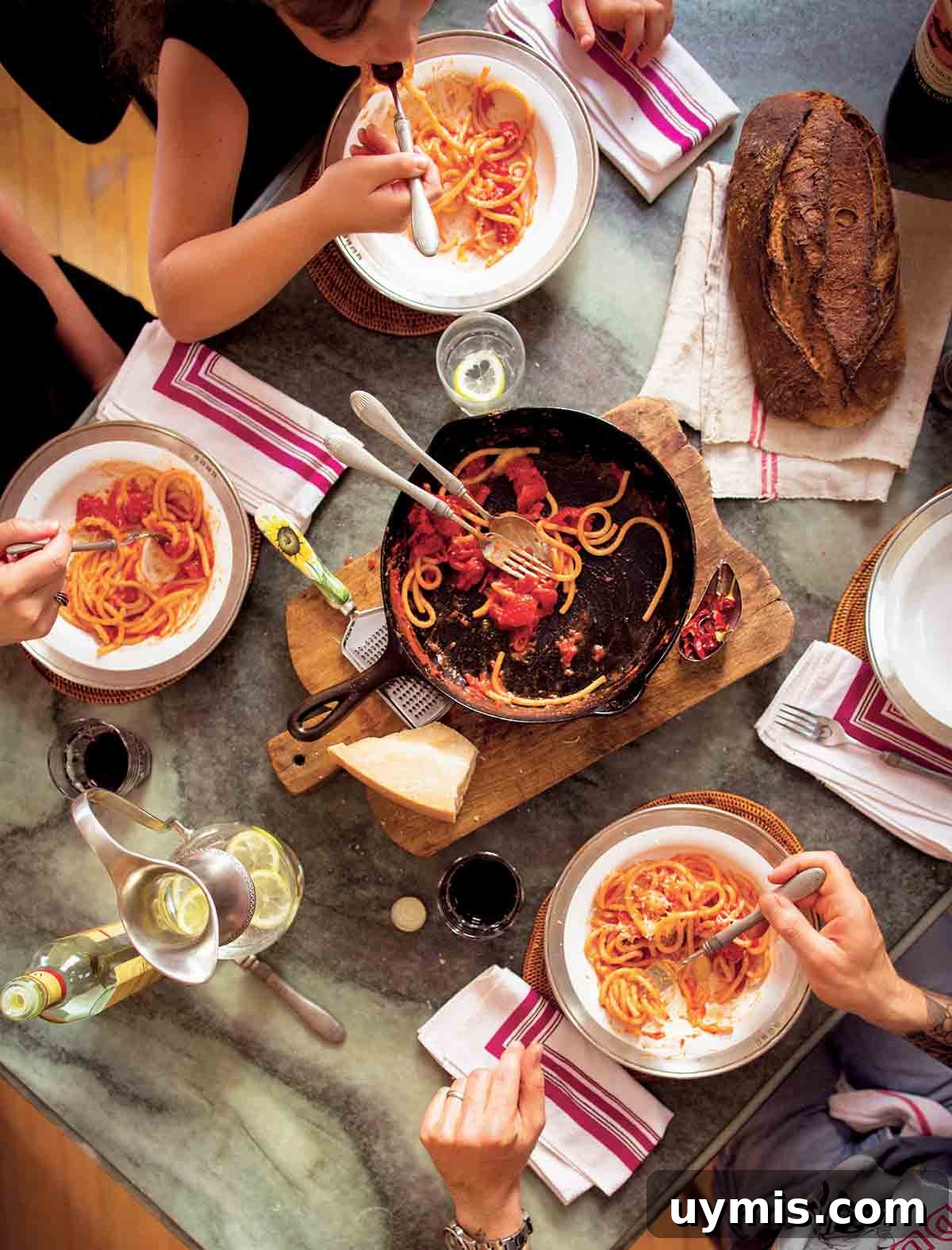
This sugo di pomodoro is a simple, authentic Italian tomato sauce made with whole peeled tomatoes, onion, garlic, extra-virgin olive oil, and fresh basil. It is quick enough for a weeknight pasta dinner, yet flavorful enough to serve when you have guests. With a short ingredient list and a total cooking time of about 45 minutes, this homemade red sauce is also an affordable, reliable recipe to keep in your regular dinner rotation.
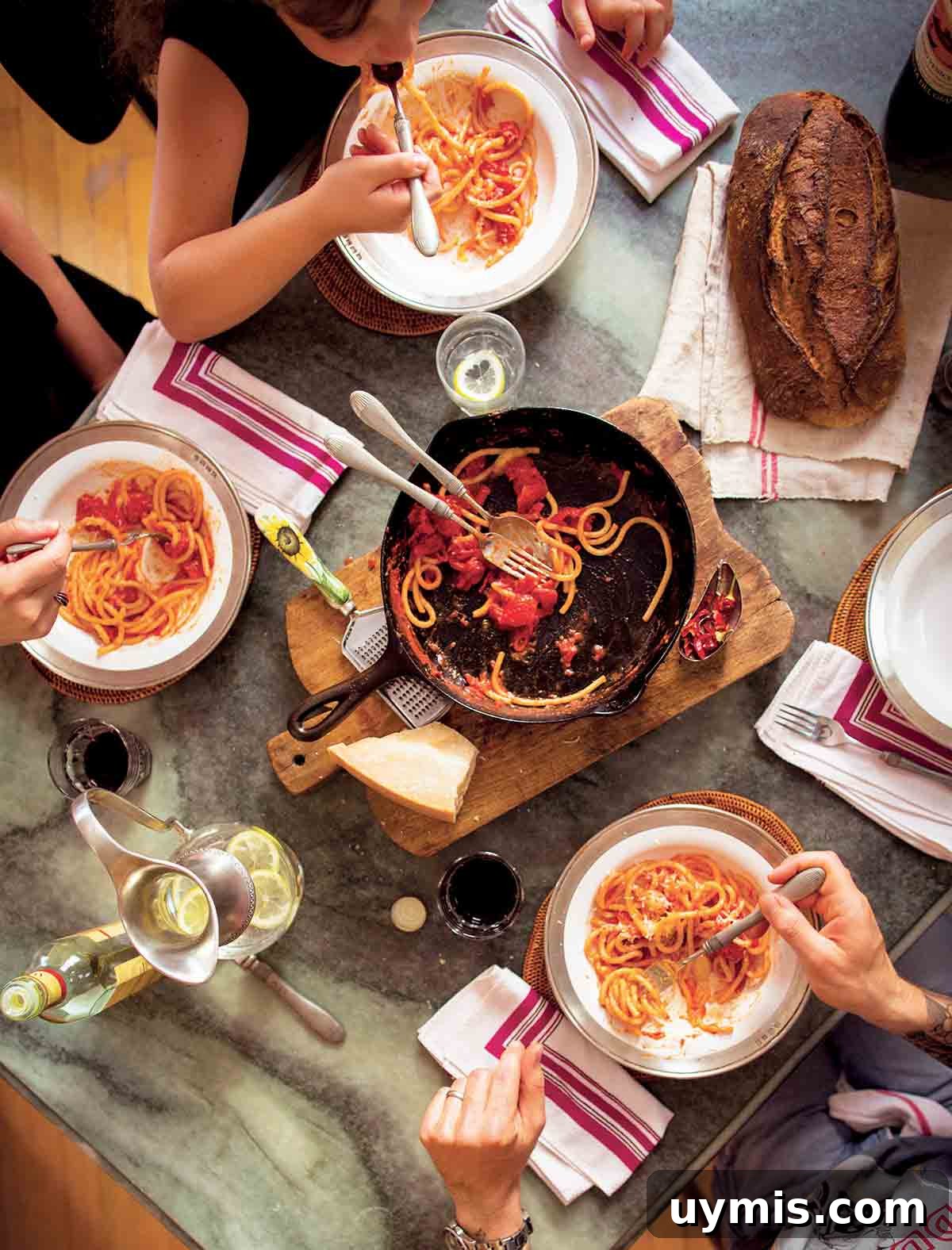
A good Italian tomato sauce does not need to be complicated. This sugo di pomodoro proves that a few carefully chosen ingredients can create a sauce that tastes fresh, balanced, and deeply comforting. The tomatoes provide body and brightness, the olive oil adds richness, the onion and garlic build a savory base, and the basil brings the sauce to life at the end.
Use this red sauce with spaghetti, rigatoni, penne, potato gnocchi, or any pasta shape that catches sauce well. It can also be used as a base for eggplant Parmesan, served with meatballs, spooned over chicken, or frozen for future meals. Whether you like your tomato sauce smooth or slightly chunky, this recipe can be adjusted easily to suit your preference.
Featured Review
This recipe will not let you down. Good olive oil makes a noticeable difference, so choose one with flavor. Whole peeled tomatoes also give the sauce a better texture, especially when crushed by hand or gently broken up while cooking. The irregular pieces make each bite more interesting.
Brie

Why Our Testers Loved This
Testers praised this sugo di pomodoro for being “simple, quick, and delicious,” as well as “elegant in its simplicity.” It is not a long-simmered Sunday gravy, but it is exactly the kind of dependable homemade tomato sauce that makes dinner easier and better. Several testers said they planned to make it again and again.
Notes on Ingredients
- Whole peeled tomatoes—The flavor of this Italian tomato sauce depends heavily on the tomatoes. Use the best whole peeled tomatoes you can find. San Marzano tomatoes are an excellent choice when available.
- Extra-virgin olive oil—Because the ingredient list is short, the olive oil is easy to taste. A good-quality extra-virgin olive oil gives the sauce richness and depth.
- Red onion—Red onion adds gentle sweetness and a savory base. If needed, another onion may be used, but keep the dice small enough to soften well.
- Garlic—Cook the garlic just until it begins to turn golden. Avoid burning it, since burnt garlic can make tomato sauce taste bitter.
- Red pepper flakes—These are optional. Add a pinch if you like a subtle heat in your red sauce.
- Fresh basil—Fresh basil gives the sauce its classic Italian aroma. Add it at the end so the flavor stays bright. In a pinch, dried basil can be used, though the flavor will be different.
Step-by-Step Instructions
- Prepare the tomatoes. For a smooth sauce, purée the tomatoes and their juices before cooking. For a chunkier sauce, leave them whole and break them apart in the pan with a wooden spoon.
- Sauté the onion and garlic. Warm the olive oil in a saucepan, add the onion, and cook until softened. Stir in the garlic and cook until it just begins to color. Add red pepper flakes, if using.
- Simmer the sauce. Add the tomatoes, season with salt and pepper, and simmer over medium-low heat until slightly reduced and flavorful.
- Adjust the texture. If the sauce is thinner than you like, continue simmering uncovered until it reaches your preferred consistency.
- Finish with basil. Stir in the torn basil leaves, remove the pan from the heat, and serve with pasta or use as desired.
For an easy and inexpensive meal, toss this tomato sauce with pasta or gnocchi and finish with Parmesan cheese, if desired. For a heartier dinner, serve it with beef meatballs. It can also be used for eggplant Parmesan, chicken Parmesan, baked pasta, or as a simple red sauce for quick family meals.
Add a small pinch of baking soda to help neutralize the acidity. You can also add a small pinch of sugar to balance the flavor. Add either option gradually, stir well, and taste before adding more.
Pro Tips & Troubleshooting
- If your finished sauce is too thin, simmer it uncovered for 15 to 20 minutes, or until it reduces to the consistency you like.
- This recipe makes enough sauce for about one pound of pasta, though those who prefer very saucy pasta may want to use slightly less pasta.
- For the best flavor, taste and adjust the salt and pepper at the end of cooking.
- For a smooth sauce, use a food processor or immersion blender before cooking. For a rustic sauce, crush the tomatoes by hand or break them up in the pan.
- Leftover sauce can be stored in a sealed container in the refrigerator for up to five days.
- The sauce can be frozen for up to six months. Thaw it in the refrigerator before reheating gently on the stovetop.
- This recipe is naturally suitable for gluten-free, dairy-free, and vegan diets when served with compatible accompaniments.

More Great Tomato Sauce Recipes

Sofregit ~ Catalan Tomato Sauce
2 hrs 10 mins
Freezer Tomato Sauce
1 hr 30 mins
Spicy Marinara Sauce
1 hr

Romesco Sauce
20 mins
Once you know how to make a clean, balanced tomato sauce like this sugo di pomodoro, you have a base for countless meals. Keep it simple with pasta, enrich it with meatballs, use it in baked dishes, or freeze a batch for nights when dinner needs to happen quickly. This is the kind of classic Italian red sauce that earns a permanent place in the kitchen because it is practical, flexible, and satisfying.
Write a Review
If you make this recipe, consider leaving a review, a rating, and a photo in the comments. Feedback from home cooks helps others decide how to serve and adapt the sauce.

Sugo di Pomodoro ~ Authentic Italian Tomato Sauce
David Leite
Ingredients
- One (28-ounce) can whole peeled tomatoes
- 2 tablespoons extra-virgin olive oil
- 1/3 red onion, cut into medium dice
- 3 garlic cloves, finely chopped
- Pinch crushed red pepper flakes, optional
- Sea salt and freshly ground black pepper
- 2 tablespoons torn fresh basil leaves
Instructions
-
For a smooth red sauce, add the tomatoes and their juices to a food processor or use an immersion blender directly in the opened can. Purée until smooth. For a chunky sauce, leave the tomatoes as they are and break them up later in the pan with a wooden spoon.
-
In a large saucepan, warm the olive oil over medium heat. Add the onion and cook until softened, 5 to 6 minutes. Add the garlic and cook for 2 to 3 minutes, just until it begins to brown. Stir in the red pepper flakes if you want a little heat.
-
Add the tomatoes and season with salt and black pepper. Reduce the heat to medium-low and simmer, stirring occasionally, for about 30 minutes, until the sauce reduces slightly. If using whole tomatoes, break them into pieces as they cook.
-
If the sauce is still thinner than you prefer, simmer it uncovered until it reaches the desired consistency.
-
Stir in the basil and remove the pan from the heat. Toss with pasta, spoon over gnocchi, or use in your favorite Italian dishes.
Notes
- Fixing acidic sauce—If the tomato sauce tastes too acidic, stir in a small pinch of baking soda. A small pinch of sugar can also help balance the flavor.
- Storage and freezing—Store leftover sauce in a sealed container in the refrigerator for up to 5 days or freeze for up to 6 months. Thaw in the refrigerator before reheating.
- Dietary information—This sauce is suitable for gluten-free, dairy-free, and vegan diets when served with appropriate pasta or sides.

Adapted From
Extra Virgin
Nutrition
Nutrition information is automatically calculated and should be used only as an approximation.
Recipe Testers’ Reviews
This sugo di pomodoro was tested by home cooks who appreciated its speed, flexibility, and clean tomato flavor. Their comments show how well the sauce works for weeknight pasta, make-ahead meals, and simple Italian cooking.

Pat Francis
This sugo recipe is one to make again and again. It is easy and fast, but it also tastes like a high-quality sauce made from simple ingredients. Its strength is its balance: nothing is overworked, and every ingredient has a purpose.
Puréeing the tomatoes with an immersion blender before cooking gave the sauce a mostly smooth texture with a few small pieces of tomato. That made it easier to control the final consistency. Fresh basil is best, though dried basil can work in a pinch if added carefully.
For those who like plenty of sauce on their pasta, this batch may be best with 10 to 12 ounces of pasta rather than a full pound. San Marzano tomatoes and a pinch of hot pepper flakes worked especially well.

Gene C.
This is a quick and satisfying Italian tomato sauce. It is not a long-cooked Sunday gravy with meats, but it is exactly the right sauce for a fast pasta dinner or for using in dishes such as eggplant Parmesan or chicken Parmesan.
Pulsing the tomatoes in a food processor keeps some texture while still making the sauce cohesive. Another useful approach is to separate the tomatoes from the canned liquid, then add the liquid as needed while the sauce cooks. That makes it easier to control how thick or loose the sauce becomes.
San Marzano tomatoes are preferred for their flavor and texture, but any good-quality canned tomatoes can produce a fine sauce. This recipe is also practical for doubling or quadrupling and freezing in portions for future dinners.

Linda Pacchiano
This sugo di pomodoro is similar to a basic marinara sauce and can be paired with almost any type of pasta. The red onion adds good flavor, but another onion or a few shallots can be used if that is what you have available.
An immersion blender is a simple way to purée the tomatoes without making extra work. Taste the sauce at the end and adjust the seasoning as needed. For the best pasta, cook it until just shy of done, then add it to the pan with the sauce and let the two finish together for a minute or two.
The sauce is simple, so the quality of the canned tomatoes matters. Choose flavorful whole peeled tomatoes whenever possible.

Sandy Hill
This basic Italian tomato sauce smells wonderful while it simmers. An immersion blender creates a smoother texture, which is ideal for anyone who prefers a less rustic sauce. The finished batch makes nearly three cups of sauce and can be tossed with cooked spaghetti for four generous servings.
The sauce also freezes well, making it useful for quick pasta dinners. Spicy or sweet sausage could be added for a heartier variation, and Parmesan cheese is a natural finishing touch for those who enjoy it.

Jennifer Bradley
This is a perfect no-fuss Italian tomato sauce for any time of year, especially in summer when fresh basil is plentiful. It takes only a little more effort than opening a jar of store-bought sauce, but the flavor is fresher and more rewarding.
Blending the tomatoes before cooking creates a sauce that is mostly smooth with a little texture. After the initial simmer, the sauce can be cooked uncovered for additional time if a thicker consistency is desired. It works well for a family pasta dinner and can leave enough extra sauce for another dish, depending on how much pasta is served.