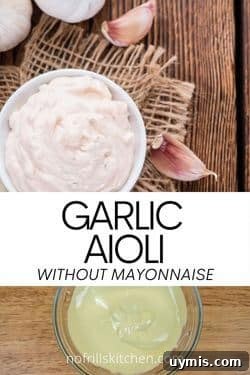
I admit the phrase “garlic aioli” can sound redundant — aioli literally means “garlic and oil” — but today the word aioli is commonly used to describe a garlic-flavored mayonnaise-style sauce. If you want a true homemade aioli without using store-bought mayonnaise, you can absolutely make one from scratch. This version uses egg yolks and a slow oil emulsion to produce a creamy, garlicky sauce that’s perfect for dipping, spreading, or dressing.
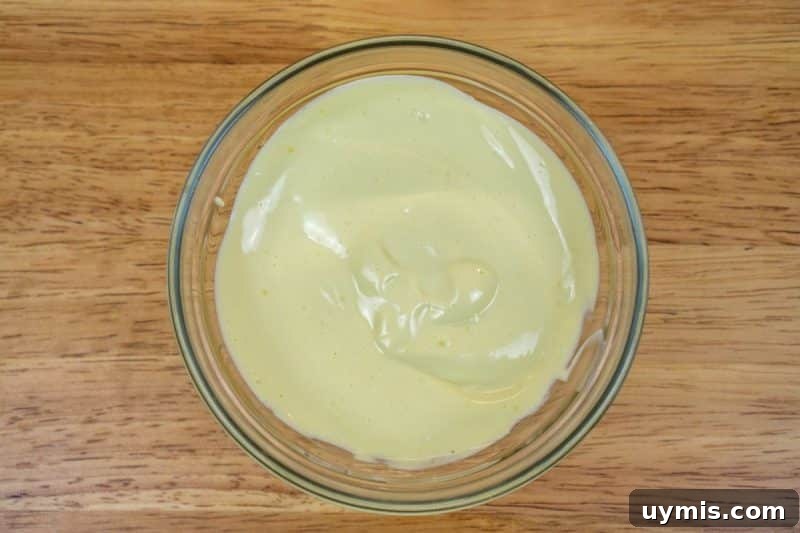
How to Make Garlic Aioli Without Mayo
Traditional aioli from Catalonia is an emulsion of garlic and olive oil made by crushing garlic and whisking in oil until it thickens. That classic method can be time-consuming and requires a mortar and pestle for authenticity. A practical home version uses egg yolks to stabilize the emulsion, making the process faster and more reliable while delivering a texture similar to store-bought mayonnaise.
This recipe is simple, but success depends on a slow, steady technique when adding the oil. Using a blender or an immersion blender makes the process more foolproof and produces a smooth, stable aioli. If you prefer a hand method, you can whisk vigorously, but be prepared for more elbow grease.
Garlic Aioli Without Mayo
Summary: Emulsify egg yolks, grated garlic, and lemon juice, then very slowly stream in oil while blending until thick and creamy. Season and chill.
Servings: 8 | Prep time: 10 minutes | Total time: 10 minutes
Ingredients
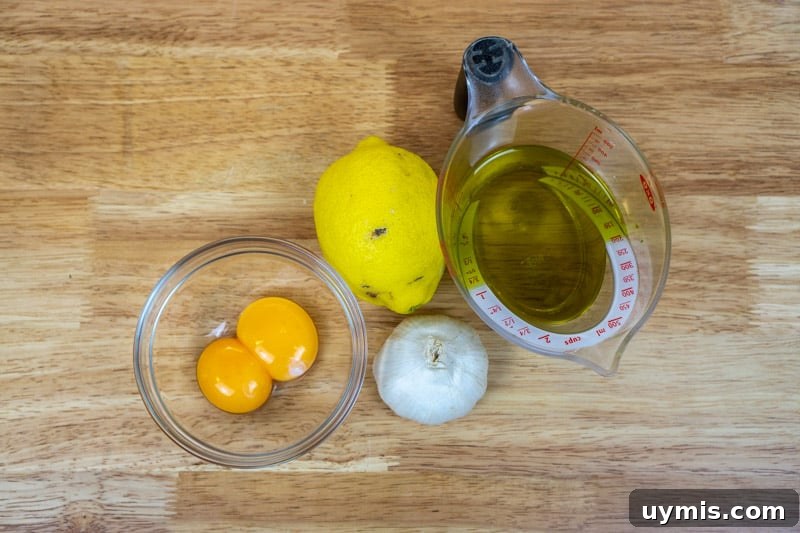
- 2 egg yolks (room temperature recommended)
- 3 cloves garlic, grated or finely minced
- 1 tsp fresh lemon juice
- 120 ml (½ cup) neutral oil such as canola, sunflower, or avocado
- 120 ml (½ cup) extra virgin olive oil
- Salt, to taste
Instructions
-
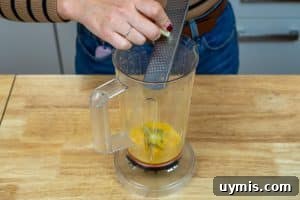
Place the egg yolks in the jar of a blender. Add the grated garlic and the lemon juice. Pulse once or twice just to combine the ingredients — you don’t need to over-blend at this stage.

-
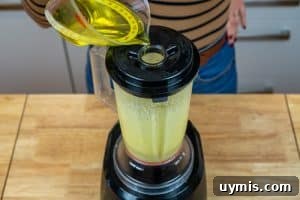
Start the blender on high. With the blender running, very slowly stream in the oils, drop by drop at first. You can combine both oils in one measuring cup and pour from that cup. The initial slow addition is crucial — adding oil too quickly can break the emulsion and cause the mixture to separate.
After about two-thirds of the oil is incorporated and the mixture has thickened, you can increase the stream to a slow, steady pour until all the oil is incorporated.
-
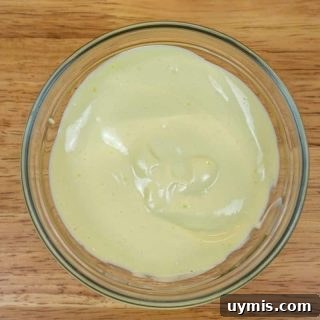
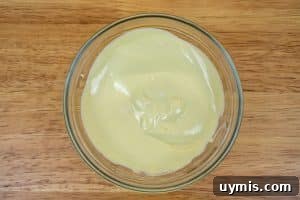
When the aioli is thick and glossy, transfer it to a small bowl and season with salt to taste. Serve right away or refrigerate until ready to use.
Nutrition (approximate per serving)
Calories: 260 kcal | Carbohydrates: 1 g | Protein: 1 g | Fat: 29 g | Saturated fat: 4 g | Cholesterol: 49 mg
Note: Nutrition values are estimates and provided for guidance only.
Tips and Variations
- Room temperature yolks: Letting yolks warm to room temperature helps the emulsion form more reliably, but cold eggs can work if you proceed slowly.
- If the aioli breaks: Rescue a separated sauce by starting a new egg yolk in a clean bowl and whisking the broken aioli into it slowly, or add a teaspoon of warm water while whisking to help rebind.
- Garlic intensity: Adjust the amount of garlic to taste. Grating or mincing the garlic yields a stronger, more immediate flavor than whole cloves crushed in a mortar.
- Oil choices: Using a mix of neutral oil and extra virgin olive oil balances richness and flavor. For a milder olive taste, increase the neutral oil proportion.
- Storage: Store aioli in an airtight container in the refrigerator for up to 3–4 days. Discard if it develops an off smell or appearance.
- Serving ideas: Use this aioli as a dip for fries or vegetables, a spread for sandwiches and burgers, or a sauce for grilled fish and vegetables.
Making aioli from scratch is straightforward once you master the slow oil incorporation. Take your time, and you’ll have a creamy, garlicky sauce that’s far superior to most prepared alternatives.