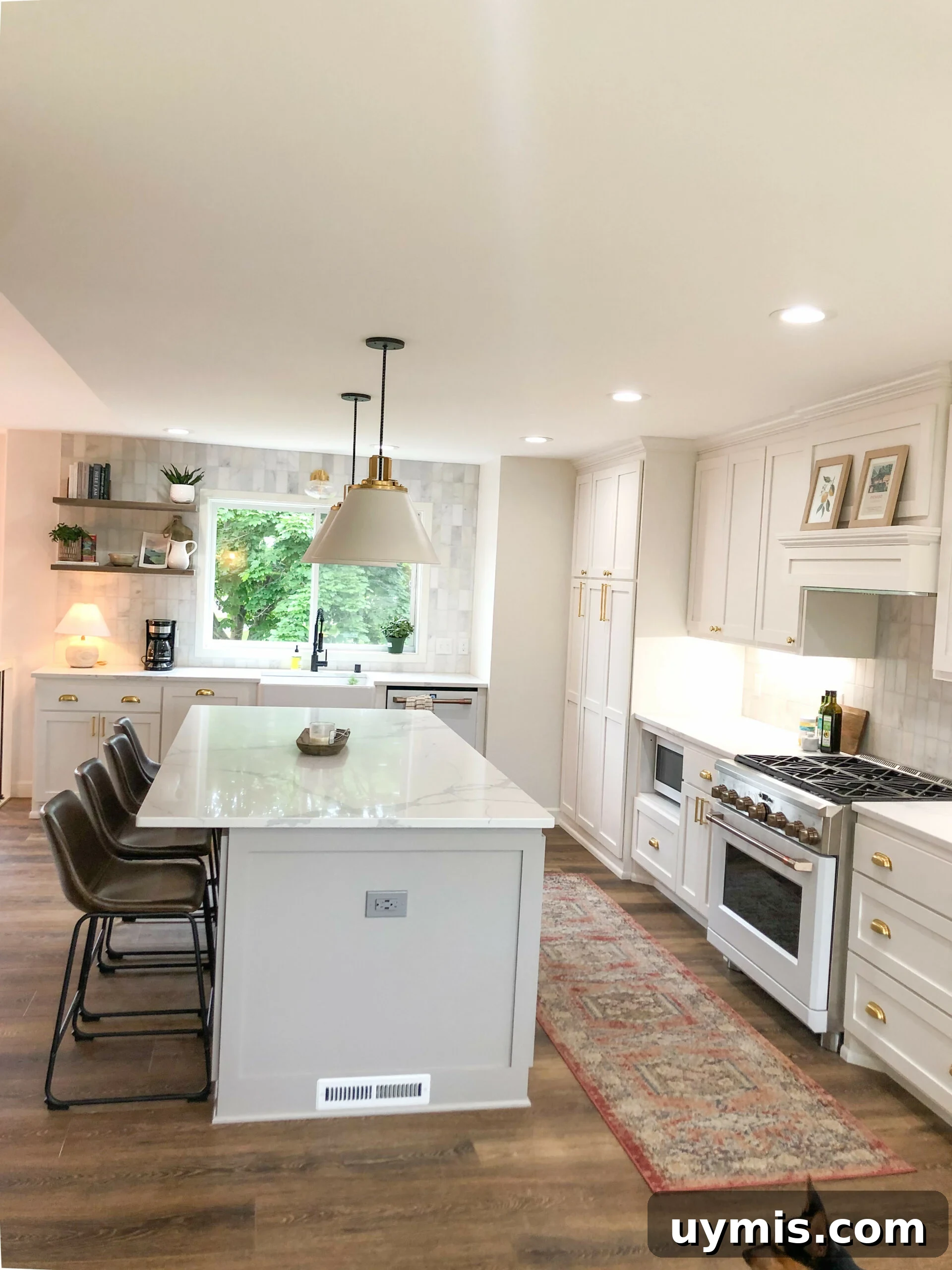
It has been one full year since we moved into our new home, and we have finally completed a major round of renovations, including a completely new kitchen. When we first started thinking about selling our previous house and moving closer to my grandparents, one of the things I hoped to find was a home with a kitchen that needed work.
I did not really want a house with a recently remodeled kitchen. After walking through so many homes, I realized that even the newer kitchens were rarely designed in a way that matched my style, storage needs, or preferred layout. A kitchen can look nice and still be frustrating to use every day. I knew that if we bought a home with someone else’s “new” kitchen, I would eventually run into the same pain points and wish we had done it ourselves.
We moved into this house knowing from the beginning that we would be building an addition and remodeling the kitchen. There was not a true dining room space, and the kitchen layout did not work well for how we live. The week we closed on the house, we started gathering quotes and meeting with contractors. Because we knew the flooring would be replaced throughout the main living level, we did not fully unpack the kitchen or much of the main floor.
Living out of boxes from April 2020 until March 2021 was not ideal, but in the end it was worth it. Waiting allowed us to make thoughtful decisions and avoid settling for temporary fixes that would not have solved the bigger problems.
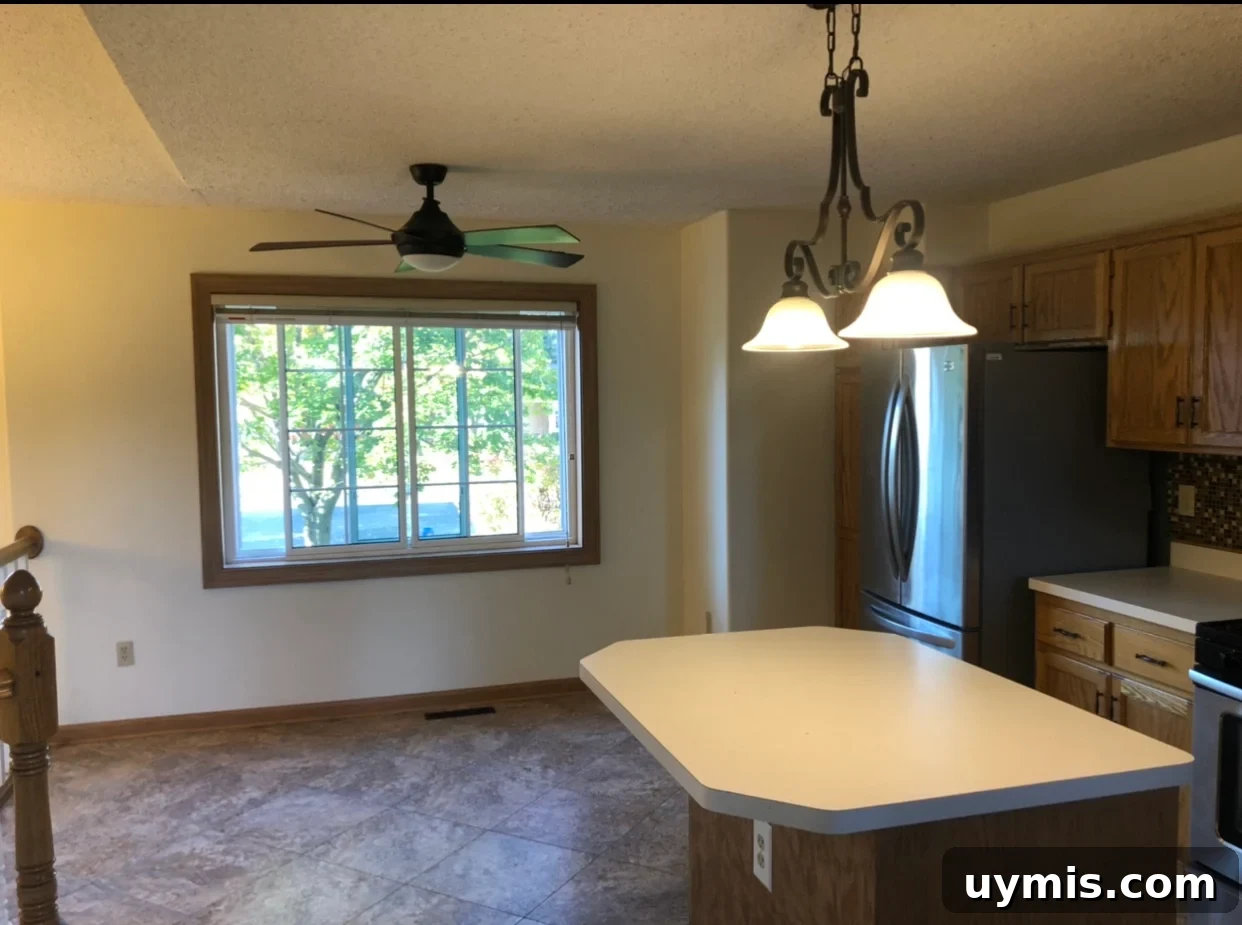
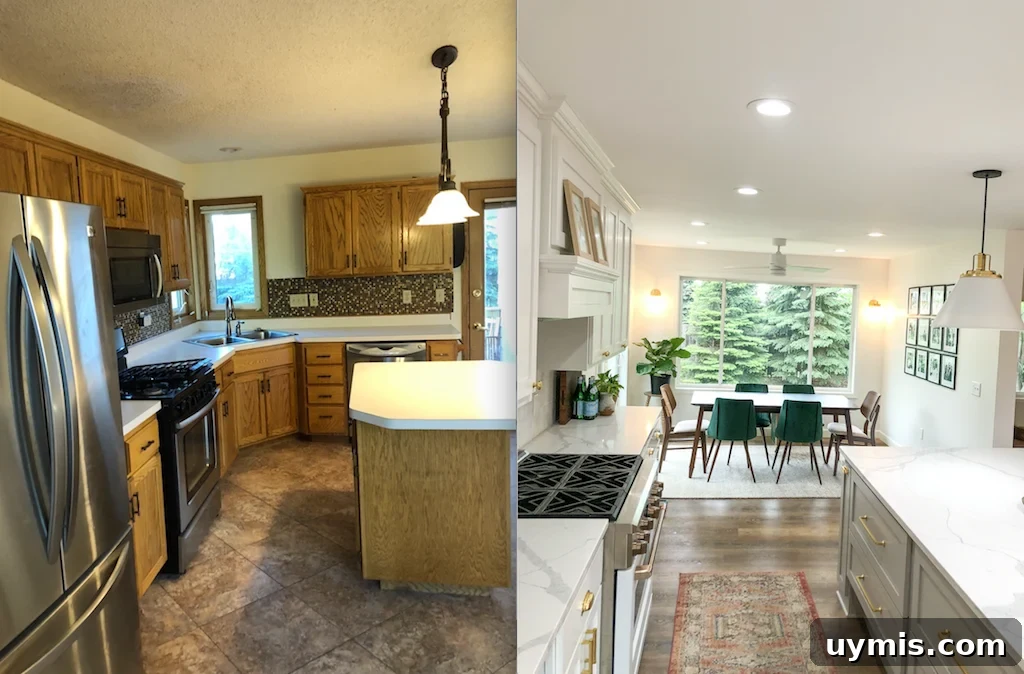
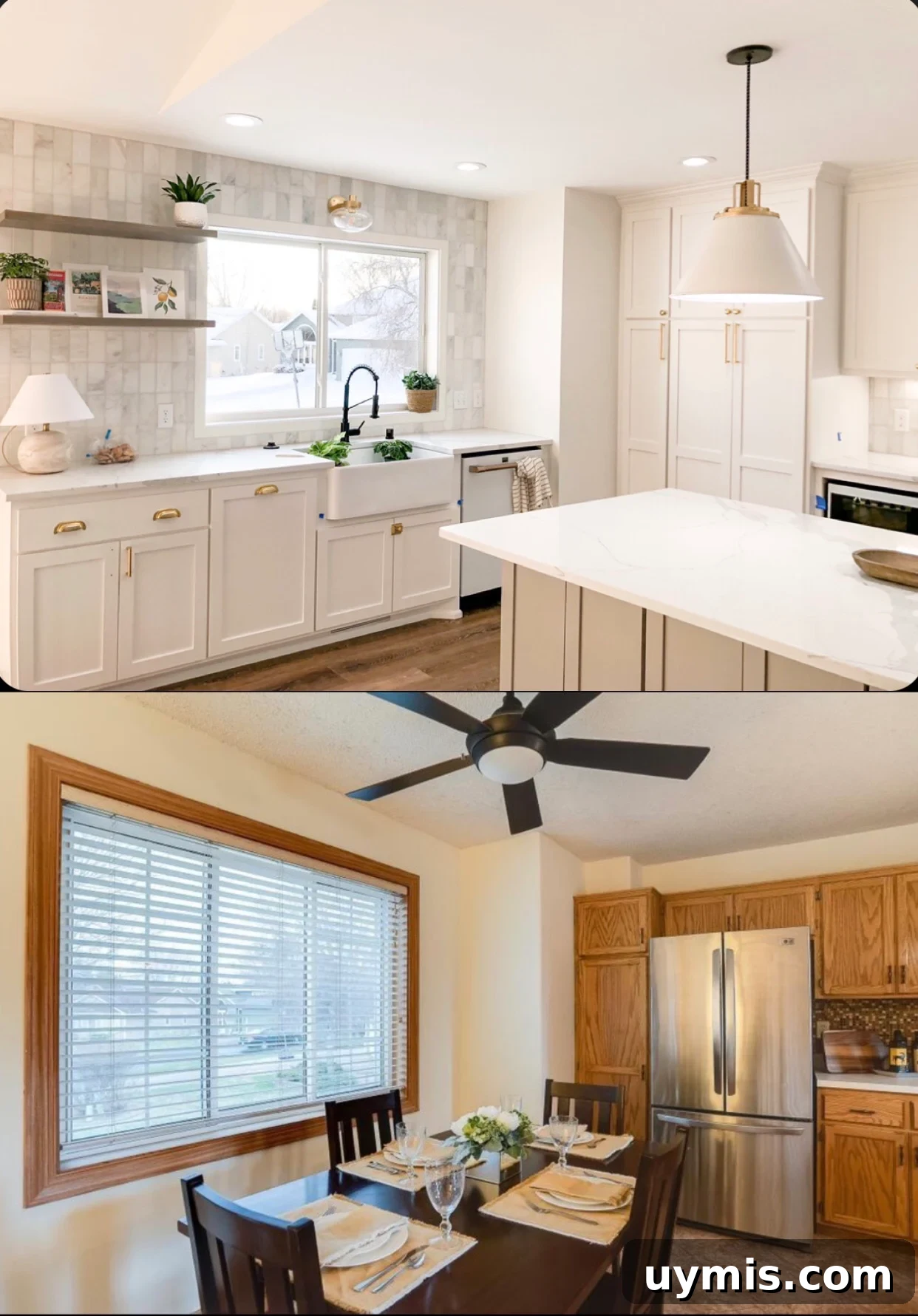
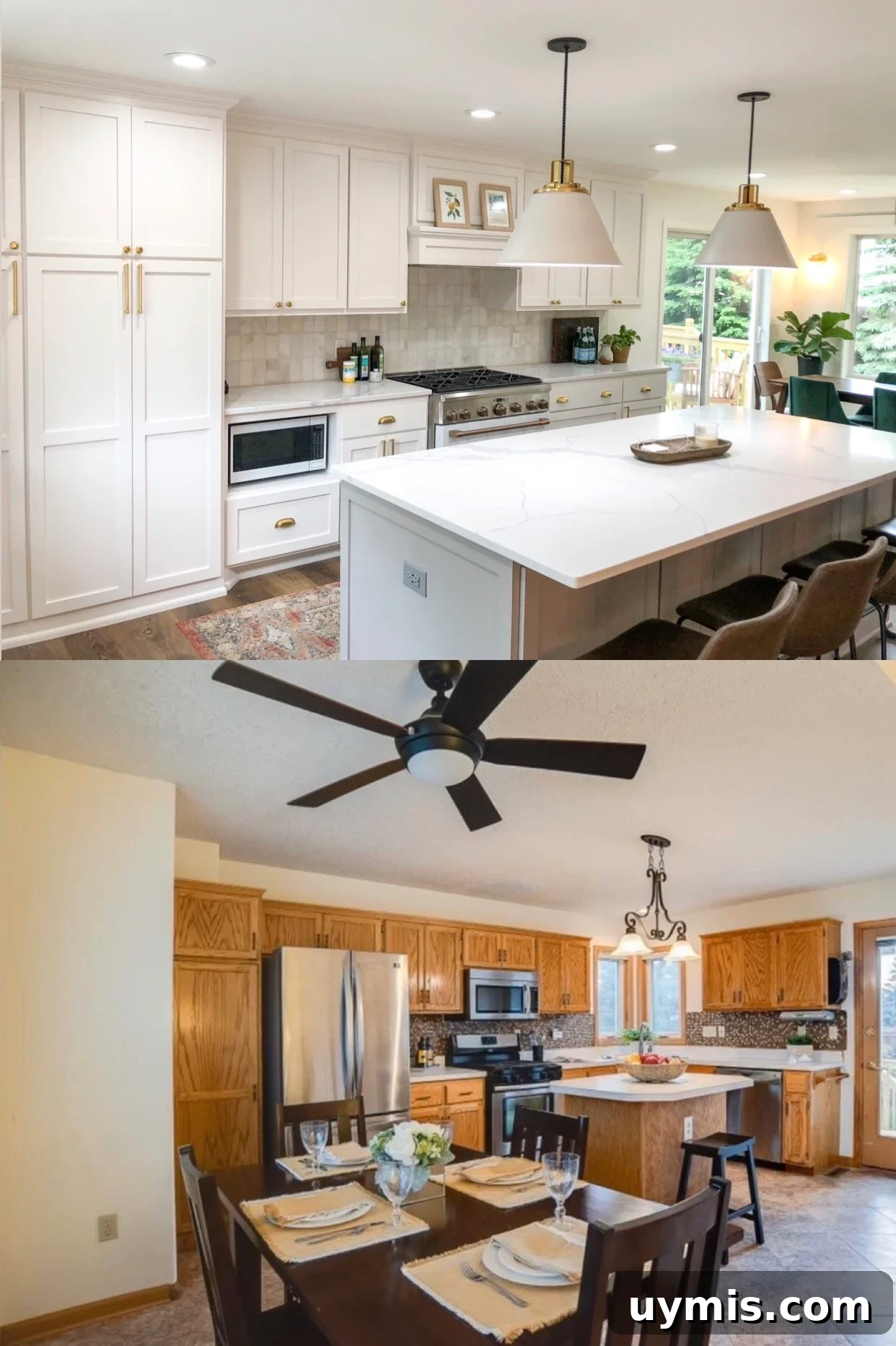
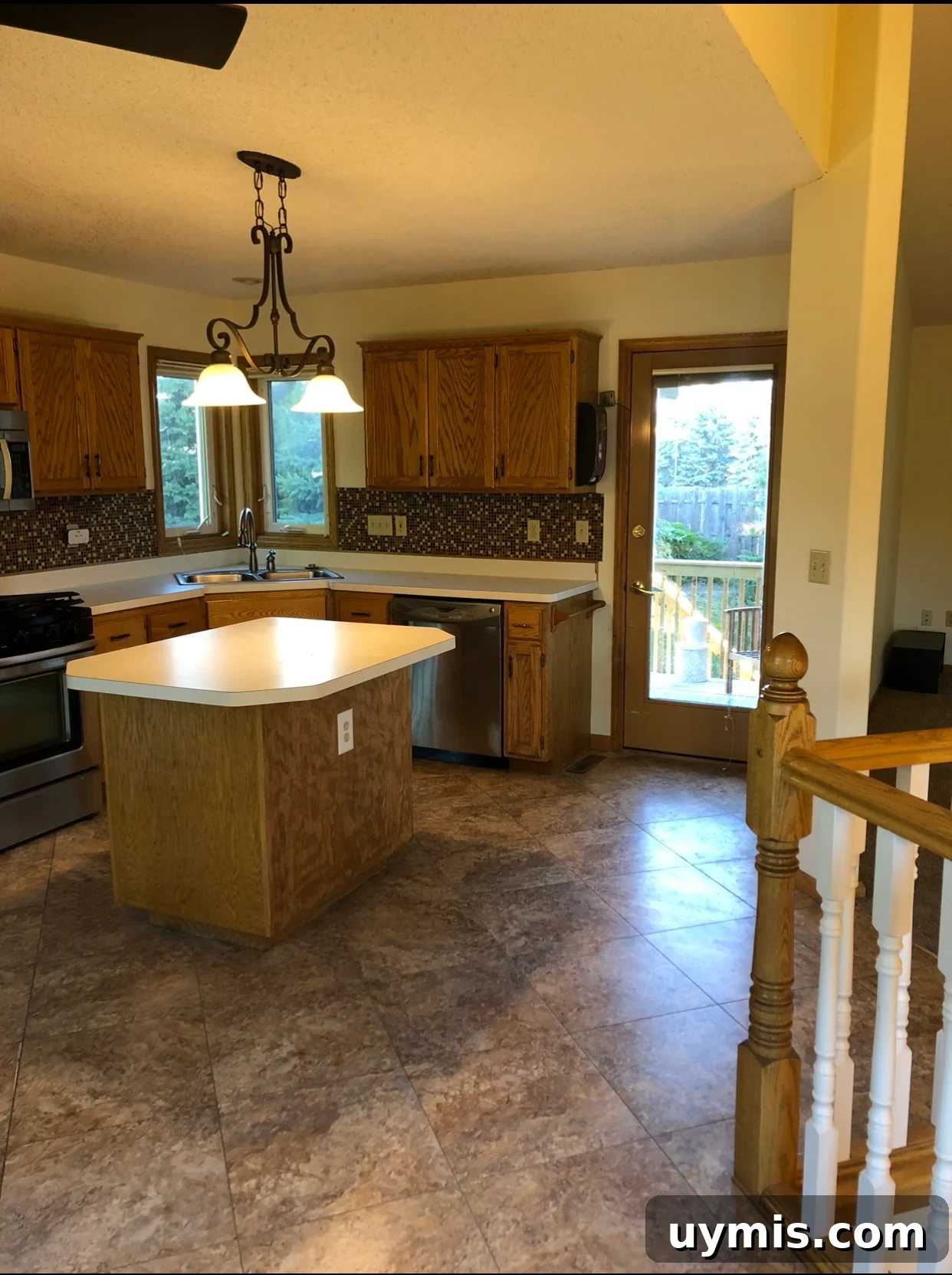
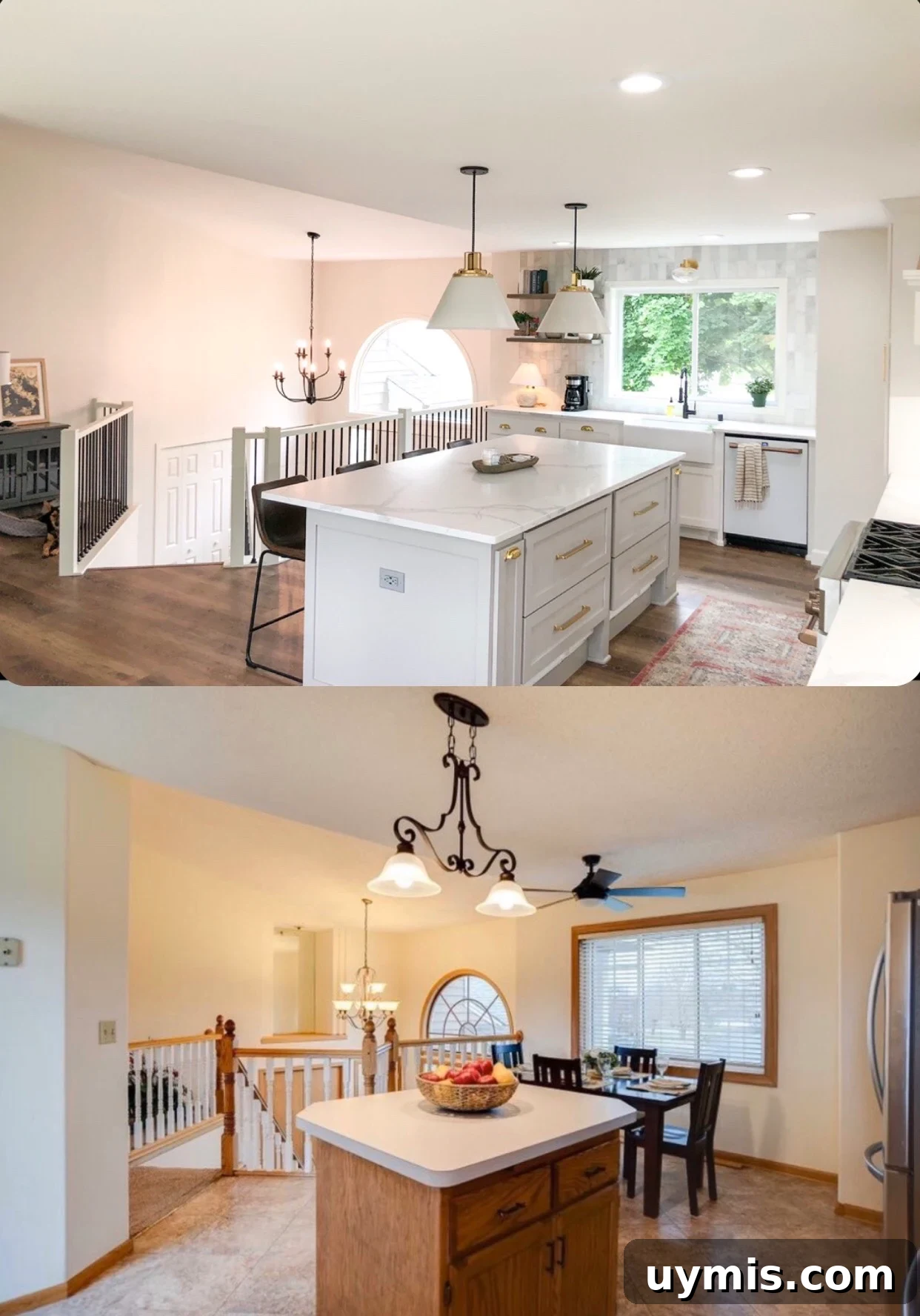
The original kitchen had several issues that needed to be fixed or updated. The island was very small and positioned too close to the oven. When the oven door was open, there was no room for anyone to stand directly in front of it.
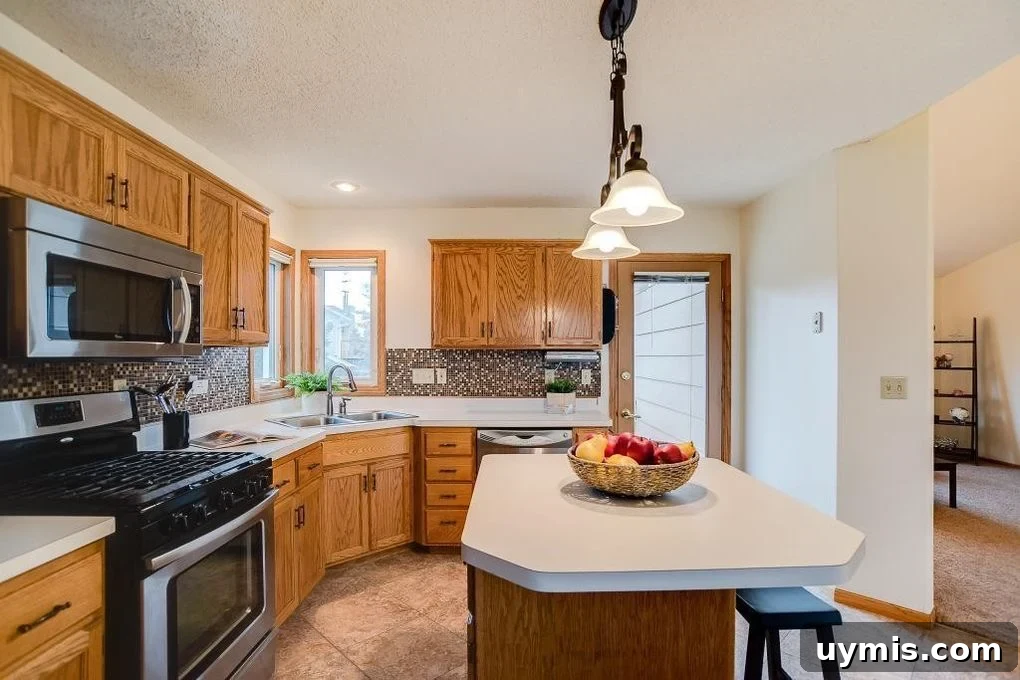
You had to stand off to one side to put dishes in or take them out, which was especially inconvenient with hot, heavy pans. The island only had space for one seat, and the dining area felt squeezed against the wall and railing. Many of the cabinet drawers were also old, warped, and difficult to open and close.
Choosing Our Contractor
We met with several recommended contractors, and the process was similar with each one. They walked through the house with us, listened to what we wanted to change, and then prepared a proposal that included the major parts of the project, such as plumbing, electrical, HVAC, carpentry, painting, and related work.
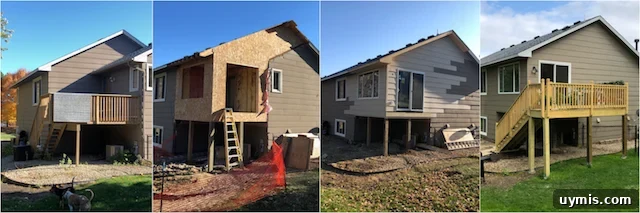
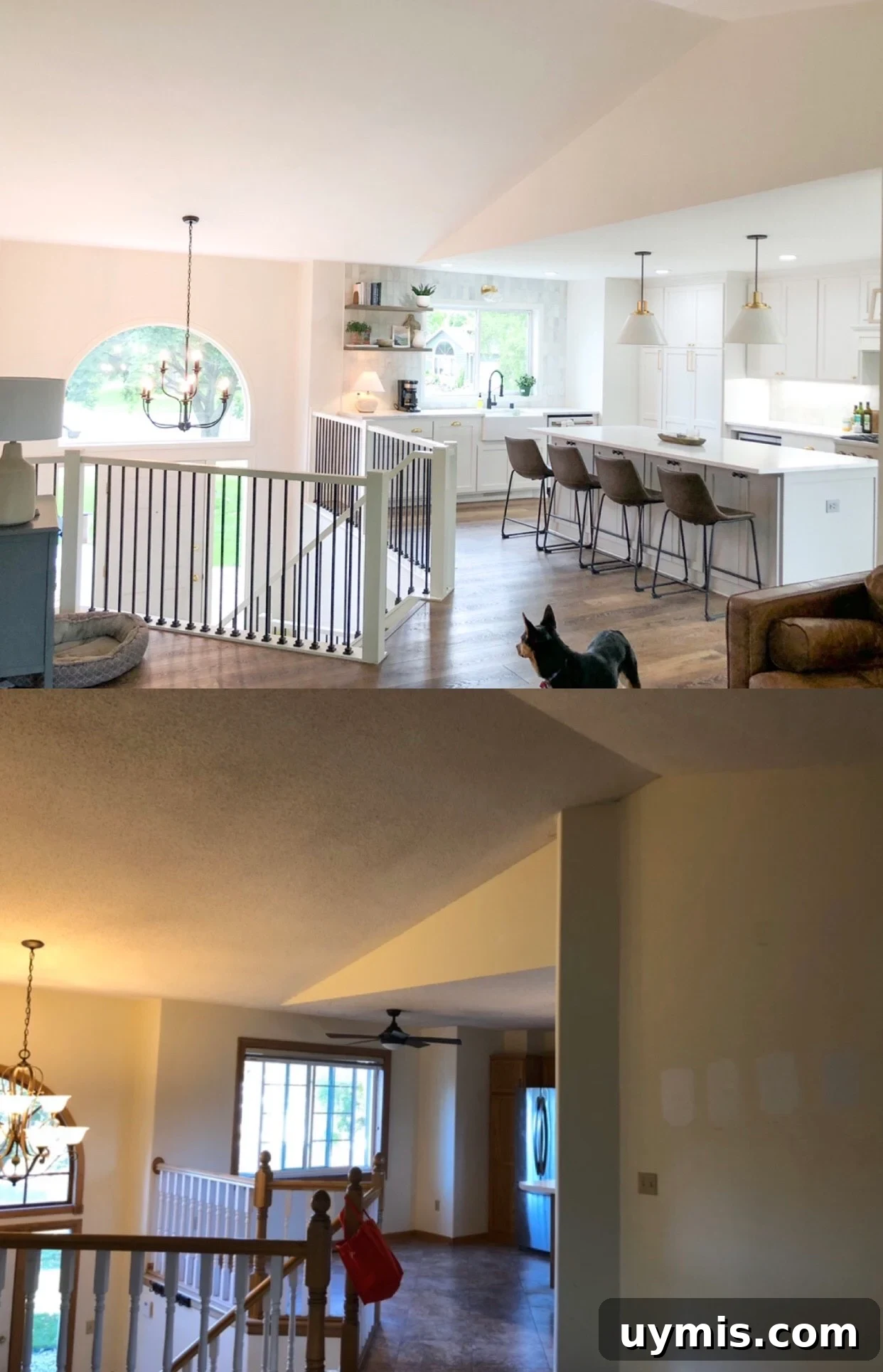
Our original plan quickly grew beyond the addition, deck rebuild, and kitchen remodel. Since the kitchen was already open to the living room and the two-story entryway, it made sense to carry the updates through the rest of the main level. We removed popcorn ceilings, replaced railings, updated light fixtures, changed doors and closet doors, installed new trim, and replaced the flooring. In total, seven rooms were updated in some way.
After meeting with the contractors, we paid close attention to how they communicated, how organized their process seemed, and how comfortable we felt with them. The contractor we chose stood out immediately. He was genuinely excited about the project, offered thoughtful ideas, and clearly had the experience to guide us through the renovation. It was obvious that he cared about the work and enjoyed what he did.
Saving & Budgeting
I can only speak to our experience, but our contractor structured payments in a way that made the budget easier to manage. We paid 20% down, and the remaining balance was divided into five payments based on completed stages of work. For example, once the addition was framed, roofed, and sheet-rocked, we made a payment for that phase. After plumbing was moved and cabinets and windows were installed, another payment was due.
This helped us see where the money was going and made the project easier to plan for, especially because the remodel stretched over roughly seven months due to delays. We had also been saving long before we sold our previous home because I knew I wanted a kitchen that I had designed around the way I cook, work, and use the space. We tend to be fairly minimal with spending, and we also used profit from the sale of our previous house toward the remodel budget. I also use a high-yield savings account that allows me to separate money into different savings “buckets,” which was helpful for a large home renovation goal.
Being Flexible vs Non-Negotiables
One question I received often during the kitchen remodel was how we decided what to include in the budget. Before the renovation began, I spent a lot of time deciding which items were true non-negotiables. This included both design choices and layout decisions. Knowing what mattered most made it much easier to be flexible in areas that were less important to me.
Every home and family will have different priorities. I thought carefully about how we use the kitchen now, how my business operates from home, and how the space might need to function in the future. I considered family gatherings, holidays, children, entertaining, and the possibility of adding more employees to my business. Those thoughts influenced the cabinet layout, dining room placement, island size, storage design, and nearly every other decision.
For example, I knew I wanted very specific cabinet features, so custom cabinetry became one of my must-have items. We worked closely with the cabinet maker to make sure everything had a place and that the layout made sense for daily use. Because we invested more of the budget there, I was able to save in areas I cared less about, such as choosing more affordable options for new doors and trim.
The same approach applied to the overall style of the remodel. I chose the kitchen hardware and pulls I truly loved, even though they were heavier-duty and more expensive. Then I selected more budget-friendly hardware for bedroom closets, linen closets, the entryway, and bedroom doors. That balance helped us stay within budget while still getting the look and function I wanted most.
Plans & Cost
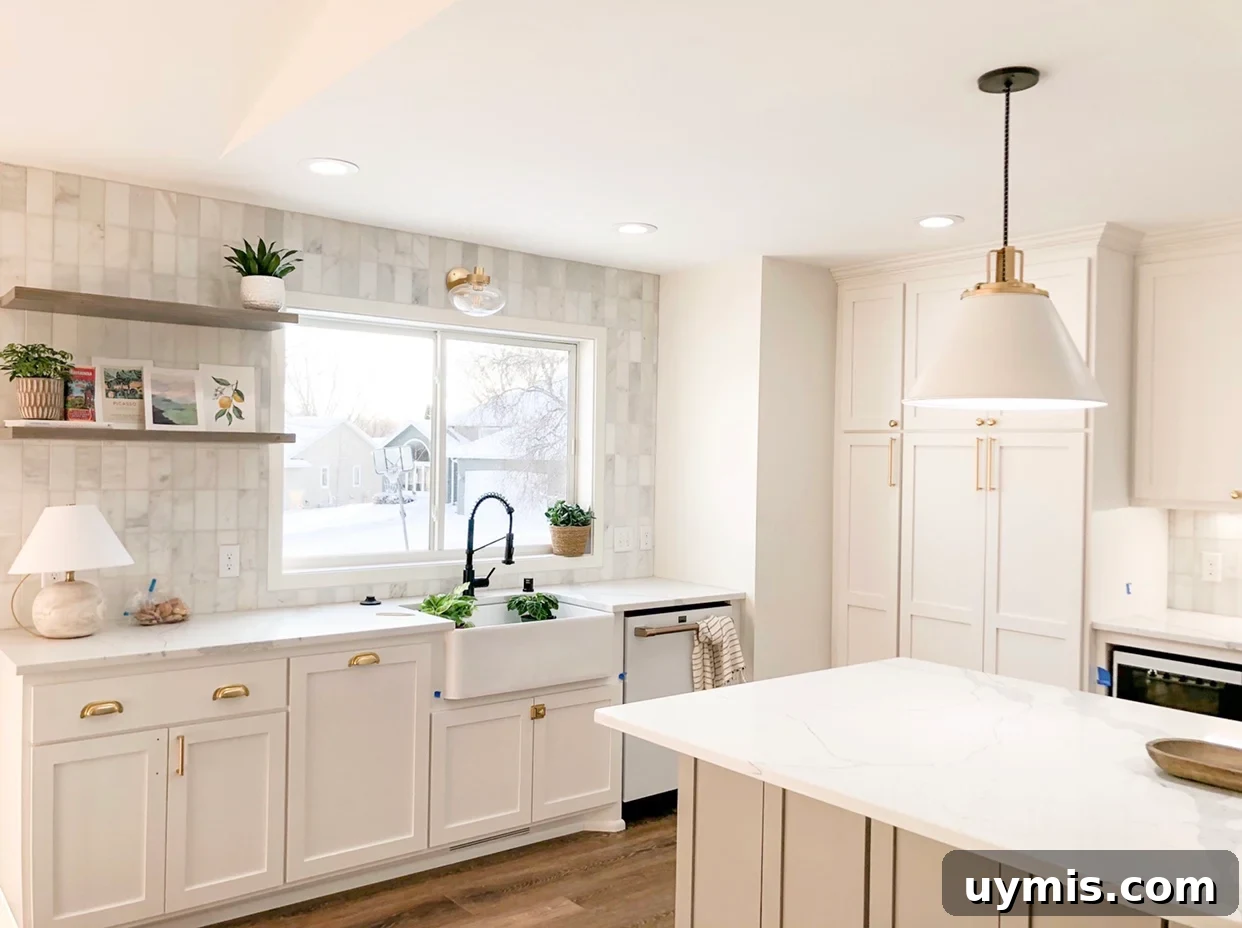
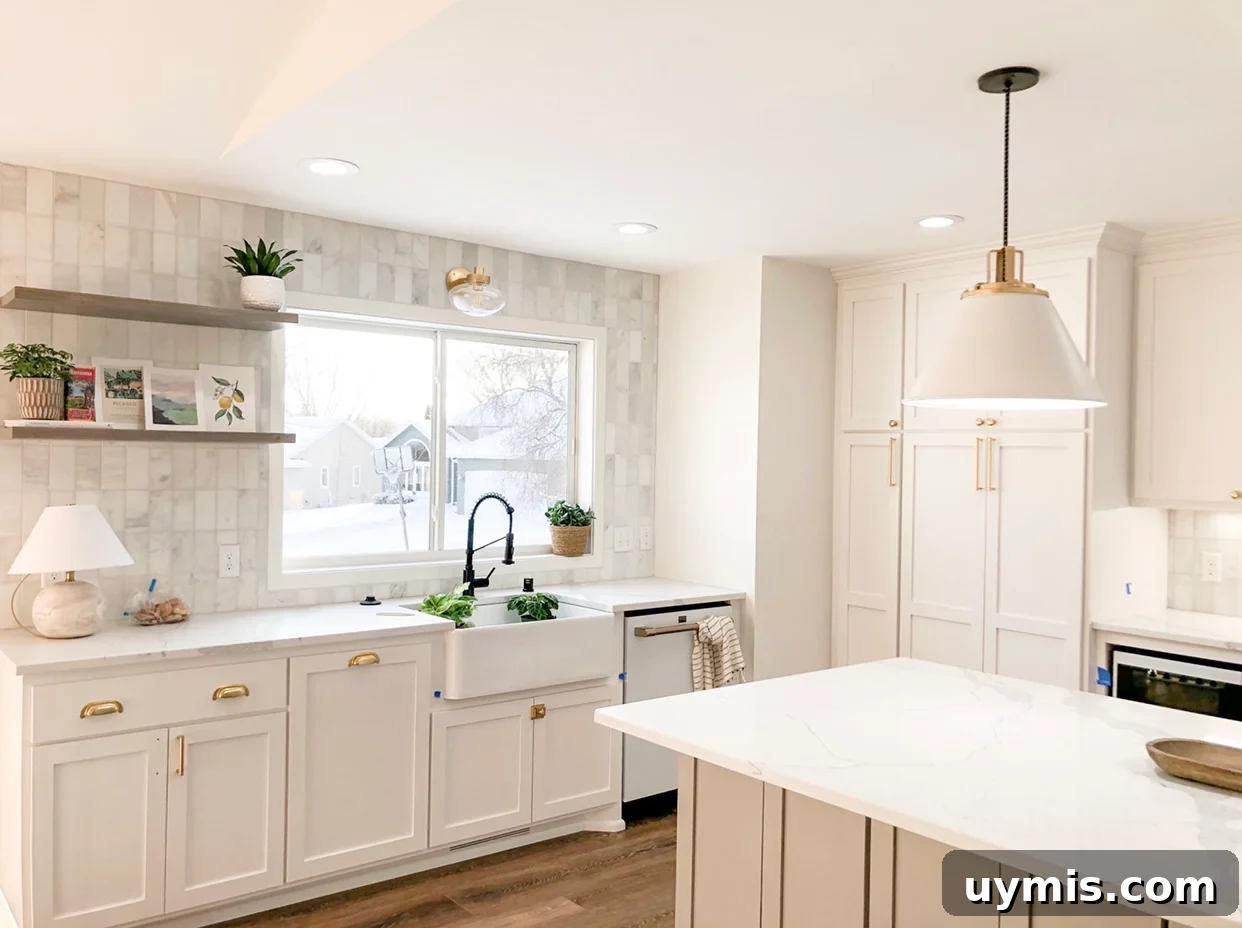
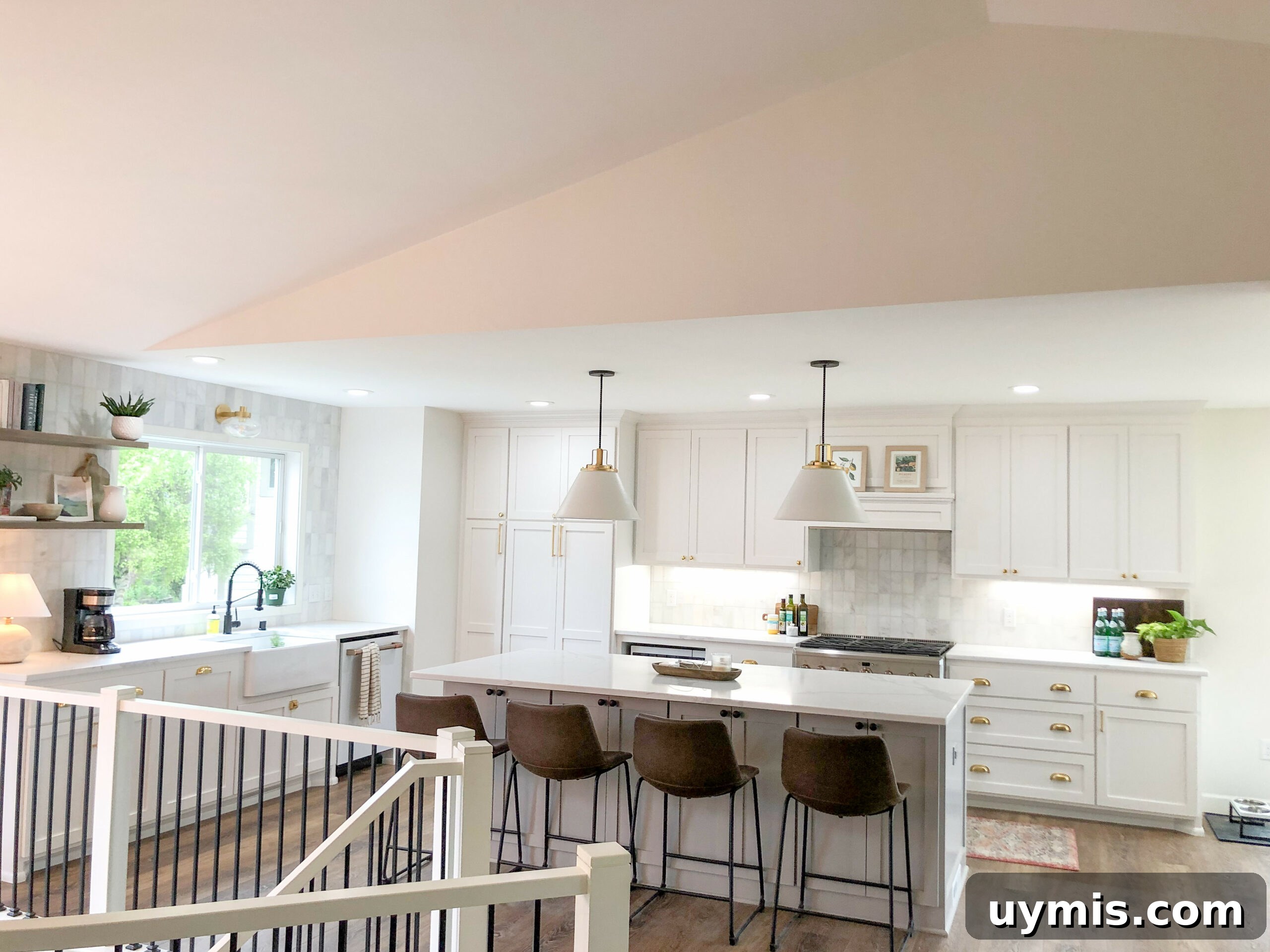
Our kitchen plans included opening up the space by adding onto the house and removing about six feet of an awkwardly angled wall between the living room and kitchen. We also changed the kitchen layout by moving the sink and dishwasher from the corner to the opposite side of the room, since the original sink area would now open toward the new addition.
The tiny island was replaced with a much larger island measuring 98 inches long by 48 inches wide. We now have more than four feet of space to move around on all sides, which makes the kitchen feel far more functional. Storage was one of my biggest priorities for the island, so the side with the overhang includes four 12-inch-deep cabinets for items we do not use every day. That extra storage has been one of my favorite practical choices.
It is difficult to separate the exact kitchen remodel cost from the addition and the rest of the main-level renovation because the kitchen would not have worked the same way without the addition. Flooring and trim costs were also spread across the entire main level rather than only the kitchen.
That said, the estimated kitchen portion of the remodel was about $55,000, not including appliances. The largest kitchen expense was the custom cabinetry, which totaled around $22,000. A kitchen remodel can certainly be done for less by using pre-built cabinets and avoiding major changes to plumbing, electrical, and HVAC, which were also significant costs in our project.
Favorite Things We Did
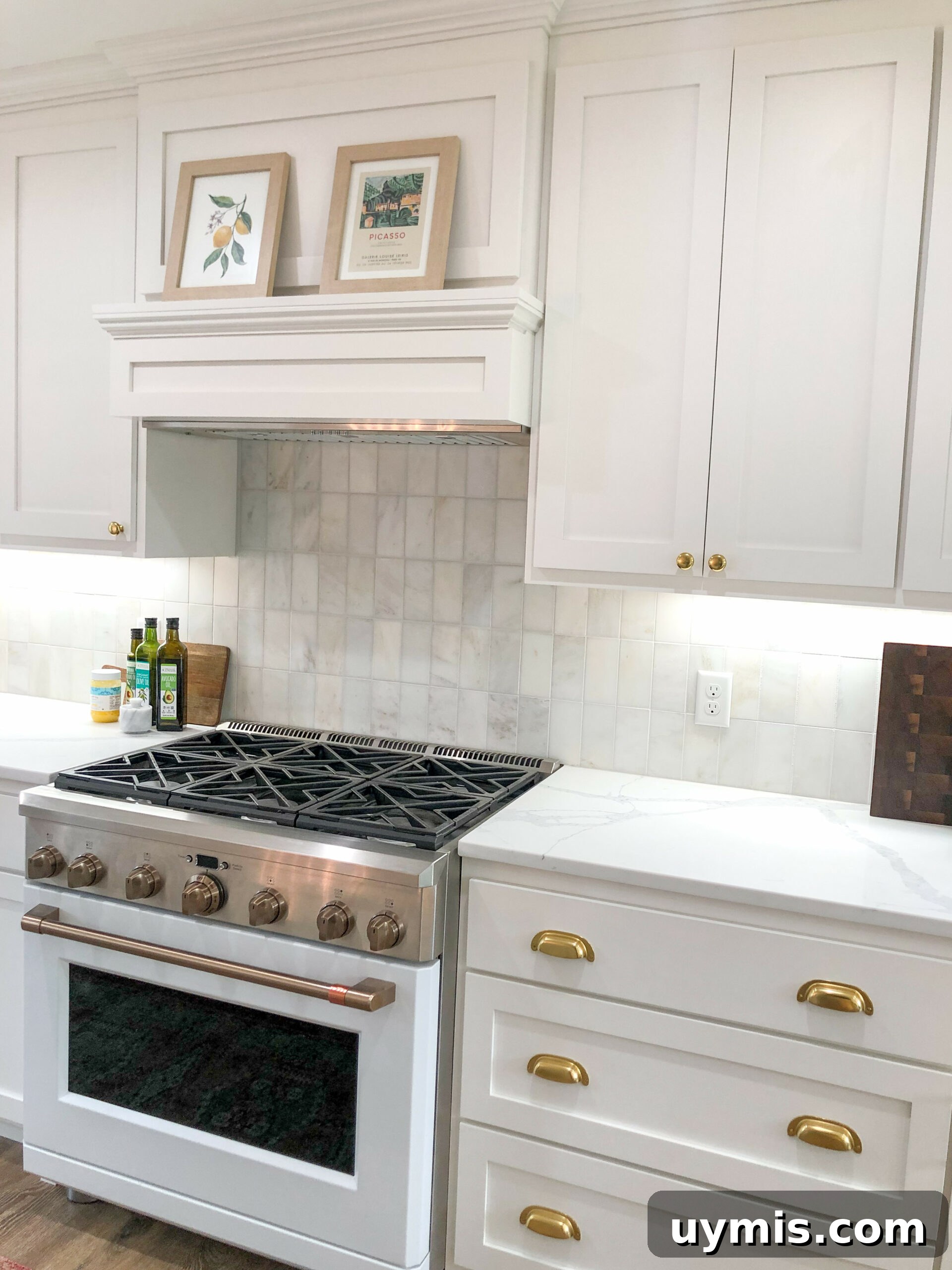
I am happy with the entire remodel, but a few design choices stand out as favorites. One of them is the custom vent hood. I really wanted a hood with a small lip or shelf so I could style it differently throughout the year. I loved the idea of adding color, warmth, or seasonal decor without having a visible metal hood. It turned out exactly how I hoped.
The stairs were another feature I was excited to change. When you first walked into the house before the renovation, the bulky orange wood railings were impossible to ignore. Because of the strange jut-outs, there were too many posts, angles, and corners. It felt visually heavy and took up valuable space. By straightening the right side of the railing, we gained three feet of walking space in the kitchen.
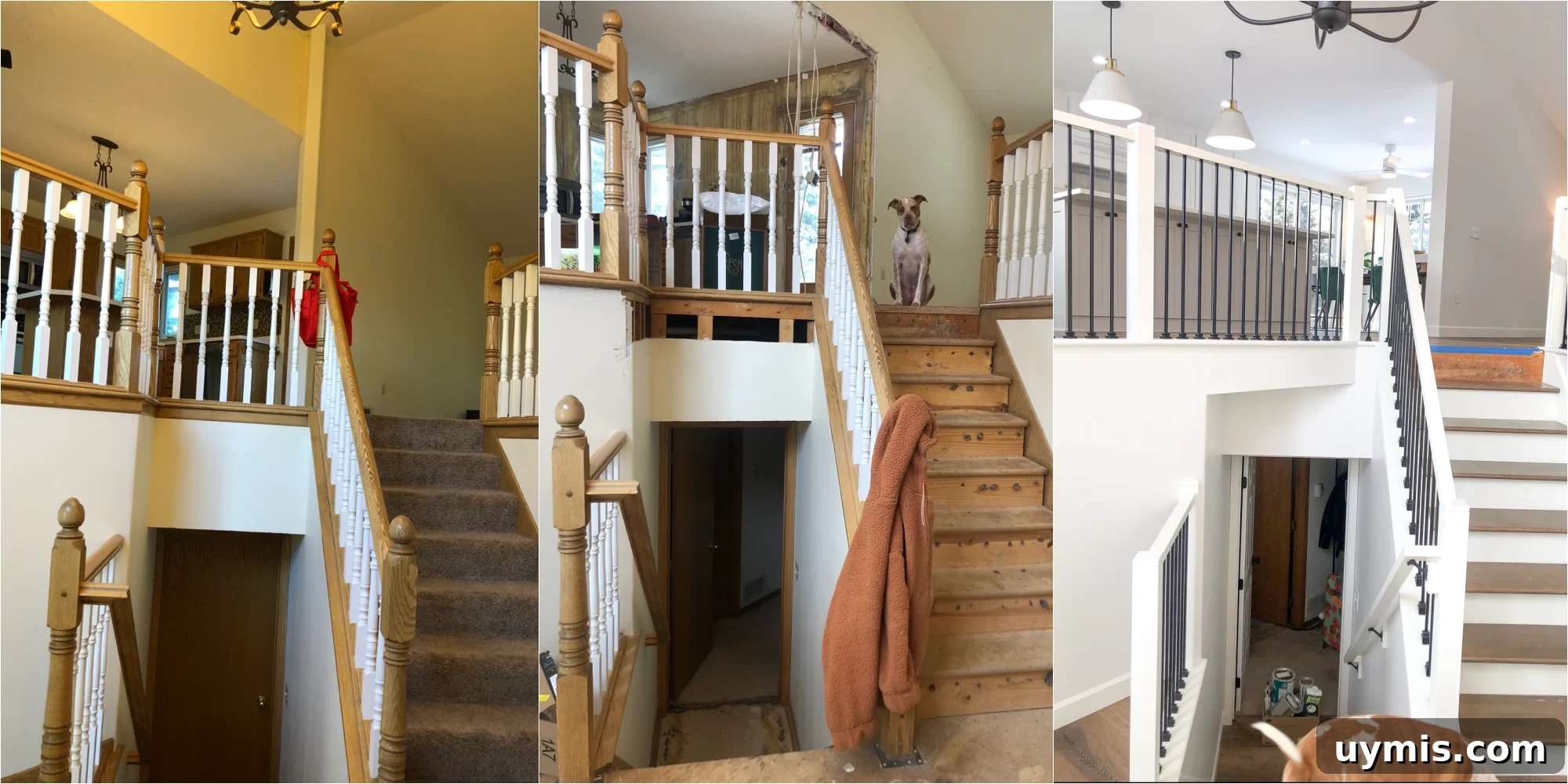
We also covered an odd alcove in the entryway above the closet. It was a common feature in many early 90s homes and was likely meant for decor, but it had a large mirror at the back and looked awkward from the kitchen. We walled it in, and the space may eventually be used when we update the bathroom. For now, it makes the two-story entry look much cleaner and more cohesive.

I also love the function of roll-out drawers in lower cabinets. They make it easy to see everything inside without getting down on the floor and digging to the back. At the same time, I prefer the look of lower cabinet doors. We used one bank of three drawers, added another drawer under the microwave cubby, and designed the remaining lower cabinets with door fronts and roll-out shelves inside. We used the same idea in the pantry area and included spice racks on both ends of the island.
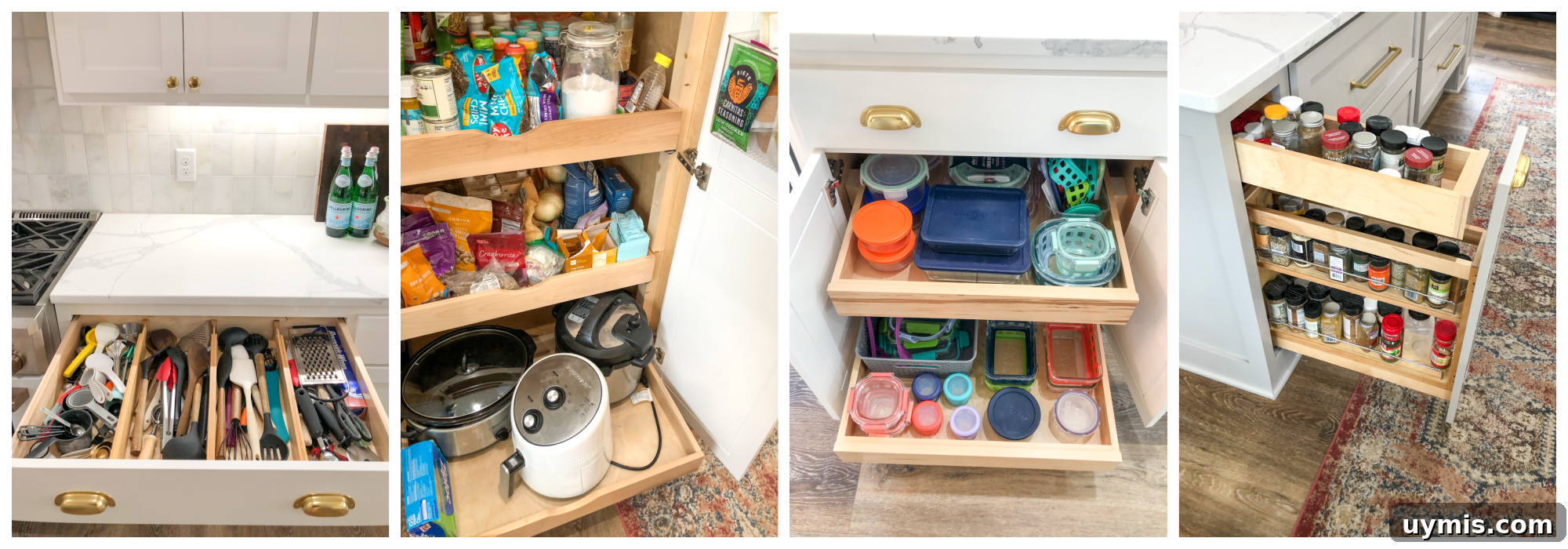
The standard upgrades have also made a huge difference in daily use. USB outlets, under-cabinet lighting, cabinet drawers designed for specific pots and pans, roll-out pantry drawers, floor outlets, better-placed windows, ceiling can lights, and pull-out trash and recycling all make the kitchen feel efficient and comfortable. It is such a relief to have a workspace that finally functions the way I need it to.
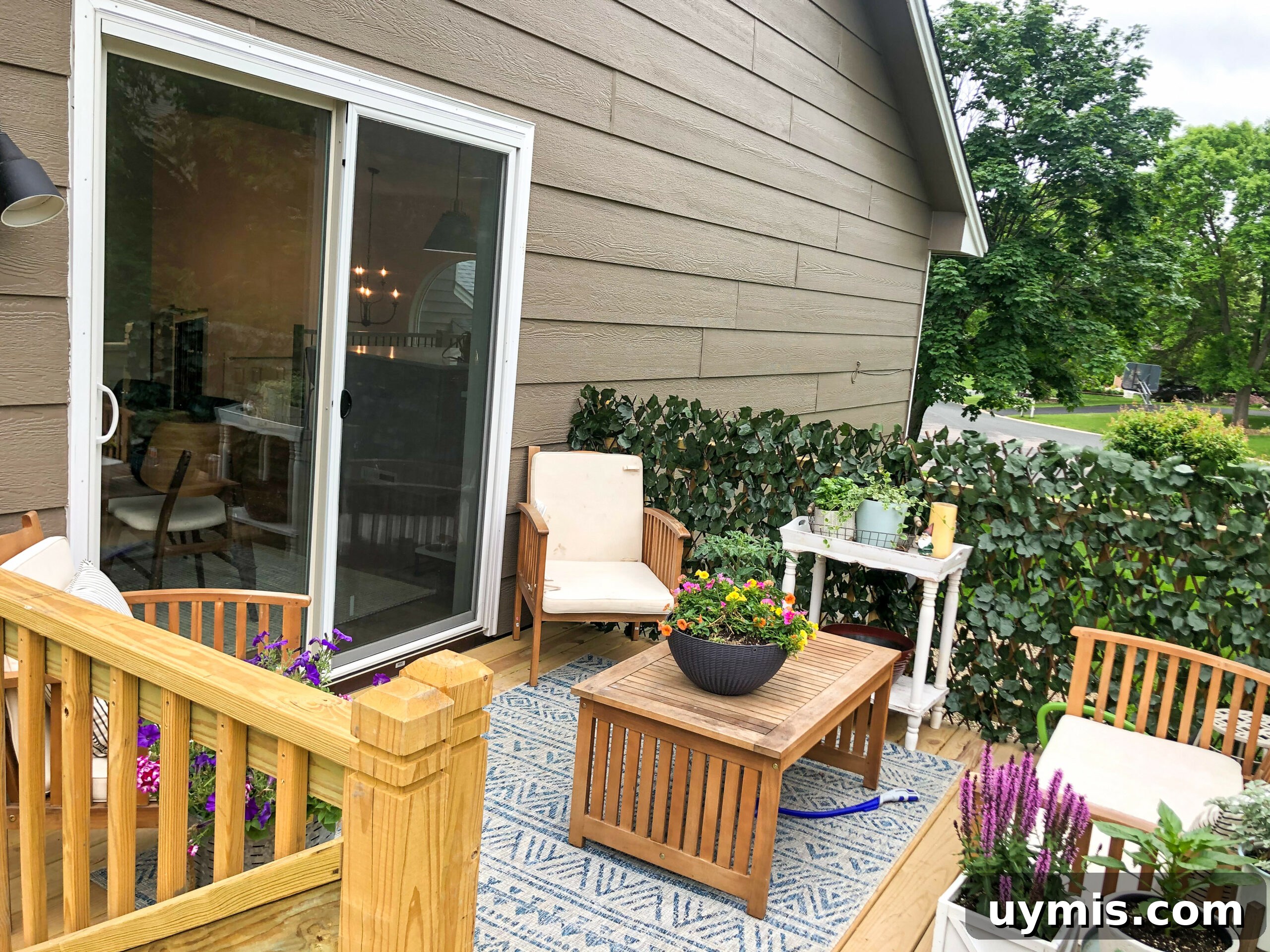
And of course, I love the new deck. It is a bit larger than the one we tore down, and although the permit took a very long time, it was worth the wait. I spend a lot of time out there, and it has become one of my favorite parts of the house.
Links to Kitchen Products
Cabinetry – Vallar Woodworking
Flooring – Paramount RigidCORE XL Vinyl Plank, color Long Beach Tan
Sink
Kraus Matte Black Faucet
Under Sink Pull Out Storage
Counter Height Stools
Sconces
Pendant Lights
Ceiling Fan/Light
Entryway Chandelier
12 Inch Appliance Pulls (Brass)
8 Inch Pantry Cabinet Pulls (Brass)
4 Inch Lower Cabinet Pulls (Brass)
Lower Drawer Pulls (Brass)
Upper Cabinet Knobs (Brass)
Cabinet Latch (Brass)
Storage Closet Pulls
Backsplash – Honed Alps 3″x6″ Marble “Puccini by Duratile Corp. Model: MM6-28-H”
Countertop – Calacatta Quartz (from ERK Granite & Marble in Bloomington, MN)
White Cabinet Paint Color – Benjamin Moore White Dove
Island Cabinet Paint Color – Sherwin Williams Repose Gray
Cafe Matte White 36-inch Gas Oven/Range
36-inch Range Hood
Cafe Matte White Dishwasher
Cafe Countertop Microwave
Sub Zero 36-inch Panel Ready Fridge Drawers
Sub Zero 36-inch Panel Ready Fridge/Freezer Combo Drawers
Pantry Door Storage Bins
Bamboo Adjustable Silverware Drawer Organizer
Bamboo Adjustable Drawer Separators
Kitchen Rug (Runner 2.7′ x 10′)
Dining Room Jute Rug
Living Room Rug
Dining Room Table
Dining Room Side (Plant) Table
Dark Green Dining Room Chairs
Brown/White Dining Room Chairs
Navy Blue Silicone Dog Food/Water Mat
Black/Marble Elevated Dog Bowls
Floating Shelf Book Ends
Marble Salt Container
Woven Storage Basket
Storage Cabinet
Deck Patio Set
Metal Deck Side Table
Deck Outdoor Rug
Outdoor Ivy Privacy Fence
Kitchen Counter Lamp
Floor Lamp
Table Lamp
Gallery Wall Frame Set
Art Frames