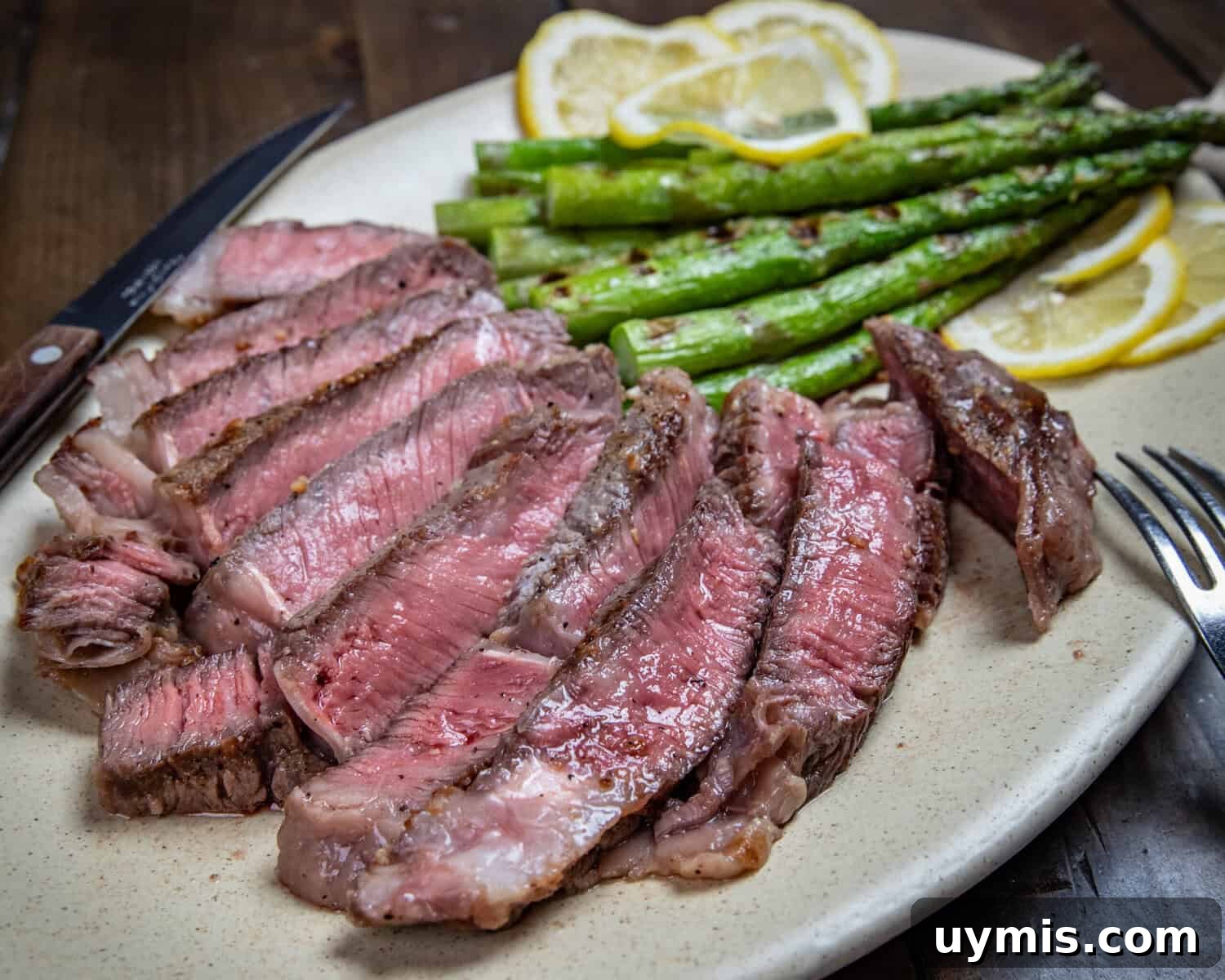
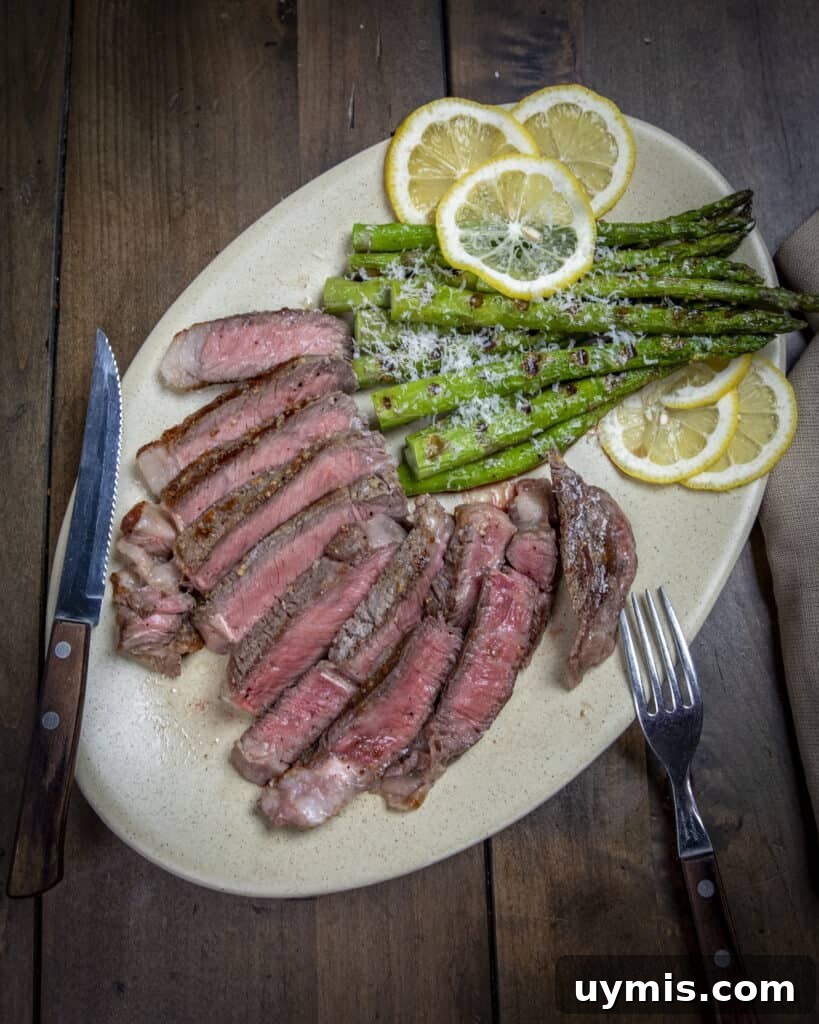
Grilling a steak on a George Foreman Grill is a fast, reliable way to enjoy the flavor and sear of an outdoor grill without leaving the kitchen. This indoor contact grill cooks from the top and bottom at once, producing attractive sear marks and caramelization while staying convenient for everyday cooking.
A few simple tips — from choosing the right cut to monitoring temperature — will help you get consistent, delicious results every time you use your George Foreman grill.
Why use a George Foreman Grill?
Indoor grilling that delivers flavor.
The George Foreman Grill is an excellent indoor alternative to outdoor grilling. Its ridged plates create attractive sear marks and concentrate heat so steaks develop a satisfying crust while staying juicy inside. Because it cooks both sides simultaneously, it shortens overall cooking time compared with a single-sided pan.
Easy cleanup and compact design.
Most models have nonstick grill plates that wipe clean easily and many are dishwasher-safe. The grill’s compact footprint makes it ideal for small kitchens, apartments, dorms, or anyone who wants a quick, no-fuss grilling option.
Versatile for sides and proteins.
While the steak rests, you can quickly grill vegetables like asparagus or broccolini on the same unit. It also works well for other steaks, chicken breasts, burgers and quick seafood, making it a versatile countertop appliance.
Choosing the right cut of steak to grill
Ribeye is a top choice for indoor grilling because its marbling adds flavor and tenderness. When using a George Foreman Grill, aim for steaks that are not overly thick — about 1/2″ to 3/4″ (12–20 mm) is ideal. A 16-ounce ribeye around 3/4″ thick provides a good balance of beefy flavor and manageable cook time.
The George Foreman cooks both sides at once, so slightly thinner steaks cook quickly and evenly. Other good options include New York strip, sirloin, burger patties, and chicken breasts.
Can you make a steak more tender?
Some cuts benefit from mechanical tenderizing, especially those from well‑worked muscles with more connective tissue. A meat mallet or tenderizer can help break down fibers and produce a more even, tender bite. If a steak is thicker than you’d like, a few light pummels will flatten and tenderize it for quicker, more consistent grilling.
Recommended grilling times and temperatures
Because the Foreman-style grill heats both surfaces, it often takes slightly longer to develop a crust than an extremely hot outdoor grill, but overall cook time remains short because both sides cook simultaneously. Typical grilling windows for a 1/2″ to 3/4″ steak range from about 4 to 10 minutes depending on thickness and desired doneness.
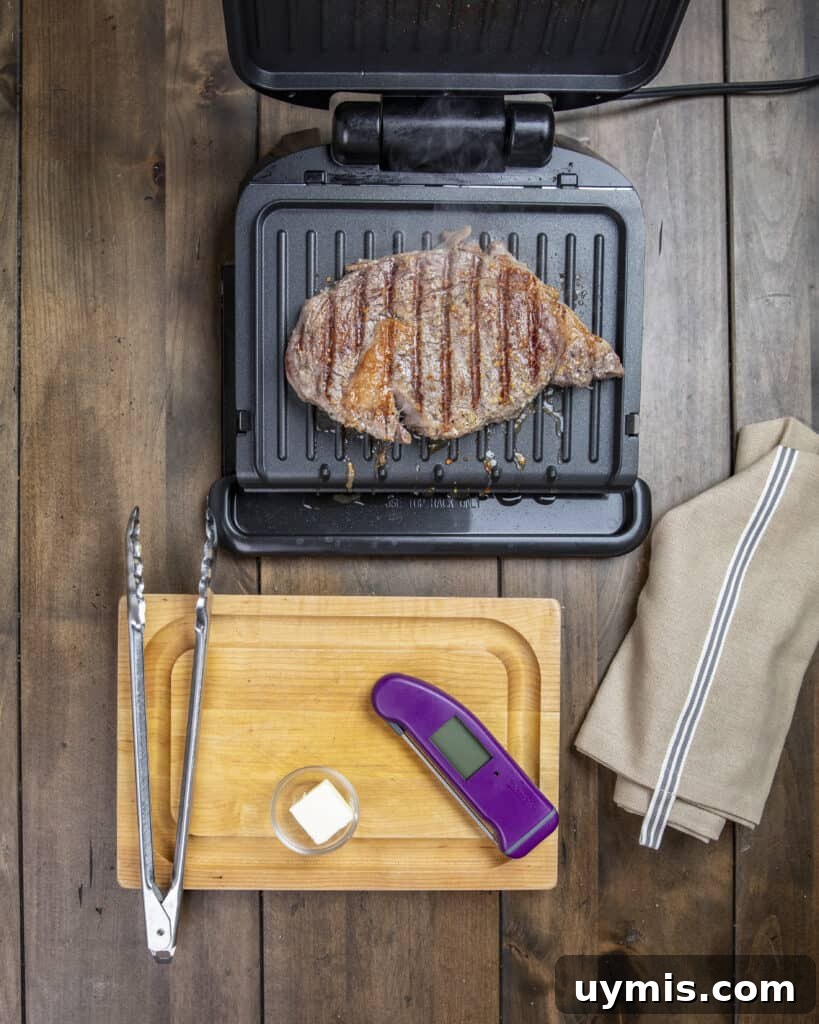
For medium-rare aim for an internal temperature of about 135°F (57°C). For medium, cook to around 145°F (63°C). Use a digital meat thermometer — it’s the most accurate way to confirm doneness.
Marinating your steak
Marinades add depth of flavor and can help tenderize. A basic marinade combines olive oil, an acid such as vinegar or citrus, salt, pepper and aromatics like garlic or herbs. Marinate for at least a few hours or overnight in the refrigerator for best flavor penetration. Pat the steak dry before grilling to promote a good sear.
How to grill a steak on a George Foreman Grill
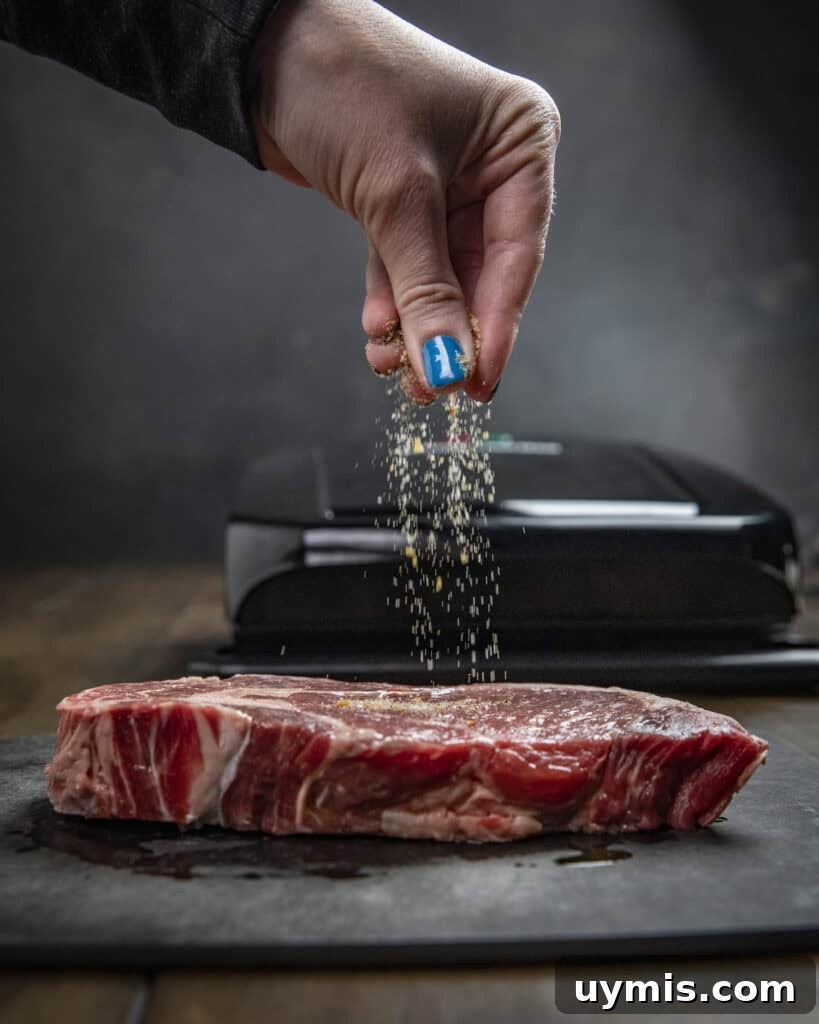
This method uses a 3/4″ ribeye. Let the steak sit at room temperature for 20–30 minutes before grilling so it cooks more evenly. Lightly coat both sides with olive oil and season generously with kosher salt, black pepper and a touch of garlic powder.
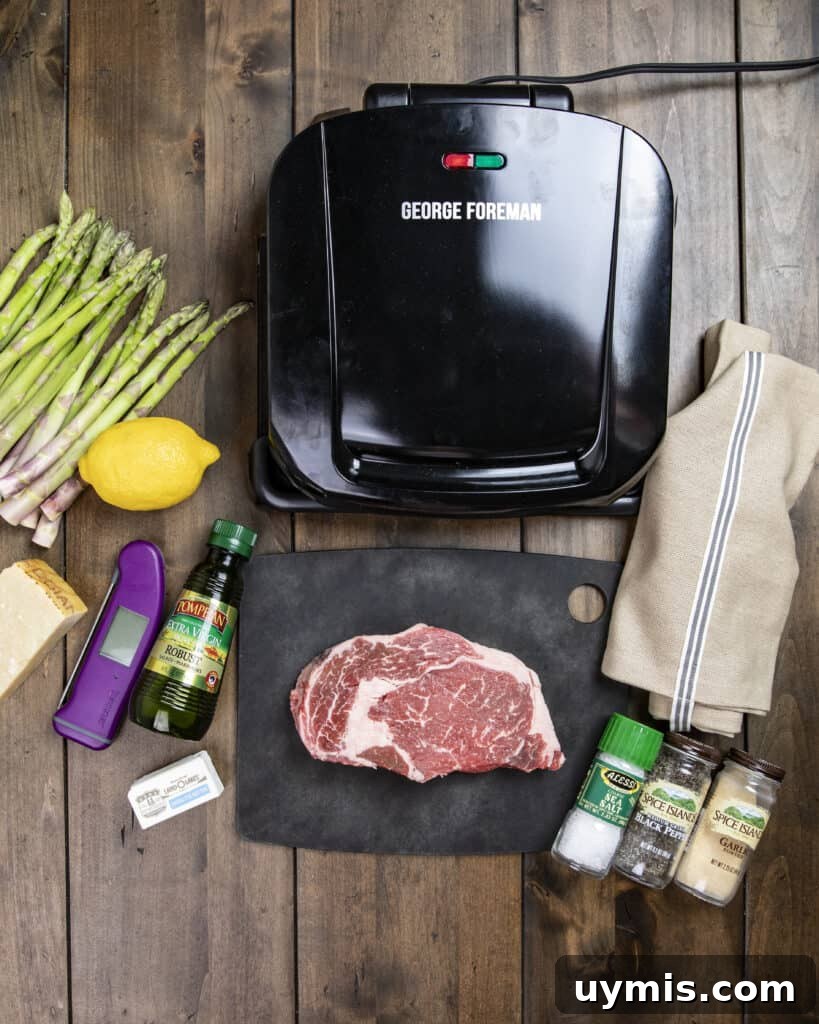
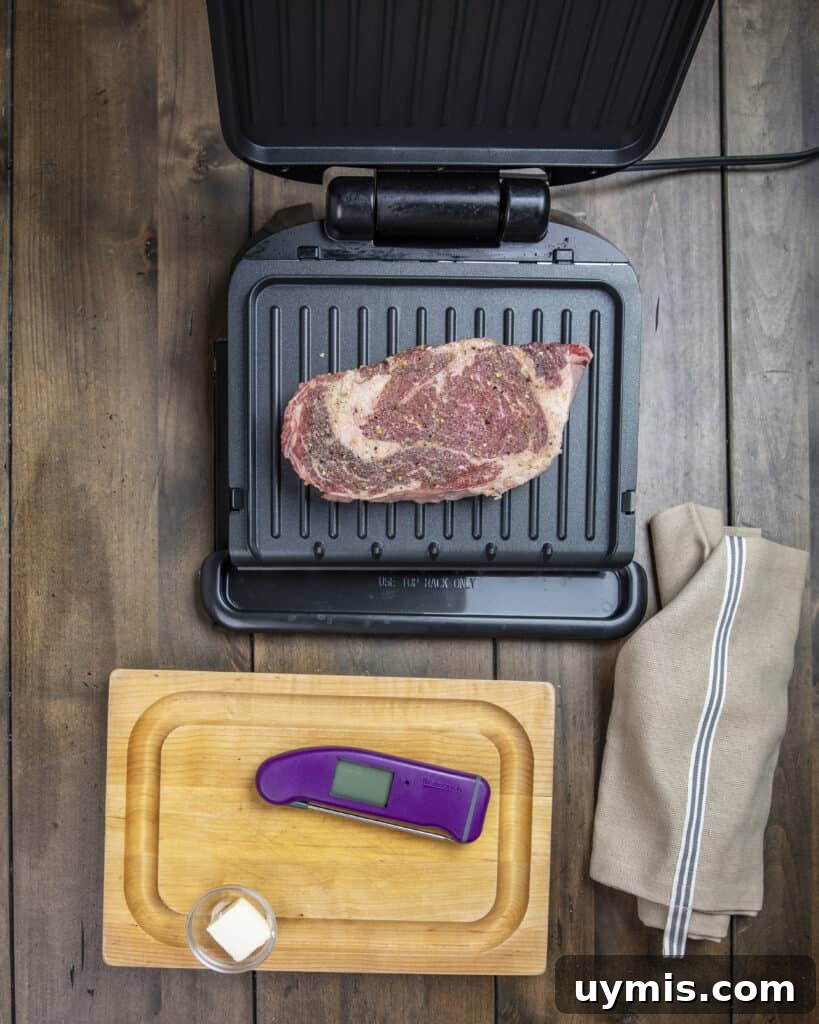
Preheat the grill and wait for the ready indicator. Place the steak on the grill, close the lid, and cook until the internal temperature reaches your target. For a 1/2″ steak expect 4–7 minutes; for a 3/4″ steak plan for 6–10 minutes. Check with a digital thermometer to ensure accuracy.
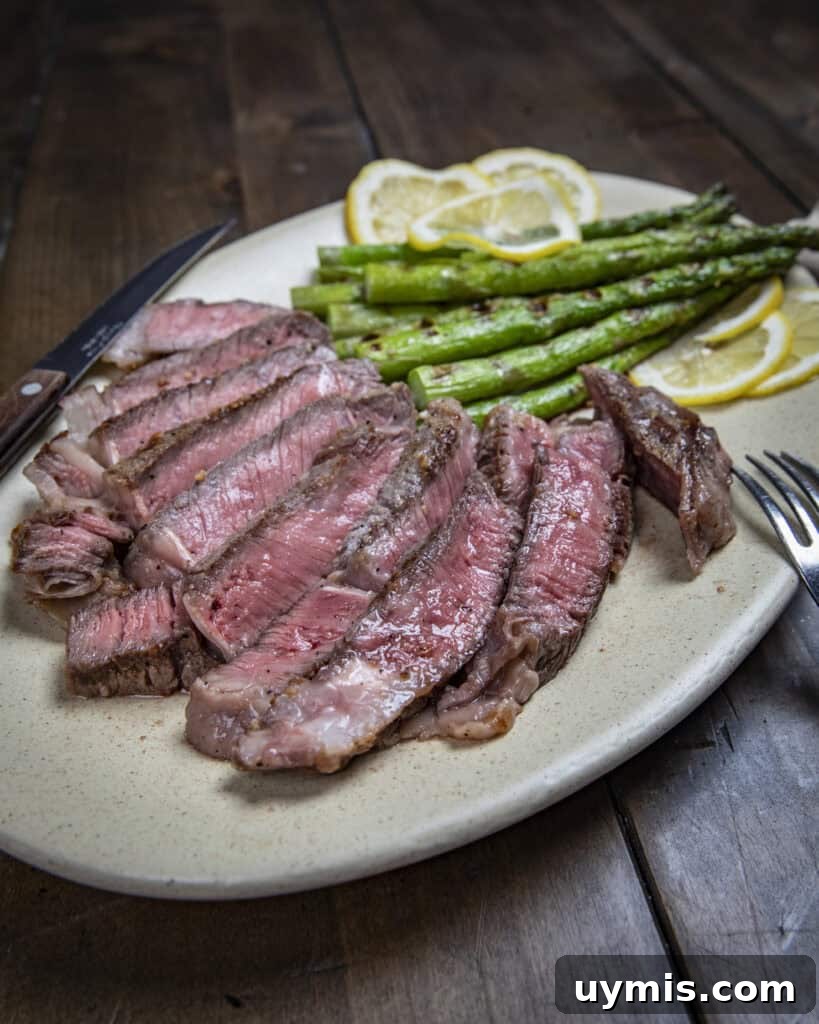
When the steak is done, remove it from the grill and top with a tablespoon of butter. Tent loosely with foil and let it rest for 5–8 minutes — resting allows juices to redistribute for a juicier slice. Slice against the grain when serving.
Grilled asparagus on the George Foreman Grill
Trim woody ends from the asparagus by snapping each stalk where it naturally breaks. Toss the spears with a light drizzle of olive oil and season with salt, pepper and garlic powder.
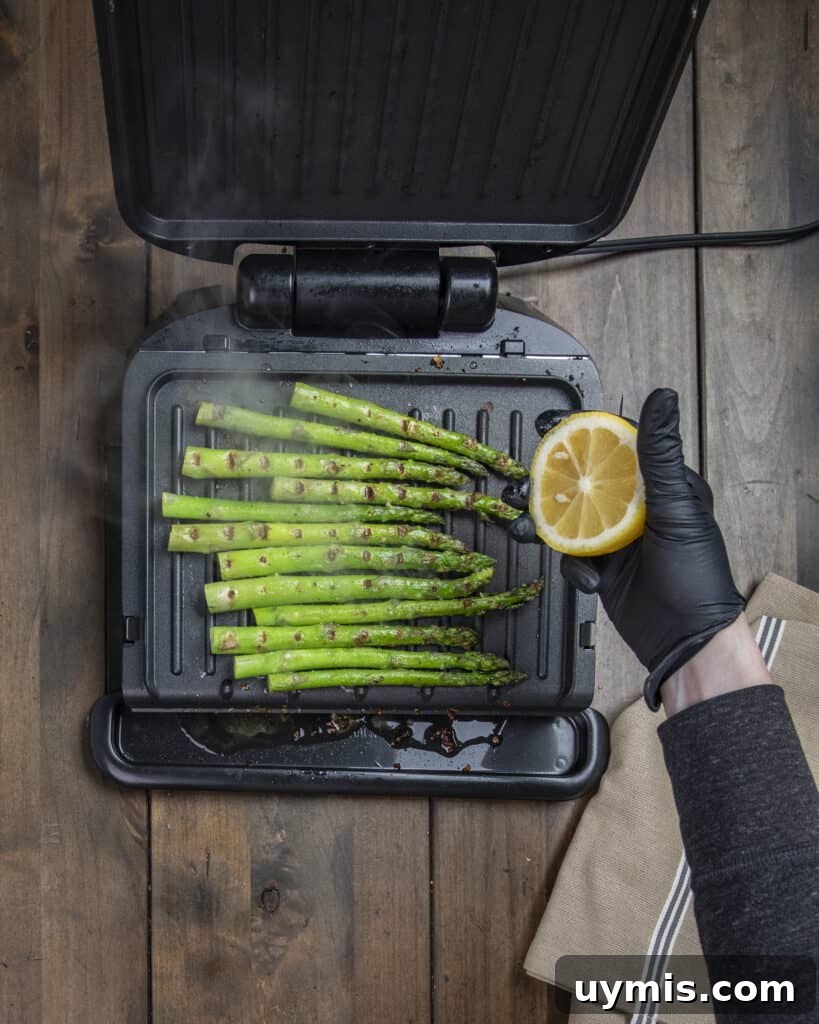
Sear asparagus on the heated grill for about 4–7 minutes until tender-crisp. Finish with freshly grated Parmesan and a squeeze of lemon juice. Serve alongside sliced steak for a simple, well-rounded meal.
Ingredients
For the steak
- 16 oz ribeye steak (about 3/4 inch thick)
- 1 tablespoon olive oil
- 1 teaspoon kosher salt
- 1 teaspoon black pepper
- 1 teaspoon garlic powder
- 1 tablespoon butter
For the asparagus (optional)
- 1 bunch asparagus, trimmed
- 1 tablespoon olive oil
- 1/2 lemon, juiced
- 2 tablespoons grated Parmesan cheese
- Salt, pepper, and garlic powder to taste
Instructions
- Allow the steak to sit at room temperature for 20–30 minutes. Pat dry and coat both sides lightly with olive oil.
- Season both sides generously with kosher salt, black pepper and garlic powder.
- Preheat the George Foreman Grill until the indicator light shows it is ready.
- Place the steak on the preheated grill, close the lid, and cook. For a 1/2″ steak cook 4–7 minutes; for a 3/4″ steak cook 6–10 minutes. Check internal temperature with a digital thermometer — 135°F for medium-rare, 145°F for medium.
- Remove the steak, top with 1 tablespoon of butter, and tent loosely with foil. Rest for 5–8 minutes before slicing.
- Slice the steak against the grain and serve.
For asparagus (cook while steak rests):
- Toss trimmed asparagus with olive oil and season with salt, pepper and garlic powder.
- Sear on the grill for 4–7 minutes until tender-crisp.
- Finish with grated Parmesan and a squeeze of lemon juice.
- Serve alongside sliced steak.
- Author: Jordan Hanger