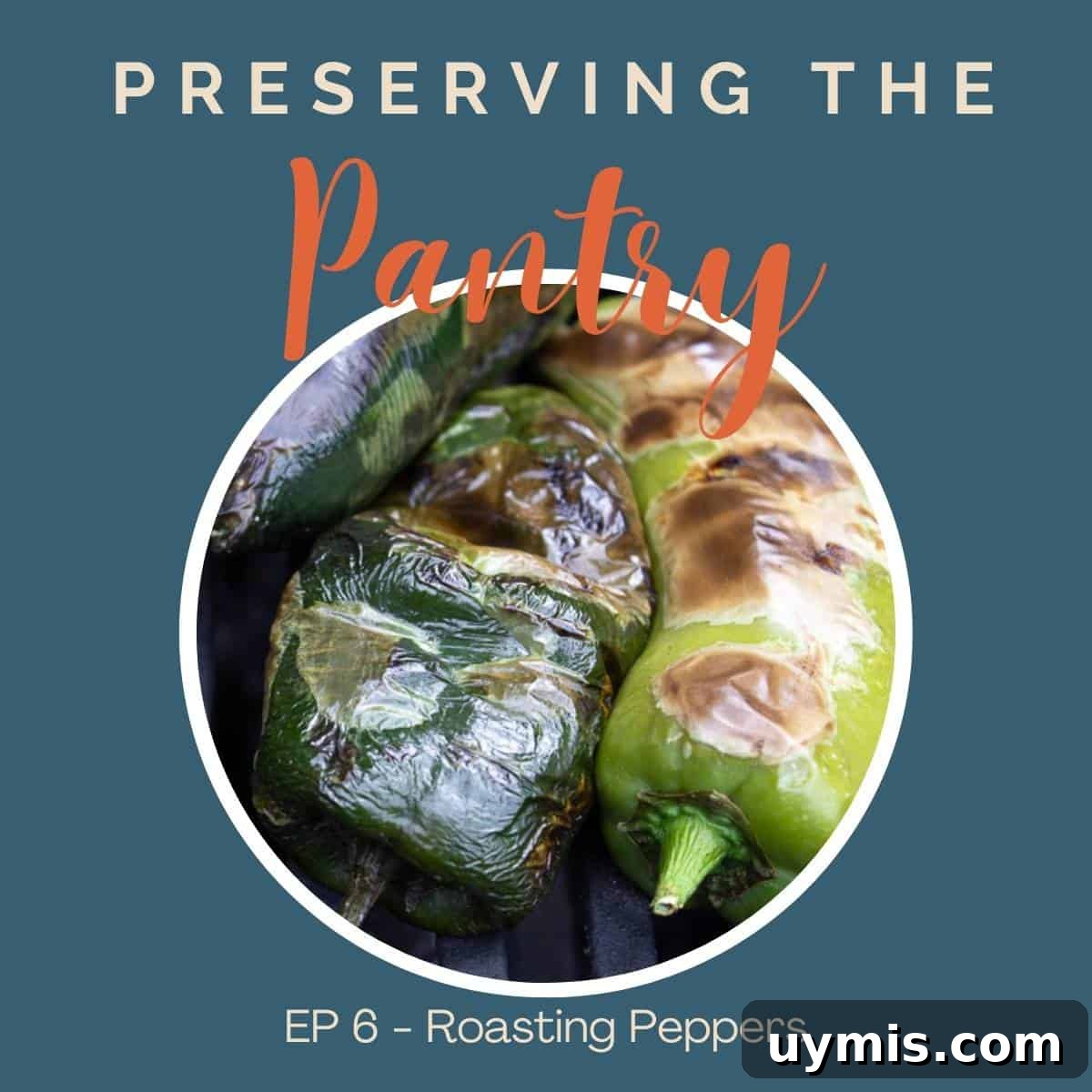
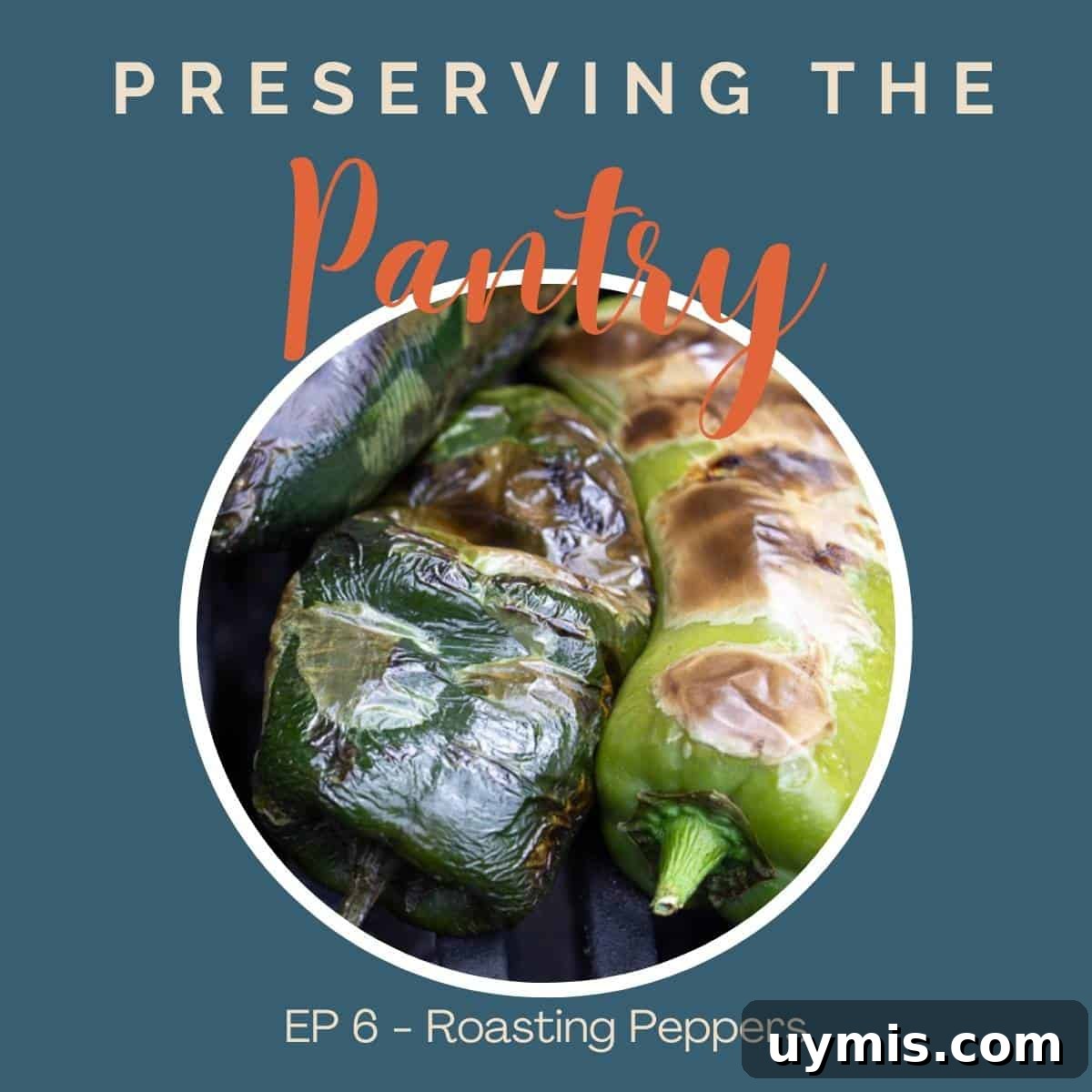
In episode 6, Kathy explains how to roast and freeze chili peppers so you can enjoy them year-round. She covers the best peppers to use, how to char and peel them, and the simplest way to freeze and reheat them for use in casseroles, soups, breakfasts, and snacks.
Play the episode
Listen to this episode on your favorite podcast platform — links and show notes are included below.
Find the complete recipe for Roasting and Freezing Chili Peppers
Recipes mentioned in this podcast:
- Chili Relleno Casserole
- Mexican Tortilla Pinwheels
- Santa Maria Style Beans
- White Chicken Chili
In this episode you’ll learn:
- Which peppers are best for roasting and freezing
- How to roast peppers on a gas grill for easy peeling
- How to freeze roasted peppers so they don’t stick together
- Simple thawing and peeling techniques for frozen peppers
- Practical recipe ideas that highlight roasted chili peppers
Where to listen to the podcast
Listen to this episode on iTunes, Spotify, Amazon Podcast, or your favorite podcast player. Or scroll down to read a full transcript.
If you love this podcast, I’d love to hear about it! Leave a comment below and hop over and leave a comment on Instagram @preservingthepantry!
Transcript
Hi and welcome back to the pantry. I’m so glad you’re here. Today we’re talking all about roasting chili peppers and how to preserve them so you can use that bright, smoky flavor all year long.
Roasted chili peppers bring a smoky depth and sometimes a gentle heat to dishes. They’re incredibly versatile: I fold them into a chili relleno casserole, mix them with cream cheese and pinwheel them in tortillas for an appetizer, stir them into Santa Maria–style baked beans, or add a few chopped peppers to a pot of white chicken chili in winter. I also love a few slices on scrambled eggs or on top of a burger.
You can roast traditional chilies like jalapeños, poblanos, Anaheims, and similar varieties, but the same method works well for sweet bell peppers—red, orange, or yellow—if you prefer milder, sweeter flavor. We grow a variety in our garden each year, which lets us roast and freeze enough peppers to last through the season and reduces what we need to buy at the store.
My preferred method is using a gas grill because the direct heat chars the skin quickly and evenly. Start by firing your grill and letting it heat for about five minutes so the grates are hot. Scrape the grates clean, then arrange the peppers on the grill. You can roast just a few peppers or as many as will fit on the grill at once.
Give the peppers three to five minutes on a side and begin rotating them as the skin darkens. Your goal is a nice dark char—deep brown to black—without burning the flesh. Rotate until all sides are evenly charred, then remove the peppers from the grill.
If you plan to use the peppers right away, slip them into a paper bag and fold it closed for five to ten minutes. The trapped steam will loosen the skins and make peeling easy. After steaming, the skin should slip off easily. At that point you can remove seeds if you prefer, although leaving them in adds more heat.
To freeze roasted peppers, place the hot peppers directly onto a baking sheet lined with parchment paper, spacing them slightly apart so they won’t stick together. Put the tray into the deep freeze and let the peppers freeze solid. Once frozen, transfer them to a zip-top or vacuum-seal bag and return them to the freezer. This flash-freezing method keeps individual peppers separate so you can pull out only what you need.
When you’re ready to use frozen peppers, remove the quantity you need and run them briefly under warm water. The warm water helps thaw them and loosens the skin, which should slide off easily. If you don’t want seeds, pull off the stem and most seeds will come out; any remaining seeds can be removed by slicing the pepper and rinsing under water.
Use your roasted peppers in any recipe that benefits from a smoky, peppery note—casseroles, chilis, soups, dips, sandwiches, and more. They keep well and are an easy way to add depth to everyday meals.
That’s all for this episode. Check the show notes for recipes mentioned today and the full roasting and freezing instructions. Thanks for joining me in the pantry—see you next time on Preserving the Pantry.
Thanks for listening, and be sure to tune in again next week for another episode.