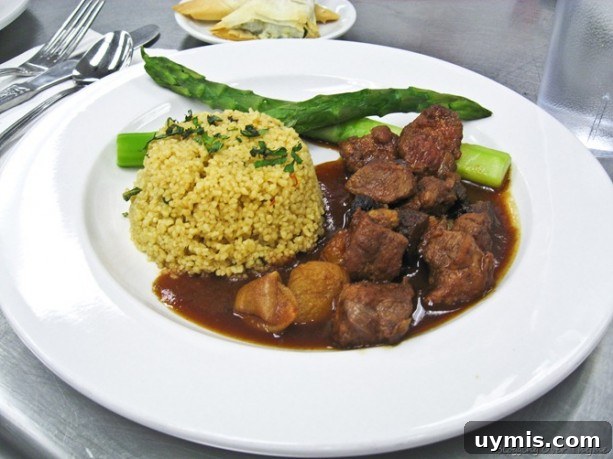
Today’s main course was a little more exotic than our usual French repertoire: Le Porc Aspicius. The technique was familiar—slow braising like a classic beef bourguignon—but the flavor profile leaned Mediterranean and North African, with saffron, toasted ground cumin, fresh mint, and marinated dried fruit lending bright, complex notes. We used pork shoulder, a flavorful and economical cut that benefits from long, slow cooking to become tender and succulent.
The dried fruit had been marinated ahead of time in a mix of red wine, red wine vinegar, fresh mint, and a touch of anchovy. It sounds unusual, but the acidic wine and vinegar with aromatic mint and umami from the anchovy created a balanced, savory-sweet component that worked beautifully in the stew.
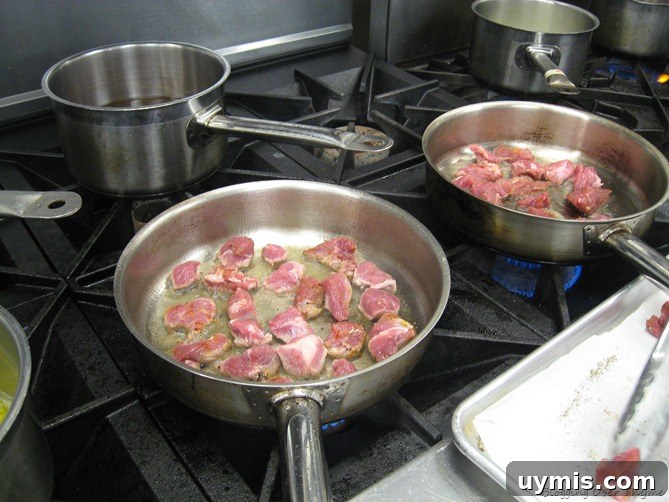
My cooking partner Tasha and I began our stew right after the demo. We trimmed the pork shoulder and cut it into bite-sized pieces, then seasoned them with salt, pepper, saffron threads, and toasted cumin seeds. The meat was seared in canola oil over very high heat to develop color and flavor. After setting the seared meat aside, we sweated a mirepoix of carrot, onion, and celery in the pan, stirred in a little tomato paste, and deglazed with red wine. We added veal stock, returned the meat to the pot, covered it with a cartouche (a parchment disk that fits snugly over the surface), and transferred it to the oven to braise gently until lunchtime.
When the pork was tender, we removed the softened mirepoix and briefly warmed the marinated dried fruit before returning the jus and meat to the pan to marry the flavors. The finished dish was served with tender asparagus and a fragrant couscous, which surprised me by how much I enjoyed it this time.
In class we learned a helpful method for softening dry couscous: take about two cups of dry couscous and add a small amount of water, then use your fingertips to break up and crumble the grains. Adding water in stages helps the grains hydrate evenly and stay light. We cooked the couscous in a couscousière—a steamer pot that sits above simmering water—though many cooking methods work. After steaming, we tossed the couscous with a small amount of chicken broth infused with saffron threads, julienned fresh mint, and ground cumin for a fragrant, layered side.
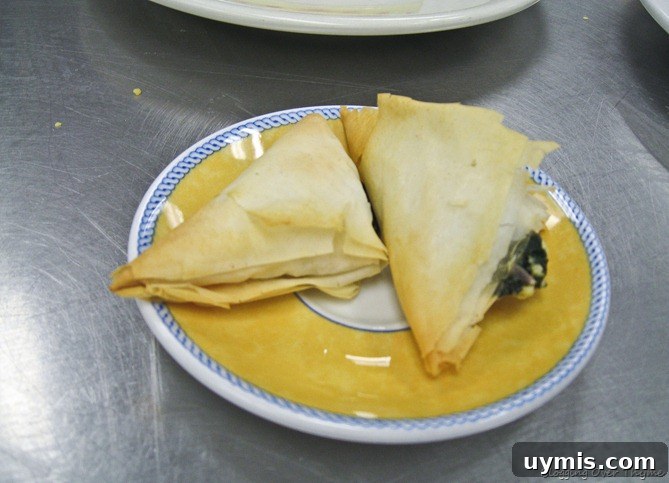
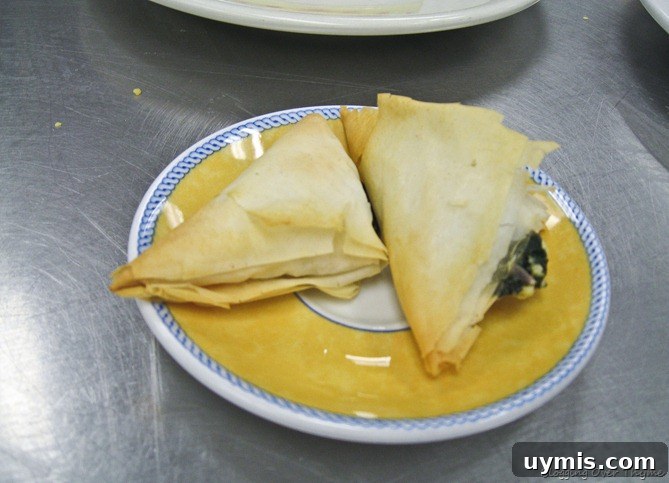
For our starter we worked with phyllo dough to make spanakopita. Phyllo is made from high-gluten flour and is stretched paper-thin; ready-made sheets from the freezer save a lot of effort. Phyllo is delicate and dries out quickly, so Chef Somchet emphasized having a strict mise en place before you begin:
- clarified butter (and plenty of it to brush between layers)
- a towel to cover and protect sheets you are not using
- a pastry brush
- a large cutting board for assembly
We were warned not to substitute olive oil or other fats—using butter is key to achieving the light, crisp texture phyllo is known for.
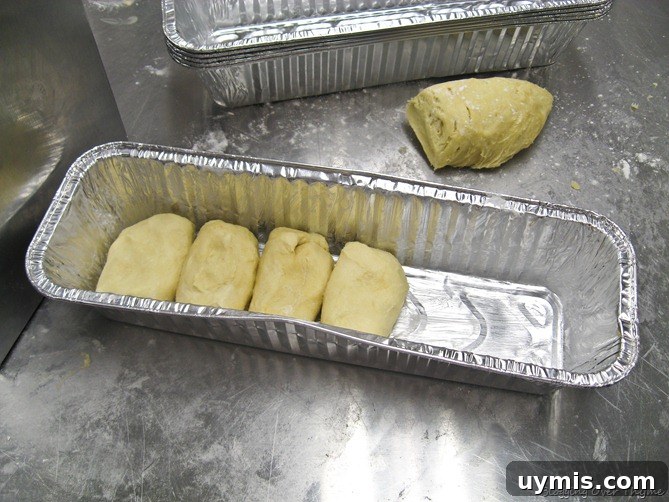
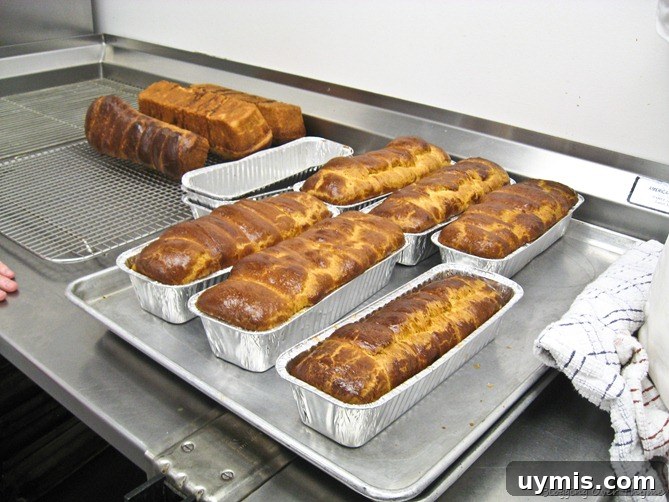
On the baking side, we finished the brioche dough we started the day before. Brioche requires patience—resting and proofing—but the result is rich, tender bread that’s worth the time. We shaped the dough into 2-ounce rolls, placed them in loaf pans to rise, and baked them to a golden finish. Although we didn’t use the brioche in today’s service, it’s ideal for next week’s French toast, bread pudding, and other applications.
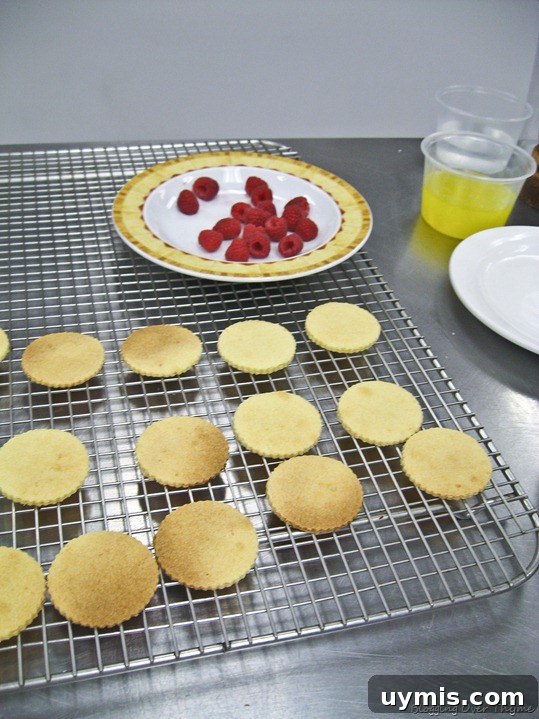
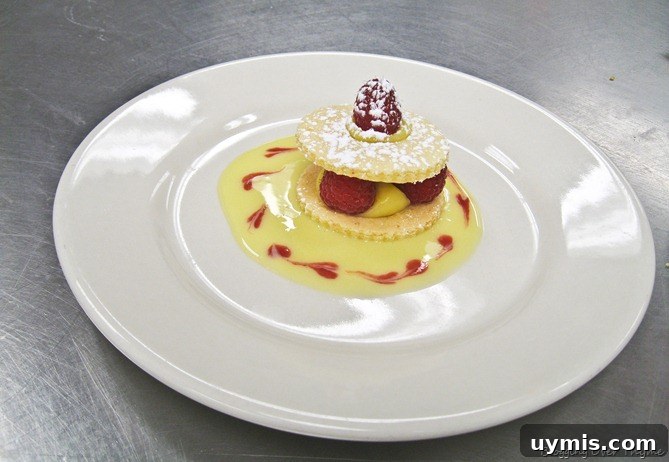
For dessert we made La Galette aux Framboises—essentially sandwich cookies. We baked a shortbread-style galette dough on a silpat and, while still warm, cut scalloped discs. The bottom cookie was piped with lemon curd (left over from the previous day) and topped with fresh raspberries, then capped with a second cookie to form a delicate sandwich. Each cookie sandwich was plated on a pool of chilled crème anglaise, with a small blackberry coulis accent to finish.
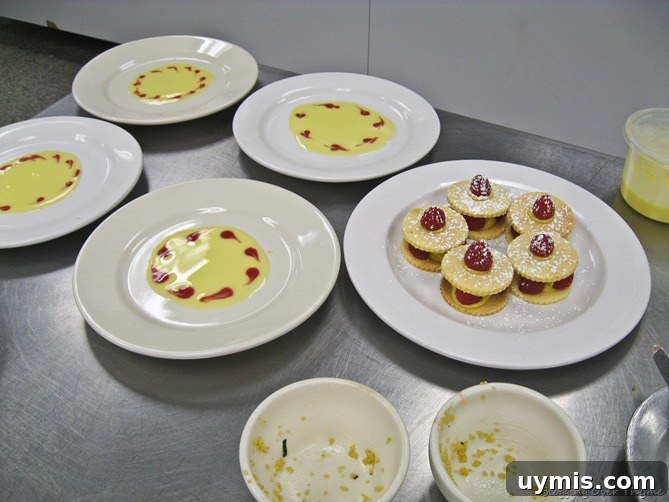
The combination of creamy crème anglaise and the bright tang of lemon curd with fresh raspberries was a lovely contrast—simple in concept, but very satisfying. Chef joked that the plating felt a bit “80s,” yet it was pleasing to the eye and delicious to eat.
After lunch we tackled the inevitable cleanup, which helps burn off the indulgence. Our class moved quickly today, which gave me time to finally present my saffron research paper that had been due weeks ago. Public speaking isn’t my favorite, but it felt good to finish. Our next assignment is on fruits; I’ll be reporting on raspberries and blackberries. It still feels a little surreal to be writing in-depth reports on spices and fruits, but I’ve come to enjoy this culinary deep dive—especially when it ends with food this good.