Learning how to sear duck breast on the Big Green Egg is one of the most rewarding skills for an outdoor cook. Duck breast can look intimidating at first because of its thick fat cap, but that layer is exactly what makes the finished dish so special. When it is rendered properly, the skin becomes crisp, golden, and deeply flavorful while the meat stays tender and juicy.
Duck breast cooks more like a fine steak than a typical piece of poultry. It has a rich, red-meat character and benefits from precise heat, a good sear, and a careful resting period. The Big Green Egg creates a stable, high-heat cooking environment, while a cast iron skillet gives the duck direct, even contact with the heat. Together, they make it possible to build a crisp crust and a medium-rare center without drying out the meat.
The key to this method is patience. You are not simply browning the outside of the duck; you are slowly melting the fat beneath the skin so it can escape into the pan. Once that fat renders, the skin tightens and crisps beautifully. This guide walks through the full process, from scoring and seasoning the duck to preparing a cherry port reduction that complements the richness of the meat.
So pour a glass of Merlot, get your cast iron ready, and enjoy this guide on how to sear duck breast on the Big Green Egg.
Step 1: Prepping the Duck for the Perfect Render
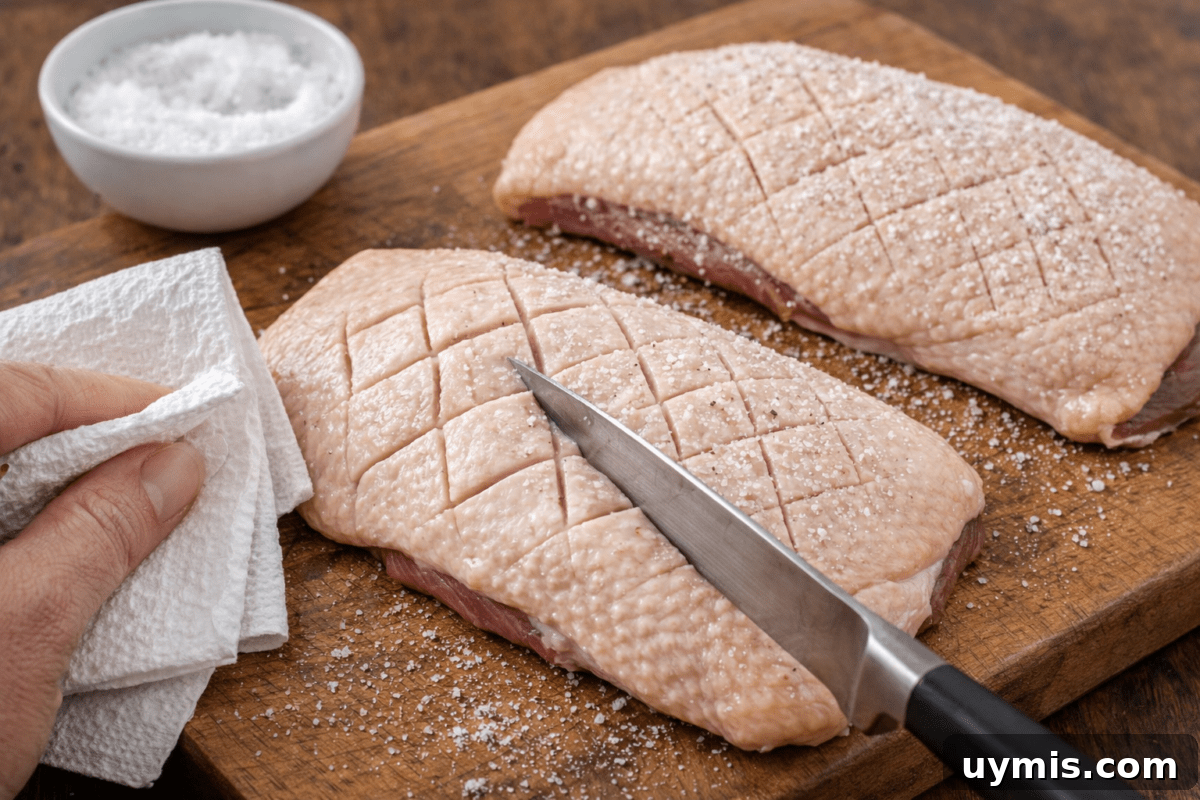
Good preparation is essential when cooking duck breast on the Big Green Egg. Unlike a steak, where you might leave the fat cap mostly untouched, duck breast needs to be scored. Scoring creates shallow cuts through the fat layer, giving the fat a path to render out as the duck cooks. Without this step, the fat can remain trapped beneath the skin, leaving the finished duck chewy instead of crisp.
Use a very sharp knife to cut a crosshatch pattern into the skin and fat. Be careful not to slice into the meat underneath. The goal is to open the fat layer, not cut the breast into pieces. After scoring, pat the duck breast completely dry with paper towels. Moisture prevents browning, so the drier the surface, the better the sear will be.
Season both sides generously with kosher salt and freshly cracked black pepper. The salt helps draw out surface moisture and seasons the rendered fat as it melts into the pan. Let the duck sit while you set up the grill and prepare the sauce ingredients.
Step 2: Big Green Egg Setup and Cast Iron Prep
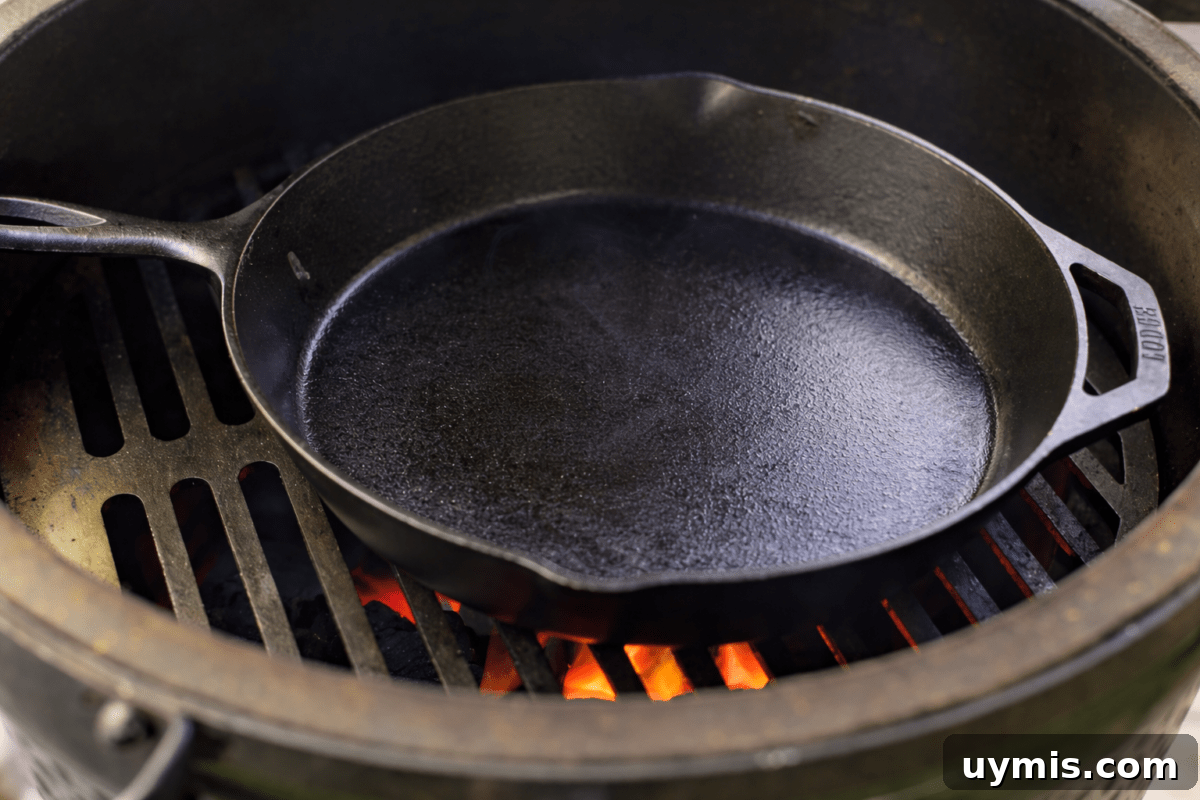
For this seared duck breast recipe, set up the Big Green Egg for direct cooking and stabilize the temperature at 400°F. A cast iron skillet is the best choice for this cook because it holds heat well and provides even contact across the skin. That consistent heat is what helps the duck fat render evenly without burning the outside too quickly.
Place the cast iron pan on the cooking grate and let it preheat for about ten minutes. You want the skillet hot enough to begin the sear immediately, but not so hot that the skin scorches before the fat has time to melt. While the pan is heating, measure and prepare the sauce ingredients. Duck cooks quickly once the rendering stage is complete, so having everything ready before the meat hits the pan makes the process much smoother.
Step 3: The Sauce Mise en Place
A rich duck breast deserves a sauce with enough acidity and sweetness to balance the fat. This version uses Tawny Port, cherries, chicken stock, shallots, and honey to create a glossy reduction. The fruitiness of the cherries and port works beautifully with the savory, crisp duck skin.
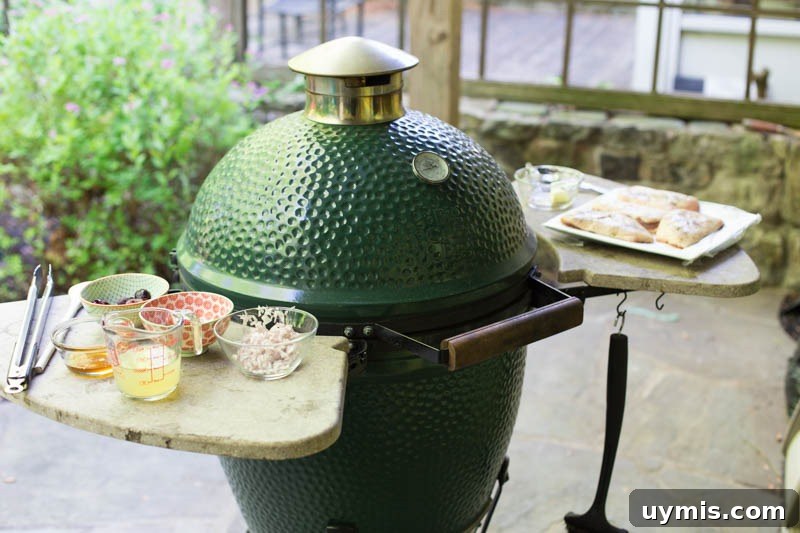
Before cooking, place the pitted cherries, chicken stock, minced shallots, port, and honey near the grill. This is important because the sauce is made in the same cast iron skillet after the duck is removed. The pan will still be very hot, and the browned bits left behind from the sear will become the base of the sauce. Having your ingredients ready allows you to move directly from searing to deglazing without losing heat or burning the fond.
Step 4: The Art of the Render
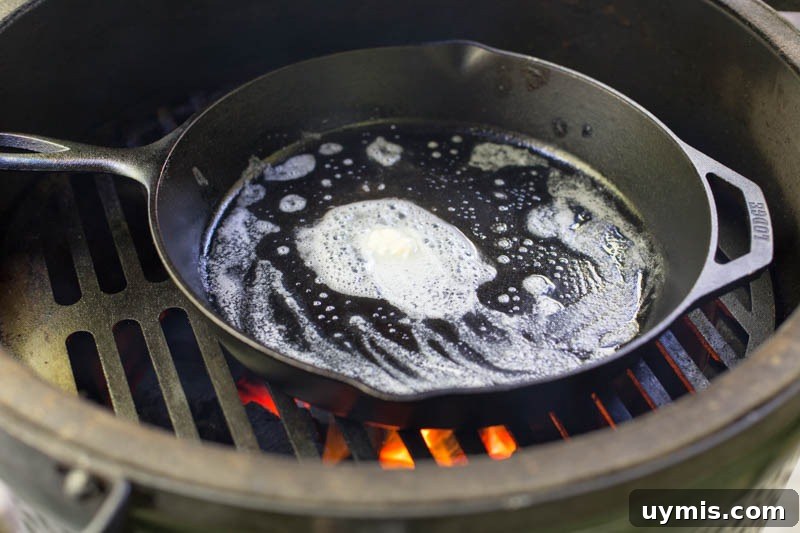
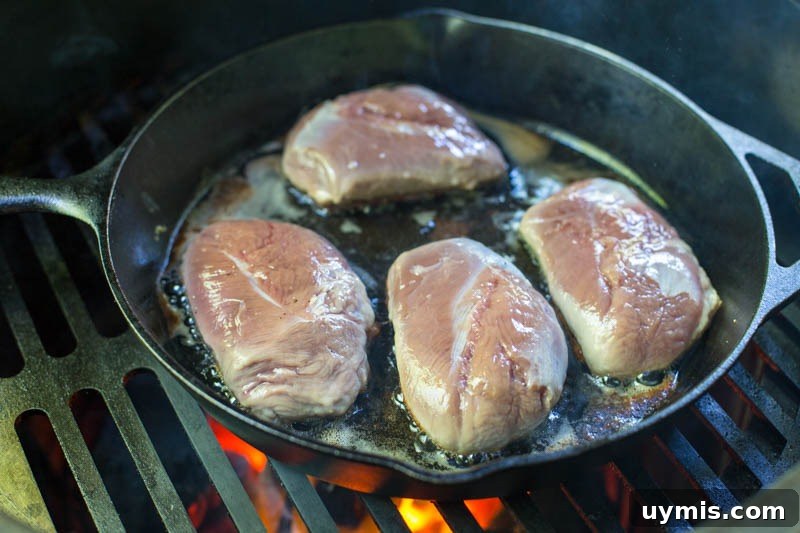
Rendering is the most important part of cooking duck breast. Add the butter to the preheated cast iron skillet, then place the duck breasts skin-side down. You should hear a steady sizzle as the skin makes contact with the pan. This is the stage where the thick layer of fat slowly melts and collects in the skillet.
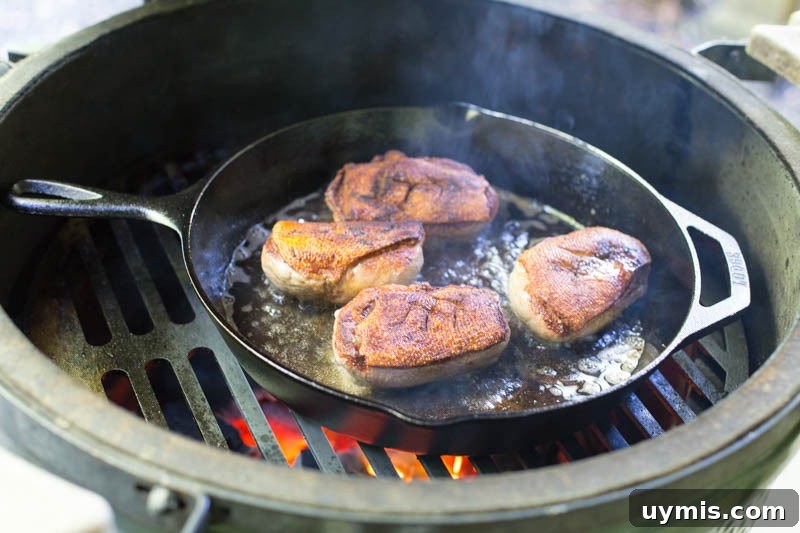
Keep the duck skin-side down for about 10 minutes. Resist the urge to move it too much. The skin needs consistent contact with the hot cast iron so it can become crisp and evenly browned. As the fat renders, the duck is almost frying in its own flavorful juices. The ideal result is a deep mahogany color with a firm, crisp surface.
If the skin darkens too quickly, reduce the heat slightly by adjusting the airflow on the Big Green Egg. If the sizzle fades too much, allow the temperature to recover. The goal is steady heat, not aggressive burning.
Step 5: The Flip and the Finish
Once the skin is crisp and deeply browned, flip the duck breasts and sear the meat side for about 5 minutes. This part of the cook goes quickly because most of the work has already been done during the rendering stage. Now you are simply bringing the duck to the proper internal temperature.
Use an instant-read thermometer for accuracy. Duck breast is best served medium-rare, with a final temperature of about 135°F after resting. Remove the duck from the skillet when it reaches 130°F, then place it on a warm plate and let it rest for 10 minutes. Resting gives the juices time to redistribute and allows carryover heat to finish the cook.
Step 6: Finishing the Port and Cherry Reduction
After removing the duck, pour off most of the rendered fat, leaving about two tablespoons in the skillet. Save the extra duck fat if you like; it is excellent for cooking potatoes or vegetables. The fat left in the pan, along with the browned bits from the duck, will add depth to the sauce.
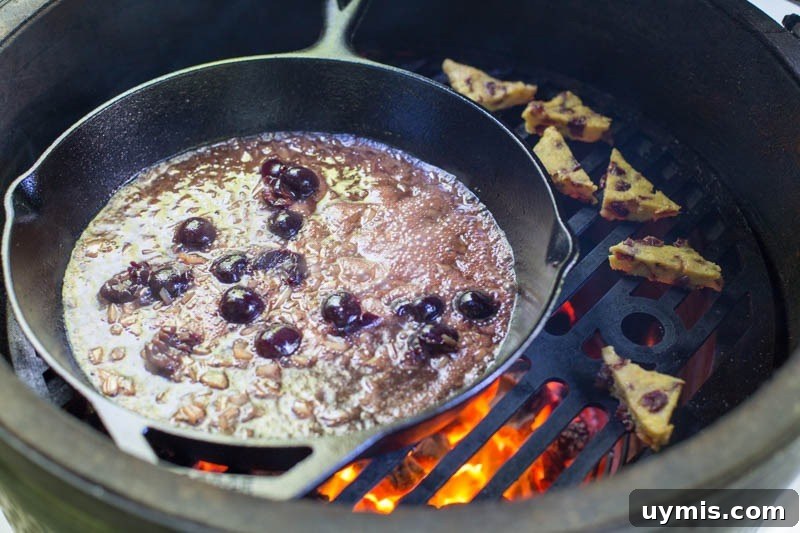
Add the minced shallots and sauté until they become soft and fragrant. Pour in the port, chicken stock, cherries, and honey, scraping the bottom of the pan to release the fond. Bring the mixture to a boil and let it reduce for about ten minutes, or until it thickens enough to coat the back of a spoon. The finished sauce should be rich, glossy, slightly sweet, and bright enough to cut through the duck’s richness.
Final Thoughts: Plating a Masterpiece
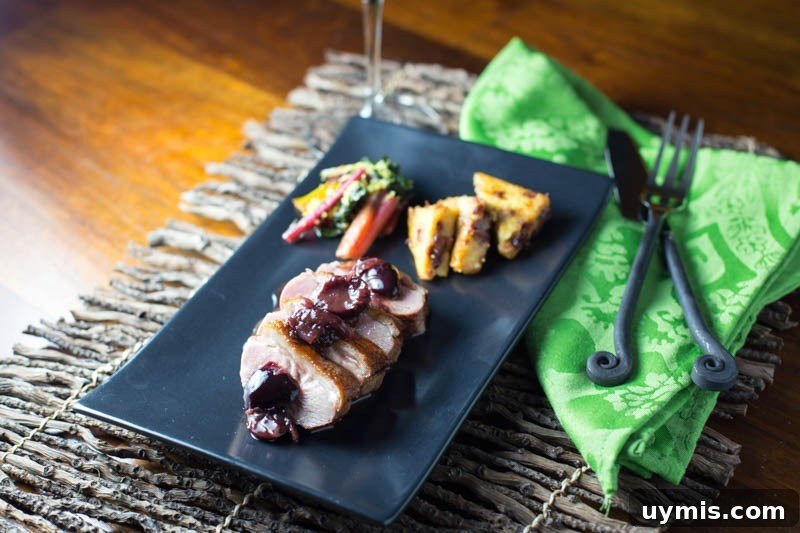
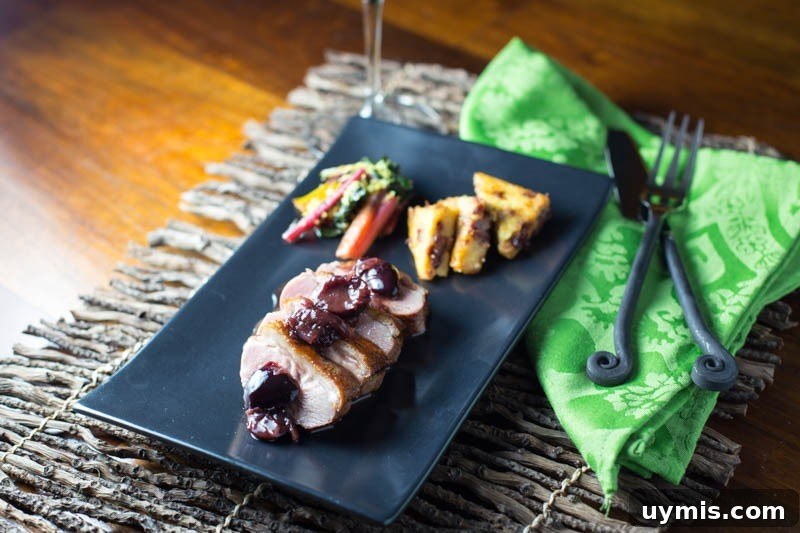
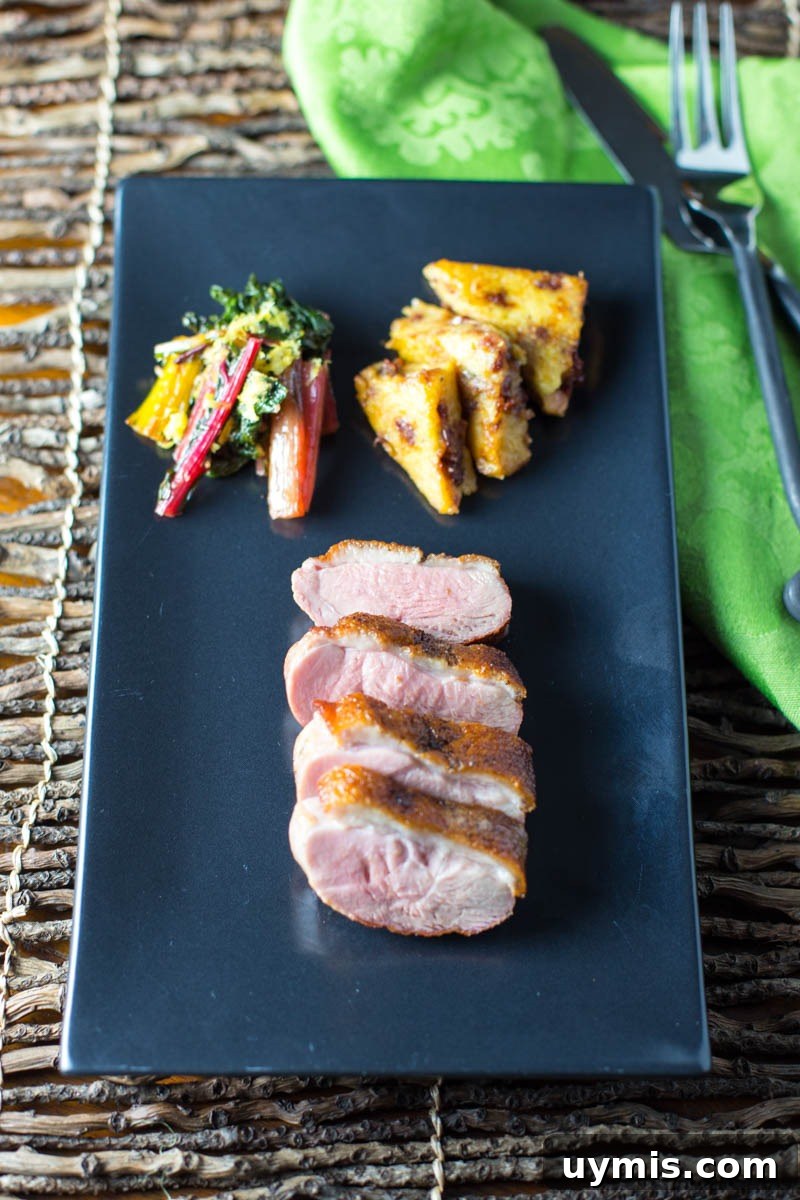
A perfectly seared duck breast is all about contrast: crisp skin, tender meat, and a balanced sauce. When sliced, the duck should show a warm, rosy center with a thin, crunchy layer of skin on top. The Big Green Egg and cast iron skillet make that result achievable with controlled heat and the right technique.
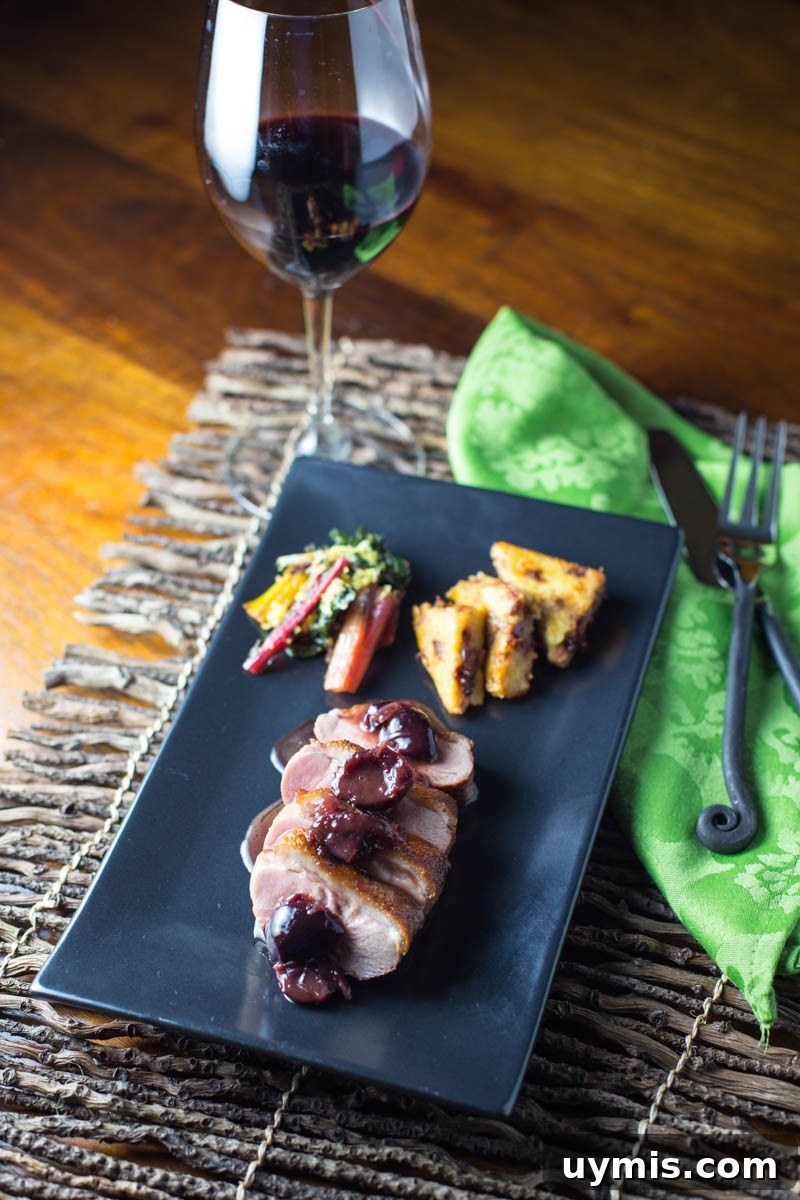
For serving, slice the rested duck breast into medallions and fan the pieces across a warm plate. Spoon the cherry port reduction over the center so it coats the meat without hiding the crisp skin completely. A glass of Zinfandel, Merlot, or Pinot Noir pairs well with the richness of the duck and the fruitiness of the sauce.
The Final Service
- The Pairing: Serve with Zinfandel, Merlot, or Pinot Noir to complement the rich duck and cherry sauce.
- The Slice: Use a sharp knife to carve the rested duck breast into 1/2-inch medallions.
- The Fan: Arrange the slices on a warm plate to show the medium-rare center.
- The Sauce: Drizzle the warm cherry port reduction over the sliced duck just before serving.
People Also Ask
Do you have to score the skin on duck breast? Yes. Scoring helps the fat render out of the skin during cooking. Without those shallow cuts, the fat can remain trapped, resulting in a rubbery texture instead of crisp skin.
What is the best internal temperature for duck breast? Duck breast is best served medium-rare. Pull it from the heat at 130°F and let carryover cooking bring it to about 135°F as it rests.
Should duck breast be cooked in a cold pan or hot pan? Both methods can work, but this Big Green Egg recipe uses a preheated cast iron skillet at steady heat. The important part is controlling the render so the skin crisps before the meat overcooks.
Big Green Egg Seared Duck Breast with Cherry Port Sauce
Equipment
-
1 Cast Iron Pan
Ingredients
The Duck Ingredients:
- 4 large duck breasts, about 6–8 oz each
- 2 tbsp kosher salt
- 1 tsp fresh cracked pepper
- 1 tbsp butter
The Cherry Port Sauce Ingredients:
- 1 cup fresh or frozen dark cherries, pitted
- 1/2 cup Tawny Port
- 1/4 cup chicken stock
- 2 tbsp shallots, finely minced
- 1 tbsp honey
Instructions
-
Prep: Score a crosshatch pattern into the duck fat without cutting into the meat.
-
Season: Pat the duck dry and season both sides with salt and pepper.
-
BGE Setup: Stabilize the Big Green Egg at 400°F for direct cooking and preheat the cast iron skillet.
-
Sear: Melt the butter in the skillet and place the duck breasts skin-side down.
-
Render: Cook skin-side down for about 10 minutes, until the fat renders and the skin is crisp.
-
Flip: Turn the breasts over and sear the meat side for about 5 minutes.
-
Rest: Remove the duck at 130°F and rest for 10 minutes.
-
Sauté: Pour off all but two tablespoons of duck fat and cook the shallots until translucent.
-
Deglaze: Add the cherries, port, chicken stock, and honey, scraping the bottom of the pan.
-
Reduce: Boil and simmer for about 10 minutes, until the sauce becomes thick and glossy.
-
Serve: Slice the duck into medallions, arrange on a plate, and spoon the warm cherry port sauce over the top.
Nutrition information is automatically calculated and should be used as an approximation.