By Kevin Williams
Bicycles are not used in every Amish community, but in some areas they are the preferred mode of transportation. In parts of northern Indiana and large sections of Holmes County, Ohio, bicycles are a common sight. In Holmes County especially, cycling is nearly universal among the Amish, and riders often adopt visible safety measures: bright yellow safety vests, reflective clothing, and, as dusk approaches, caps or headgear fitted with flashing LED lights. These features make cyclists easier to spot and reflect a practical, safety-first mindset among many riders.
The roads in Holmes County are notably hilly, and it is striking to see how effortlessly many Amish cyclists handle steep climbs and descents. That efficiency is likely due to a mix of factors: sturdy, well-maintained bikes, experience riding in a hilly landscape, and developed riding technique—knowing when to build speed on a descent and when to conserve momentum for the next hill. At the same time, electric bicycles (e-bikes) are becoming more common in rural areas, including Amish communities, which can make it difficult for drivers to judge a cyclist’s speed or stopping ability.
That difficulty in distinguishing between conventional bicycles and e-bikes can create real safety concerns. Drivers who misjudge a bike’s speed or assume a slower-moving rider will behave like a standard pedal bike may pull out at intersections or pass too closely. As one reporter pointed out:
“They have to signal, indicate when breaking,” she said. “The biggest issue we have, and complaints we’re hearing, are discerning the difference between E-bikes and regular bicycles. It’s hard to gauge when passing, and sometimes at crossroads, drivers assume because it’s going slower, it is a regular bike and they are pulling out in front of them.”
The images here capture several aspects of cycling in these communities: determined pedal power on rolling terrain, practical choices like carrying children or cargo, and consistent use of bright safety clothing. One photo shows a parent pedaling along the shoulder of busy Route 68 north of Berlin, Ohio, illustrating how cyclists often share roads that handle significant vehicle traffic. Another image highlights the bright yellow clothing commonly worn for visibility.
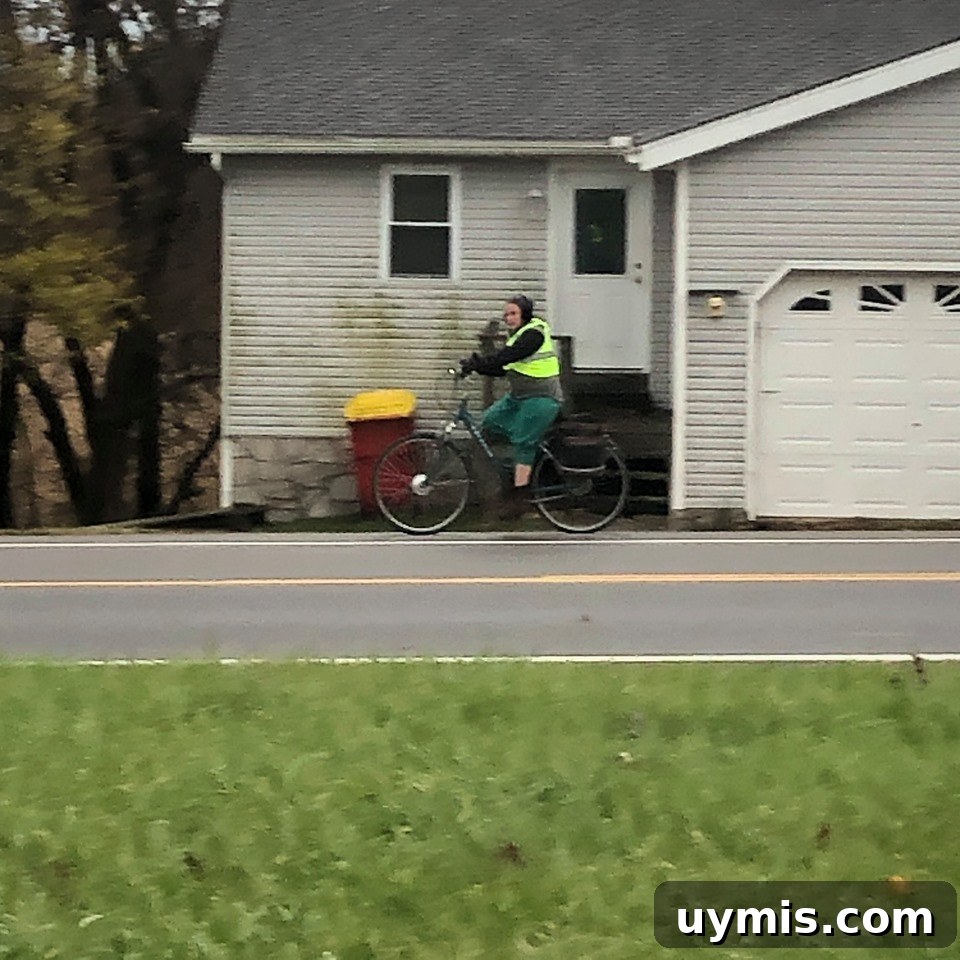
pedal power!
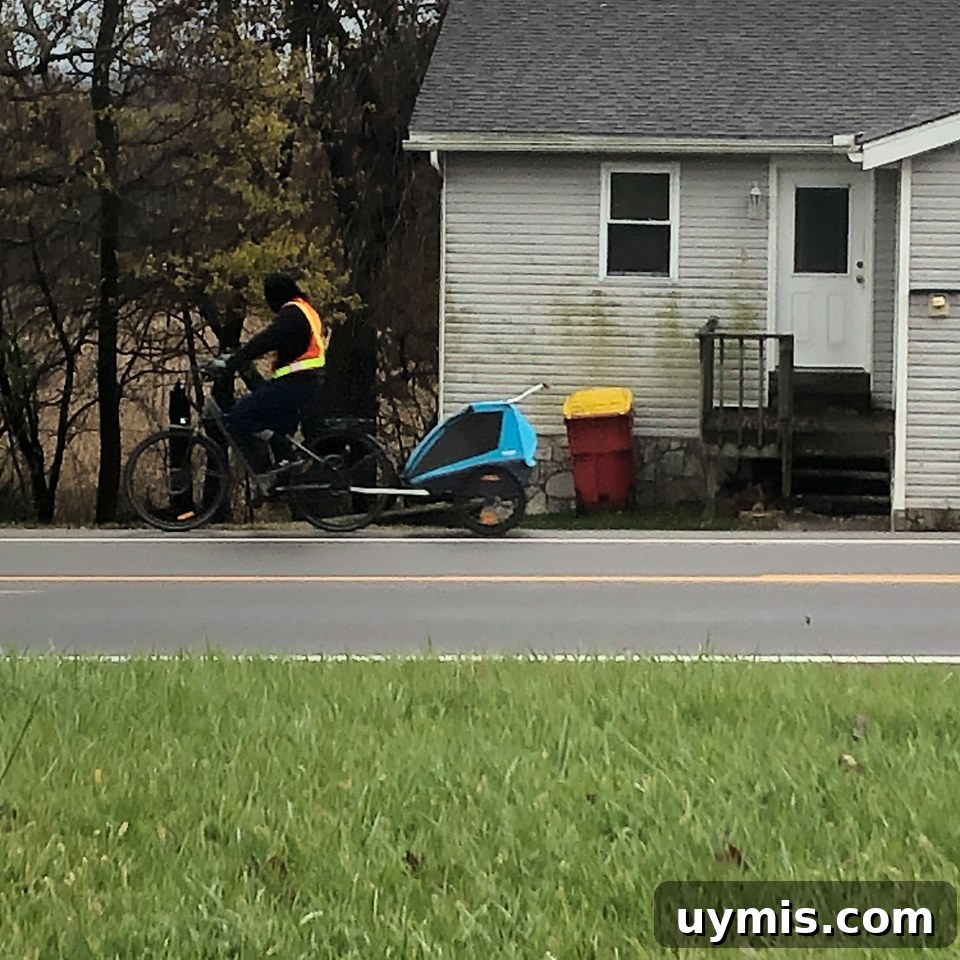
Sometimes you have to just get someplace, even if that means a child in tow…pedaling the shoulder along BUSY Route 68 north of Berlin, Ohio

Most Amish hear wear some sort of bright yellow safety clothing.
Awareness and respectful road-sharing can reduce risk for everyone. Practical steps that help improve safety include:
- For cyclists: wear high-visibility clothing, use front and rear lights at dawn, dusk, and night, signal clearly before turning or stopping, and ride predictably in your lane. If carrying children or cargo, make sure loads are secure and riders maintain control at all times.
- For drivers: slow down when approaching cyclists, allow extra distance when passing, anticipate that a bicycle may be moving more quickly than it appears if it is an e-bike, and be especially cautious at intersections and driveways where sightlines may be limited.
- For communities and planners: improving shoulders, signage, and designated bike lanes where feasible can offer safer space for cyclists on busy routes.
These measures are not exhaustive, but they reflect common-sense approaches that reduce collisions and confusion between vehicles and bicycles. With e-bikes becoming more prevalent, communication matters more than ever: signaling intentions, maintaining visible gear, and exercising patience on the road make a difference.
Ultimately, the sight of Amish cyclists—whether on traditional pedal bikes or on e-bikes—speaks to a culture of mobility adapted to rural life. The combination of practical safety gear and experienced riding helps many navigate rolling, busy roads with confidence. As e-bikes continue to appear, both riders and drivers will benefit from heightened awareness and simple precautions that protect everyone who shares the road.