How to Finish and Bind a Handmade Quiet Book
At last, it is time to finish the quiet books. If you have been working through each page, this final step brings everything together into a sturdy, usable handmade book. The process is simple, but it does take a little patience, especially when sewing through several thick layers. Take your time, check your alignment often, and you will end up with a neatly bound quiet book that is ready to be enjoyed.
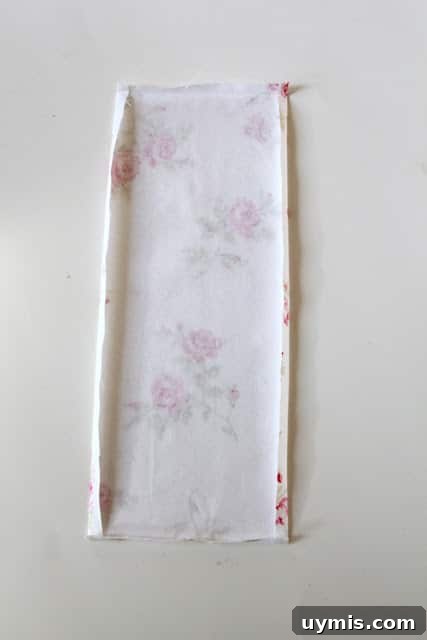
To finish the quiet book, start with one piece of coordinating scrap fabric cut to 12 inches tall by 5 inches wide. A slightly shorter piece can work, but 12 inches gives you a little more room and makes the binding easier to handle. If you have interfacing available, you may cut it to the same size and press it onto the wrong side of the binding fabric for extra body. If you do not have interfacing, do not worry; the book can still be finished beautifully without it. Fold each long side edge in by ¼ inch and press well. Then fold the top and bottom edges in by ½ inch and press again. Set the prepared binding piece aside while you assemble the pages.
Next, gather your seven finished quiet book pages. If you have not yet sewn the fronts and backs of the pages together with batting inside, complete that step first so you have seven finished pages ready to bind. Stack the pages in the order you want them to appear in the book. Carefully line up the top edges, bottom edges, and right-hand sides as evenly as possible.
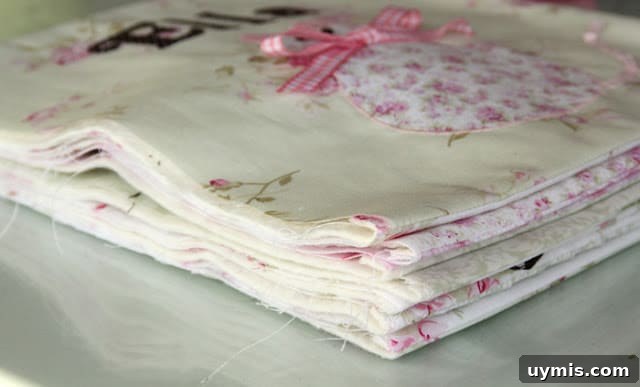
Divide the stack into two smaller sections. Sew each section together along the left-hand side using a ¼ inch seam allowance. Sewing the pages in smaller groups first makes it easier to manage the thickness and helps keep the pages aligned.
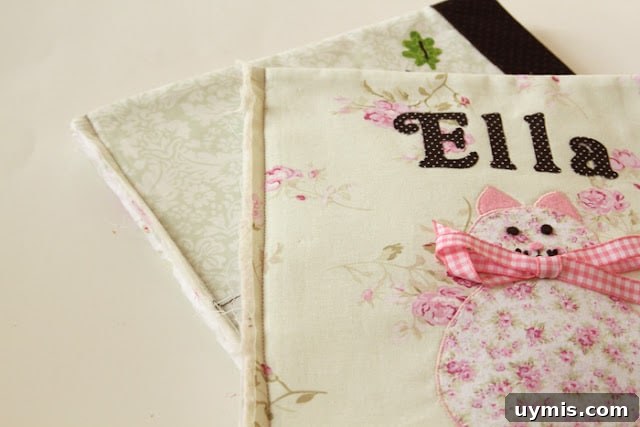
Now place the two sewn stacks on top of each other. Once again, align the top, bottom, and right-hand edges. Using just slightly more than a ¼ inch seam allowance, stitch the two stacks together along the left side. Try to place this stitching just inside the previous stitching lines so the earlier seams will not be visible when the pages are turned. Because this step involves sewing through many layers, it may be easier to begin in the center of the spine and sew down toward the bottom edge. Remove the book from the machine, turn it around, and sew from the center toward the top edge. Go slowly, especially near the edges where the layers are thickest. Backstitch securely at the beginning and end of each seam to keep the binding strong.
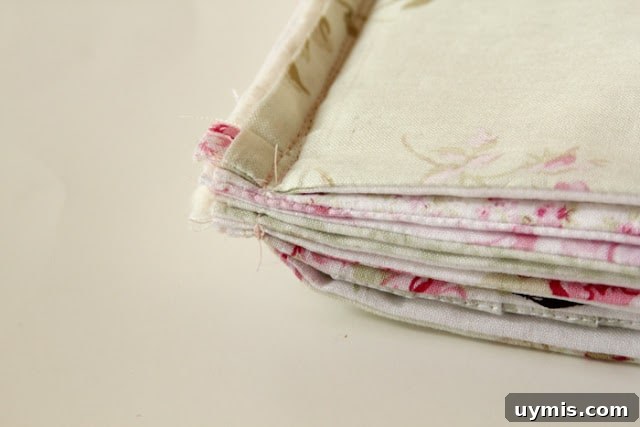
Before moving on, check that everything is secure and lined up neatly. This is the best time to correct any uneven pages.
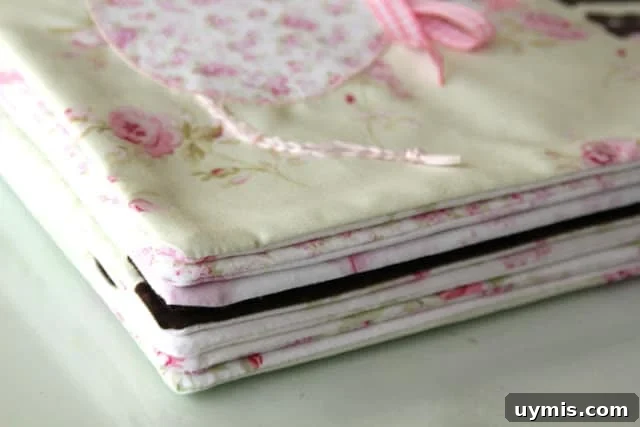
If one page sticks out more than the others, consider removing the stitching and sewing it again. It may feel frustrating in the moment, but a few extra minutes of adjustment can make the finished quiet book look much cleaner and more professional.
To add the outer binding, place the prepared 12 by 5 inch fabric piece on top of the front cover with the right side facing down. Position the left pressed crease about 2 inches from the left-hand side of the front cover. Pin the binding fabric to the front cover only, keeping the rest of the book free.
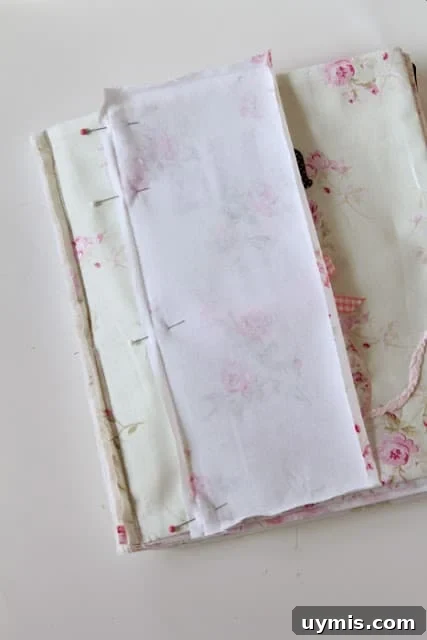
Open the book carefully and place the front cover under the sewing machine presser foot.
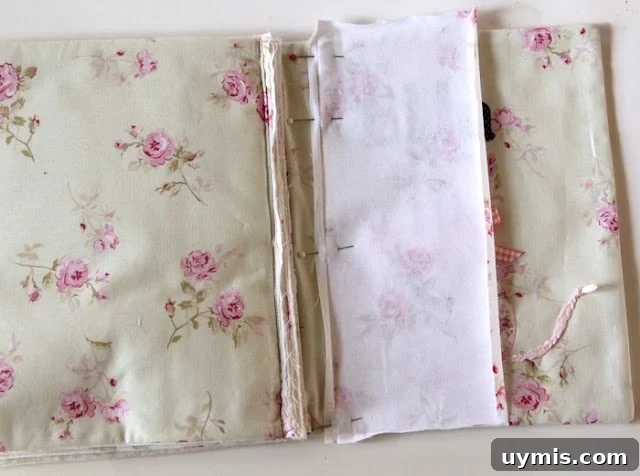
Stitch straight down the pressed crease of the binding fabric. Backstitch well at both the beginning and the end so the seam stays secure with use.
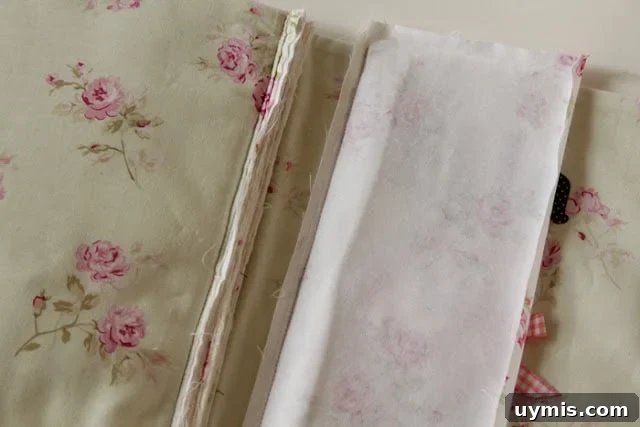
With the book still open, fold the binding fabric back over the sewn page edges so it wraps around the spine and covers the raw seams.
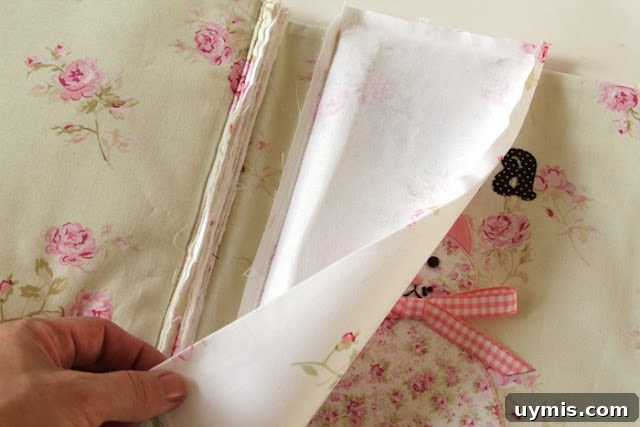
Pin the opposite pressed edge to the back cover, about 2 inches in from the right-hand side. Make sure the folded edge is tucked under neatly so the back cover has a clean finish.
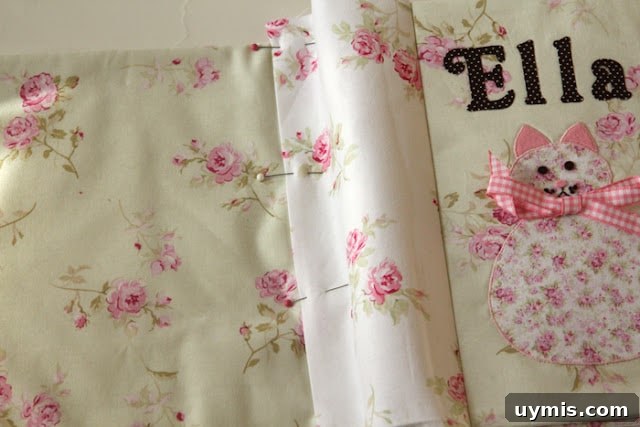
Before stitching this edge down, open and close the quiet book a few times. The binding needs enough slack to allow the book to close smoothly and lie flat without pulling. If the fabric feels too tight or too loose, adjust the pinned edge before sewing. Once you are happy with the fit, open the book again and place the back cover under the sewing machine. Topstitch along the folded edge of the binding. A decorative stitch works especially well here because it adds a polished finish and creates a pretty detail on the inside of the cover as well.
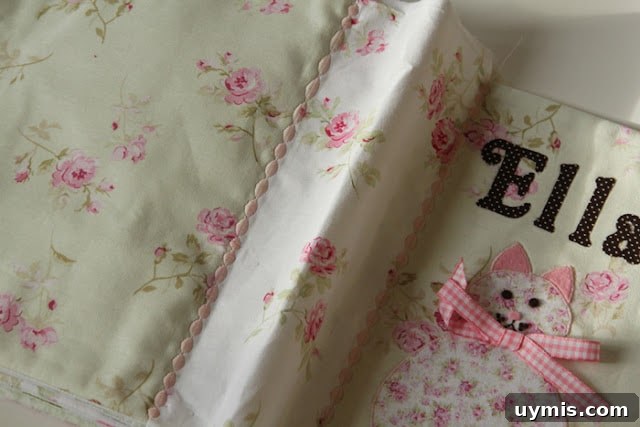
The final step is closing the top and bottom of the binding. This part can be a little awkward because you are working around thick seams and folded fabric, but a hand slipstitch gives the neatest result. Open the quiet book along the center while you work, tuck the raw edges inside along the pressed fold, and slipstitch across the opening by hand.
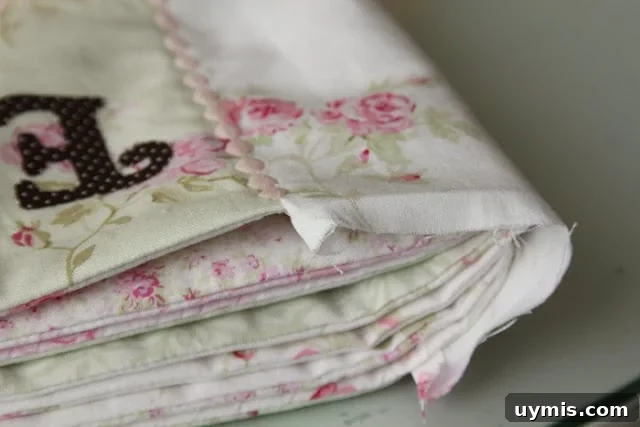
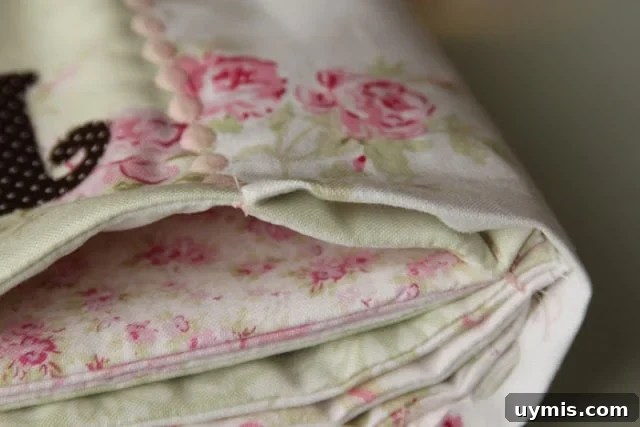
The trickiest area is the center seam, where all the page layers meet. Wrap the binding fabric around the seam as neatly as possible, then stitch and gently pull the fabric closed so the raw edges are covered. It does not need to look perfect while you are working; once the stitching is complete, the binding will look much cleaner.
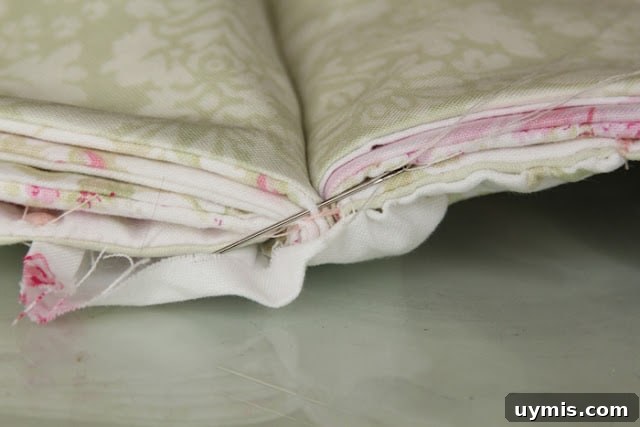
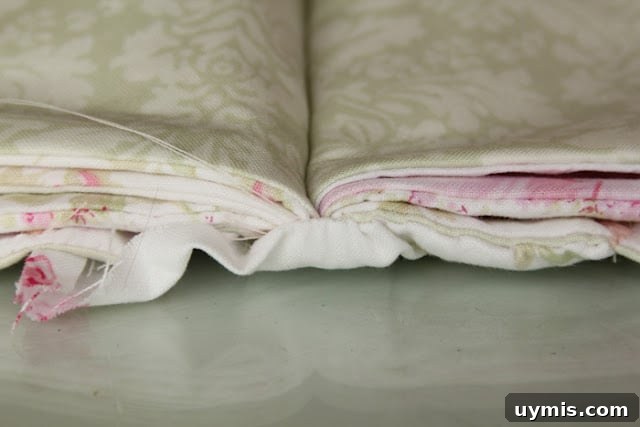
As you sew, keep smoothing the fabric and checking that the top and bottom edges are enclosed. The goal is to hide the bulky raw edges while creating a binding that can handle repeated opening and closing.
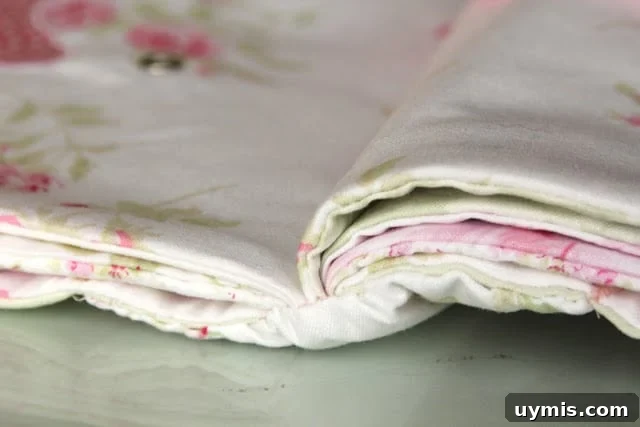
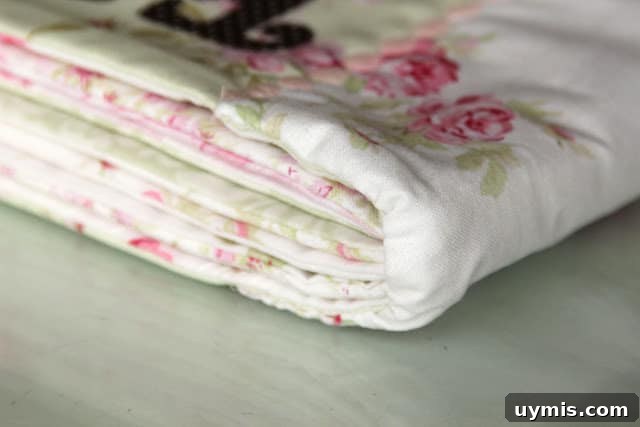
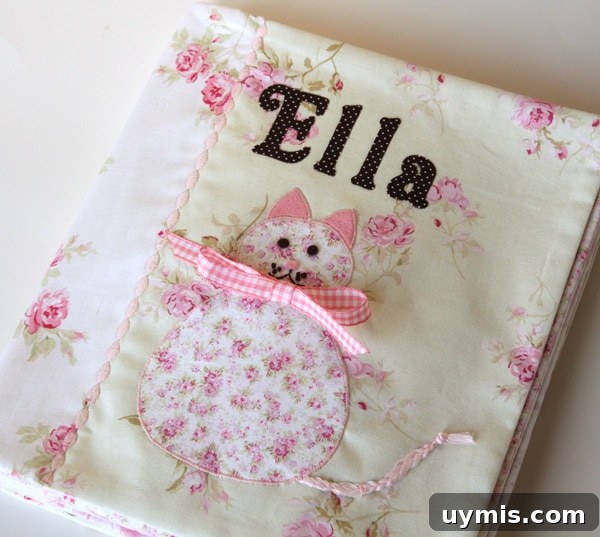
That is the finished quiet book. Once the binding is sewn, the pages are secure, the spine is covered, and the book is ready for gifting or everyday use. A handmade quiet book is a special project because each page is created with care, and the final binding turns all those individual pieces into one complete keepsake. If the process felt slow at times, the finished result is worth it: a soft, interactive fabric book that can be opened, explored, and loved again and again.