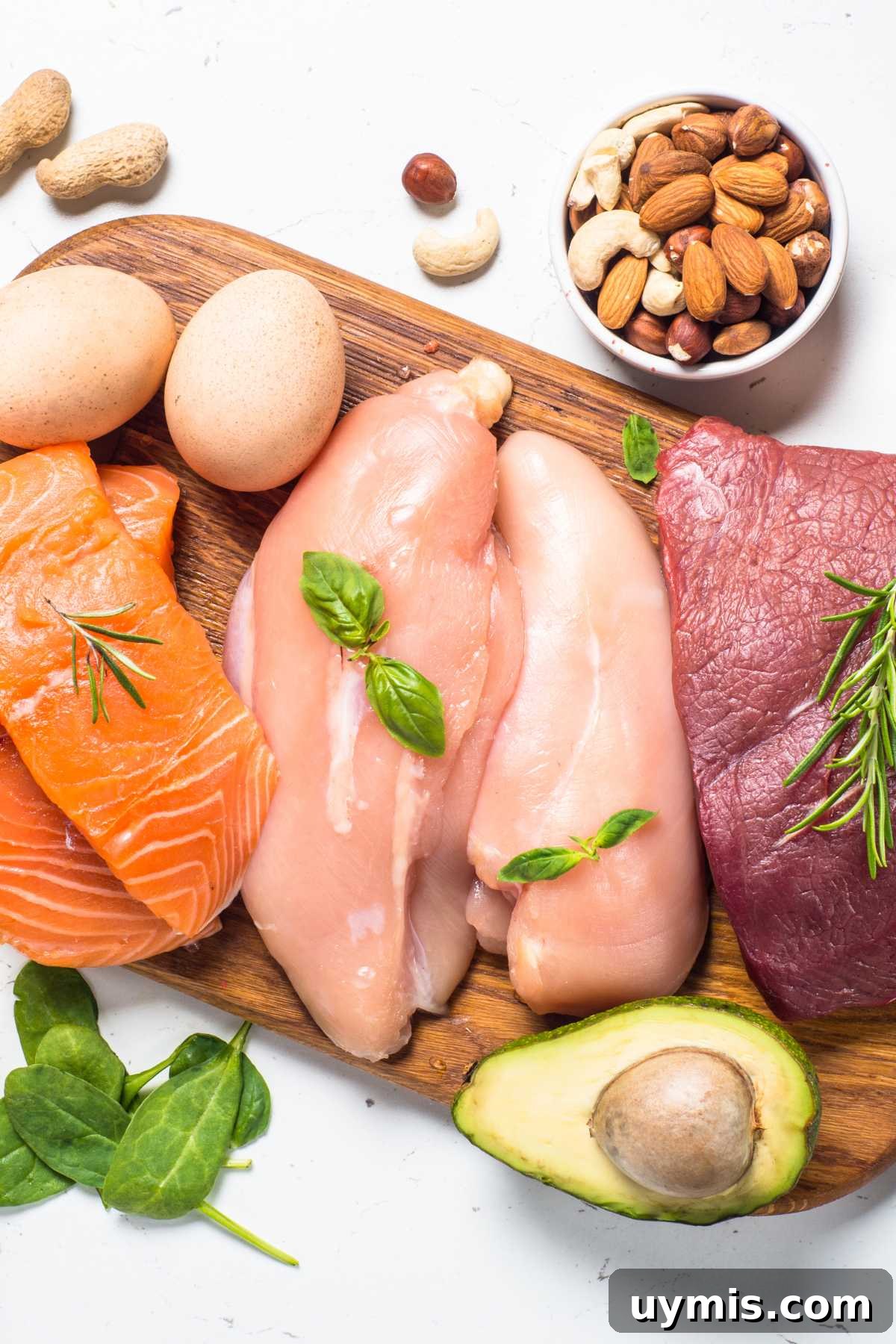
Eating more protein supports muscle health, appetite control, and overall wellbeing. Increasing protein in your daily meals can help you feel fuller longer and support strength and recovery.
Download the FREE printable list of high protein foods to simplify meal planning and make protein choices faster.
As a Registered Dietitian, I know protein can feel confusing. There’s a lot of mixed messaging, and hitting daily protein goals can seem impossible. This article clears that up: what protein is, why it matters, how much you need, and practical ways to add it to your routine.
Below you’ll also find an extensive list of 60 high protein foods, with portions, calories, and protein values so you can compare options and plan meals with confidence.
What is protein?
Protein is one of the three macronutrients—along with carbohydrates and fats—that provide energy and the building blocks our bodies need. Proteins are made of amino acids, which are used to build and repair tissues, form enzymes and hormones, and support immune function.
When you eat protein-rich foods, your body breaks them down into amino acids and distributes them to tissues and cells for a variety of vital functions.
Why is protein important?
Protein supports muscle growth and maintenance, helps with wound healing and tissue repair, and contributes to healthy metabolism. It’s also a very satiating nutrient, so higher-protein meals tend to keep you feeling full longer—useful for appetite control and weight management.
Beyond muscles, proteins are key components of enzymes, many hormones, and immune cells, making adequate intake essential for overall health.
How much protein should you eat?
Recommended protein amounts vary by source and purpose. The commonly cited 0.8 grams per kilogram of body weight is a minimum value intended to prevent deficiency, not necessarily to optimize health or performance.
A more practical target for most active adults is:
- 0.7–0.9 grams of protein per pound per day (about 1.4–2.0 grams per kilogram)
- Or aim for 30–40 grams of protein per meal to simplify intake and support muscle maintenance and satiety
For example, a 150-pound person would aim for roughly 105–135 grams of protein per day. These ranges work well for many people who exercise regularly, but adjust based on your age, activity level, and goals.
What factors impact protein needs?
Protein requirements depend on many individual factors, including:
- Age
- Sex
- Body size (height and weight)
- Activity level and type of exercise
- Health status and recovery needs
- Dietary preferences and restrictions
- Specific health or fitness goals
Use general recommendations as a starting point, then adjust based on how you feel, your performance, and any guidance from a healthcare professional.

What foods contain protein?
Nearly all whole foods contain some protein, but the richest sources include:
- Meat and poultry
- Fish and seafood
- Eggs
- Dairy products
- Soy and other plant-based proteins
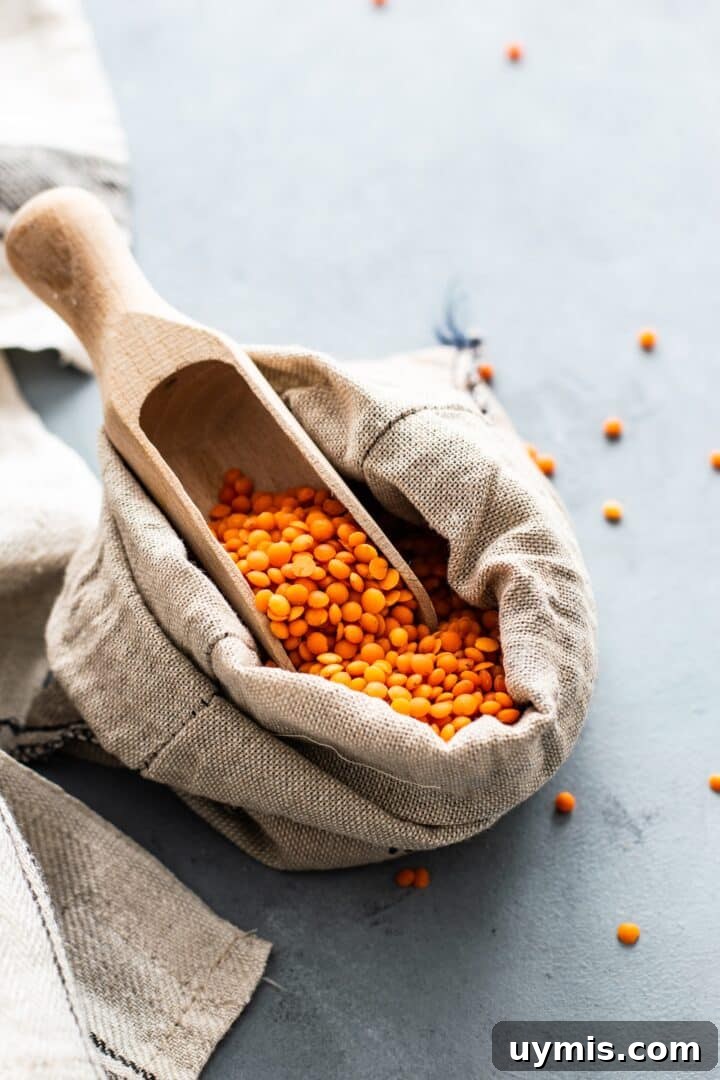
- Beans and lentils
- Nuts and seeds
List of 60 high protein foods
Below is a detailed list of high-protein foods with portion sizes, calorie counts, and protein content to help you compare options. These values are typical references to help guide choices, not strict rules.
For context: 100 grams of cooked chicken breast provides about 32 grams of protein for roughly 158 calories. Plant sources can be protein-dense but may also be higher in calories per protein gram, so consider both protein and calorie needs when choosing foods.
High protein meat
| Food | Portion | Calories | Protein (grams) |
| Chicken breast, skinless, cooked | 100 grams | 158 | 32 |
| Chicken thigh, skinless, raw | 100 grams | 144 | 19 |
| Lean ground chicken, cooked | 100 grams | 189 | 23 |
| Canned chicken, drained | 100 grams | 185 | 25 |
| Turkey breast, cooked | 100 grams | 147 | 30 |
| Lean ground turkey, cooked | 100 grams | 213 | 27 |
| Turkey bacon, cooked | 3 slices | 90 | 8 |
| Turkey, deli meat | 100 grams | 109 | 22 |
| Turkey sausage, cooked | 100 grams | 196 | 24 |
| Beef, t-bone steak, trimmed | 100 grams | 212 | 27 |
| Beef tenderloin, cooked | 100 grams | 168 | 28 |
| Lean ground beef, raw | 100 grams | 185 | 18 |
| Pork tenderloin, raw | 100 grams | 119 | 22 |
| Pork chops, cooked | 100 grams | 202 | 25 |
| Ground pork | 100 grams | 346 | 19 |
| Pork sausage, cooked | 100 grams | 317 | 18 |
| Ham, deli meat | 100 grams | 101 | 17 |
High protein fish and seafood
| Food | Portion | Calories | Protein (grams) |
| Shrimp, cooked | 100 grams | 99 | 24 |
| Canned tuna, drained | 1 can | 121 | 27 |
| Salmon, farmed, cooked | 100 grams | 206 | 22 |
| Canned salmon, bone-in | ½ large can | 260 | 40 |
| Smoked salmon | 100 grams | 117 | 18 |
| Sardines, canned and drained | 1 can | 191 | 23 |
| Cod, cooked | 100 grams | 84 | 20 |
| Halibut, cooked | 100 grams | 239 | 18 |
| Tilapia, cooked | 100 grams | 128 | 26 |
| Fish sticks, frozen | 100 grams | 277 | 11 |
High protein dairy and eggs
| Food | Portion | Calories | Protein (grams) |
| Greek yogurt, plain, nonfat | 1 container (156 grams) | 95 | 16 |
| Greek yogurt, plain, whole milk | 100 grams | 95 | 9 |
| Yogurt, plain, nonfat | 100 grams | 50 | 4 |
| Milk, 2% | 1 cup | 122 | 8 |
| Cottage cheese, 2% | 1 cup | 180 | 24 |
| Cheddar | 50 grams | 205 | 12 |
| Gouda | 50 grams | 178 | 13 |
| Mozzarella, partskim | 50 grams | 148 | 12 |
| Parmesan, grated | 2 tbsp | 64 | 5 |
| Ricotta, whole milk | 100 grams | 158 | 8 |
| Eggs, whole | 2 eggs | 144 | 12 |
| Egg whites | ½ cup | 63 | 13 |
| Whey protein powder | ⅓ cup | 113 | 25 |
High protein plant foods
| Food | Portion | Calories | Protein (grams) |
| Tofu, extra firm | 100 grams | 55 | 7 |
| Soy milk, unsweetened | 200 grams | 76 | 7 |
| Edamame | 1 cup | 188 | 18 |
| Textured vegetable protein, dry | 1 cup | 249 | 35 |
| Seitan | 100 grams | 107 | 18 |
| Chickpeas, cooked | 1 cup | 269 | 15 |
| Black beans, cooked | 1 cup | 240 | 15 |
| Kidney beans, cooked | 1 cup | 225 | 15 |
| Navy beans, cooked | 1 cup | 255 | 15 |
| Lentils, cooked | 1 cup | 226 | 18 |
| Almonds, dry roasted | ½ cup | 450 | 14 |
| Pistachios, dry roasted | 1 oz | 161 | 6 |
| Cashews, dry roasted | 1 oz | 163 | 4 |
| Peanuts, dry roasted | 1 oz | 166 | 7 |
| Peanut butter | 2 tbsp | 191 | 7 |
| Powdered peanut butter | 13 grams | 60 | 6 |
| Almond butter | 2 tbsp | 196 | 7 |
| Pumpkin seeds, raw | 50 grams | 278 | 15 |
| Hemp seeds | 3 tbsp | 166 | 9 |
| Quinoa, cooked | 1 cup | 222 | 8 |
12 dietitian tips to eat more protein
Adding protein to your day is easier with a few practical habits. Try these strategies:
- Stock the freezer. Keep easy proteins like frozen salmon, edamame, and cooked chicken for fast meals.
- Combine protein sources. Pair foods like beans and tofu or grains and cheese to increase total protein at meals.
- Prioritize no-prep options. Canned fish, cheese sticks, and ready-to-eat legumes are convenient and protein-rich.
- Add protein to breakfast. Begin the day with eggs, Greek yogurt, cottage cheese, or a protein-rich smoothie.
- Keep a reference list. Save a short list of your favorite protein foods on your phone for quick planning.
- Use protein powders when convenient. Protein shakes can be a practical way to boost intake on busy days.
- Make protein-rich smoothies. Blend yogurt or protein powder with milk and seeds for a filling drink.
- Serve larger protein portions. Small increases—like 3 to 5 ounces of meat—add meaningful protein to a meal.
- Choose protein-containing carbs. Whole grains and legumes provide both carbohydrates and extra protein.
- Aim for 30+ grams per meal. That target reduces the need for protein-heavy snacks to meet daily goals.
- Opt for lean proteins. Choosing lower-fat cuts increases protein relative to calories when desired.
- Make it tasty. Use herbs, spices, and sauces to make protein foods enjoyable and easy to include regularly.
Printable list of 60 high protein foods
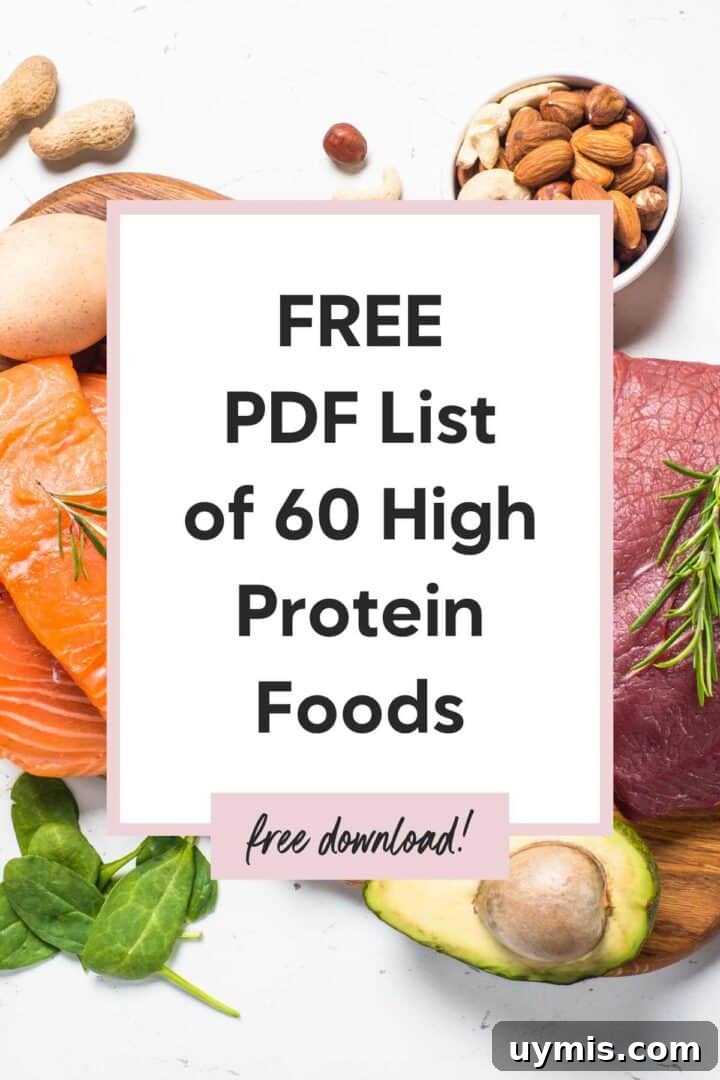
Free printable PDF: a downloadable list of 60 high protein foods is available for quick reference and meal planning.
Print it and keep it with your grocery list to make smarter, faster protein choices at the store.
Final thoughts
Protein matters for health, appetite, and recovery, and most people benefit from prioritizing it at meals. Use the meal targets and food list above to guide your choices, and adjust based on activity level and personal goals.
Keep a printable version of high protein foods handy so building balanced, protein-rich meals becomes simple and sustainable.
More articles:
- What is volume eating?
- Free list of 90 high fiber foods
- High protein vegetarian snacks
- How to eat healthy without cooking
- Signs of an unhealthy relationship with food